- Universally positive player reception
- Pleasant and beautiful graphics
- Excellent roguelike deckbuilder
- Lack of content
- Poor performance and optimization
- Frequent crashes and instability
Emotions
Archetypes
Hardware
What players like:
Common complaints:
Gameplay feedback:
Performance notes:
Recommendations:
Other player notes:
Similar games
Blend with other games




Review evidence
Why players say this
Review evidence
Why players say this
Steam review verdict
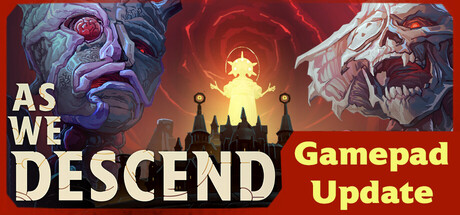
Despite universally positive reception, beautiful graphics, and excellent roguelike deckbuilding, it suffers from thin content, poor optimization, and frequent crashes.
What players like
Universally positive player reception: A large cluster of reviewers describe the game as great, fun, and enjoyable overall. The sentiment is consistently positive with no major complaints.
Pleasant and beautiful graphics: Reviewers frequently compliment the graphics, calling them nice, beautiful, and appealing. The visual style is often highlighted as a strong point.
Excellent roguelike deckbuilder: Many reviewers praise the game as an excellent entry in the roguelike deckbuilding genre, with tactical combat and strong meta progression. It is considered a top-tier title for fans of deckbuilders and roguelikes.
Innovative within roguelike deckbuilder genre: The game stands out from other deckbuilders and roguelikes due to its unique identity and innovative mechanics. Reviewers note that it brings something new to the genre.
Addictive roguelike experience: Many find the game addictive and describe it as a phenomenal roguelite with innovative concepts. The roguelike elements are well-received.
Common complaints
Lack of content: Many players report the game currently feels scant in content, with limited variety and not enough to do. This is the most frequently mentioned issue in the feedback.
Inadequate tutorial and explanation: The game lacks a proper tutorial, leaving new players confused about mechanics and goals. Many request better in-game explanations to ease the learning curve.
Negligible meta progression: Players find the meta progression system to be negligible or very slow, with almost no key traits or cards to unlock. This makes long-term progression feel uninteresting.
Balance issues: Game balance is perceived as poor or wonky, becoming more apparent as players learn the systems. Difficulty balance has notable flaws.
Shallow gameplay and depth: Players describe the gameplay as monotonous and lacking depth, with little to keep them engaged long-term. The core loop feels shallow.
Gameplay and performance
Roguelike deckbuilder genre: Players widely categorize the game as a roguelike deckbuilder, often comparing it to Slay the Spire. The combination of deckbuilding, roguelike runs, and card-based combat is the most frequently cited defining feature.
Deckbuilding core loop: The game revolves around deckbuilding, with players collecting and upgrading cards, drafting units, and constructing decks across runs. Deck management and card synergies are central to the gameplay experience.
Faction and class variety: There are currently two playable factions with distinct playstyles, and a third faction is planned. Players select factions that fundamentally change how they approach the game.
Turn-based tactical combat: Combat is turn-based, often with positional elements and combos. The game blends tactical combat with card play, similar to Darkest Dungeon or XCOM.
Difficulty and ascension systems: The game features multiple difficulty levels and an ascension-style progression system for added replay value. Difficulty scales over time and through ascension modifiers.
Poor performance and optimization: Many players report that the game runs poorly, with low FPS, stuttering, and freezes. Performance issues are widespread and often mentioned as a major concern.
Frequent crashes and instability: Crashes occur often, sometimes on boot or during battles, requiring frequent restarts. The game is unstable and crashes are a common complaint.
Delayed combat transitions and black screens: Entering combat involves long black screens and delayed transitions, breaking immersion.
Severe menu lag: Menus have severe lag, making navigation sluggish and unresponsive.
Stuttering when rotating city: Rotating the city view causes noticeable stuttering, impacting the smoothness of the experience.
Recommendations
Highly recommended overall: Multiple reviewers give a strong positive recommendation, with some scoring it 10/10. The game is widely endorsed as worth playing.
Perfect for roguelike deckbuilder fans: Many reviewers strongly recommend the game to fans of roguelike deckbuilders, calling it a must-play that scratches that specific itch. It is praised as an excellent addition to the genre with strong meta progression.
Worth the price: Reviewers frequently state the game is worth its price and recommend buying it without hesitation. Some mention it is especially good value for money.
Appeals to Slay the Spire fans: Reviewers note that if you like Slay the Spire and Monster Train, you will likely enjoy this game. Comparisons to similar titles are common.
Worth trying for newcomers: The game is seen as worth a try and a good entry point for those new to deckbuilders. It offers a light but enjoyable experience for genre newcomers.
Buying context
Community fair range: $15.00 - $20.00.
Game completion: 30.0h.
Session length: 2.0h.
Endgame: 65.0h.
As We Descend has a core roguelike deckbuilding loop that many find addictive, but enjoyment typically requires overcoming a steep learning curve and unclear onboarding; players who persist and learn the mechanics tend to find it satisfying.
Friction: Inadequate tutorial and unclear explanations; Steep learning curve with many complex mechanics; Slow and stretched-out meta progression; Unbalanced difficulty and damage spikes; UI/UX issues and tedious interactions; Repetitive gameplay loop and pacing issues.
Unlock drivers: Learning and mastering game mechanics; Building unit synergies and drafting perks; Meta progression unlocking new units and cards; Understanding card and unit synergies.
Player profiles
Challenge-Seeking Roguelike Veteran: Optimizes decks, seeks punishing runs, and pursues ascension-style difficulty progression. Motivation: Mastering a tough, deep roguelike deckbuilder with meaningful choices and replayable challenge. Stance: buy.
Casual Newcomer Deckbuilder: Plays casually with mouse-only controls, takes time to think, and wants forgiving combat between battles. Motivation: Enjoying an accessible, chill deckbuilding experience without needing prior genre knowledge. Stance: buy.
Tactical Synergy Tinkerer: Experiments with different unit combinations, card pools, and technology systems to create powerful team compositions. Motivation: Discovering and exploiting unit synergies, build paths, and faction mechanics. Stance: buy.
Platform notes
The Windows 12-15GB VRAM cohort is mostly positive, with both included reviews recommending the game and only isolated optimization concerns noted.
Windows 12-15GB VRAM: positive. Reviewers recommend the game and report generally acceptable performance, though one notes that optimization could be better.
Steam Deck: The Steam Deck feedback is mixed. One user reports that controller inputs work without configuration, which is a positive signal. However, other users describe the Steam Deck controls and UI as messy and call for improved full compatibility, indicating a playable but rough experience rather than a seamless native one. No evidence was found for Proton Experimental toggles, external launchers, battery drain, or crashes.
Extra review signals
External guides: Audit of filtered reviews shows the primary Wiki Tax complaint is instructional: players want an in-game encyclopedia, clearer mechanics and keywords, build planning help, and outcome guidance to avoid wrong choices. No review explicitly asks for drop rates, loot tables, farming locations, safe-to-sell valuation, inventory management, blueprints, crafting requirements, maps, bugs, or navigation fixes. Because Mechanics and Builds are explicitly present, the strict scoring hierarchy lands at Tier 3.
Other review notes
Comparison to Slay the Spire: Reviewers frequently compare the game to Slay the Spire, citing similar deck-building and roguelike mechanics. Some find it more strategic with multiple squads and less randomness.
Active development and updates: The game is actively being developed with frequent updates and patches. Developers are responsive to community feedback and continue to improve the game.
Two factions currently available: The game currently features two playable factions, with a third planned for future release. Reviewers mention this as a current limitation.
Early access status noted: Many reviewers note the game is in early access and look forward to its full release. They mention it is an alpha or early access title with a ton of potential.
Game still incomplete: Reviewers note the game is not yet finished and still far from complete. It is a work in progress with an official release still upcoming.