- Engaging equipment-based build diversity
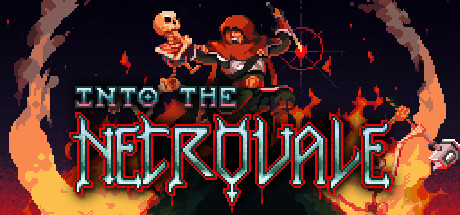
- Charming pixel art aesthetic
- Fun core gameplay loop
- Satisfying action combat feel
- Repetitive and monotonous gameplay
- Projectile overload causes severe lag
Emotions
Archetypes
What players like:
Common complaints:
Gameplay feedback:
Performance notes:
Recommendations:
Other player notes:
Similar games
Blend with other games





Review evidence
Why players say this
Review evidence
Why players say this
Steam review verdict
Charming pixel art and satisfying combat pair with engaging gear builds and a fun loop, but repetitive, monotonous gameplay and projectile-heavy lag drag it down.
What players like
Engaging build diversity: There is a staggering amount of build variety, with a plethora of weapons, items, and abilities that allow for unique and experimental playstyles. The meld system further enhances build crafting.
Charming pixel art style: Players frequently praise the game's pixel art, describing it as charming, lovely, and appealing. The visual style is a standout positive feature.
Fun core gameplay loop: Many reviewers highlight that the game is simply fun to play, with a satisfying and enjoyable core gameplay loop. Clusters repeatedly mention the loop as fun, great, and immensely satisfying.
Satisfying combat feel: Combat is often described as great, satisfying, and fun, with smooth flow. Players enjoy the weapon-feel and the overall combat experience.
Abundant loot and gear: Players enjoy the huge amount of loot and cool gear that drops, providing plenty of items to find, upgrade, and use for crazy builds.
Common complaints
Repetitive and monotonous gameplay: Players frequently criticize the core gameplay loop as highly repetitive, with the same rooms and content repeated excessively, leading to boredom. The experience becomes monotonous and fails to maintain engagement over time.
Unbalanced difficulty and game balance: The game suffers from extreme balance discrepancies, with later stages becoming either too easy or unplayable. This inconsistent difficulty curve frustrates players and undermines the sense of progression.
Grindy progression and gem farming: Players find the game requires excessive grinding to obtain gems for unlocking levels, which feels tedious. This grind extends playtime artificially and detracts from enjoyment.
Despair system poorly designed: The Despair system is criticized for requiring micromanagement or being trivialized by equipment, making it either a burden or irrelevant. Many feel it adds unnecessary complexity without meaningful impact.
Poor melee versus ranged balance: Melee combat is perceived as weak and risky compared to the powerful ranged options, with insufficient incentives to choose melee. This imbalance discourages melee-focused playstyles and affects overall game balance.
Gameplay and performance
Equipment-based build crafting: Core gameplay revolves around combining and synthesizing equipment to create builds. Players experiment with item combinations to shape their character.
Top-down ARPG roguelite: The game is described as a top-down action RPG with roguelite elements. This genre blend shapes its combat, exploration, and progression.
Action hack-and-slash combat: Combat is fast-paced hack-and-slash with both melee and ranged options. Players report good hit feel and fun projectile-heavy encounters.
Equipment slots and melding: Characters have 12 equipment slots that can be melded, with options to combine same-category items at the blacksmith. Endgame allows melding a third item into combinations.
Gear-focused character progression: Progression centers on obtaining gear with higher stats and upgrading equipment. This drives a satisfying sense of advancement without excessive grind.
Projectile overload causes severe lag: Many players report that large numbers of projectiles slow the game to zero FPS or crash it, especially in late-game builds. This occurs even on high-end hardware and often becomes unplayable.
Crashes from excessive effects or enemies: The game frequently crashes when attacking hordes of enemies or when too many effects and particles are active. Some crashes render save files unusable.
Endgame builds cause unplayable lag: If builds are not limited, the game lags terribly and becomes unplayable in the endgame. Even high-end setups like RTX 4090 experience lag.
Performance degrades with many particles: Combining many effects and particles causes slowdowns, and players suggest turning off effects or optimizing settings to mitigate the issue.
Lag in complex environments and mechanics: Lag occurs in maps with many environmental objects and multi-shot weapons, and is tied to mechanics like ignite. Reducing multi-shot weapons largely eliminates the lag.
Recommendations
Strong Overall Recommendation: Many reviewers highly recommend the game without significant reservations, calling it a little gem and praising its fun and accessible roguelite design with strong build variety. The tone is enthusiastic and largely unconditional.
Appeals to ARPG Fans: Reviewers consistently recommend the game to fans of Path of Exile, Diablo, Vampire Survivors, and similar ARPGs or roguelites. The isometric combat and build tinkering are highlighted as familiar and enjoyable for this audience.
Genre and Playstyle Preferences: Reviewers specify that the game suits fans of classic dungeon crawlers, old-style RPGs, roguelikes, speedrunners, and players of all ages. Some caution that it may not appeal to those seeking heavily narrative-driven or guided experiences.
Great Value and Price: Multiple reviewers say the game is worth the full price and a bargain even in early access, with some calling it a banger for the money. It is frequently described as more than worth its cost.
Build Crafting Focus: The game is repeatedly praised for deep build options and accessible crafting that does not feel like a second job. It appeals to players who enjoy creating unusual, meta, or highly optimized builds.
Buying context
Community fair range: $9.99 - $14.99.
Game completion: 40.0h.
Story completion: 40.0h.
Session length: 12.0h.
Endgame: 21.0h.
Into the Necrovale is broadly reported as enjoyable from the start, with addictive build progression, but many players say the mid-to-late game becomes grindy, repetitive, and sometimes unplayable.
Friction: steep learning curve on some mechanics; items do not explain what they do; grindy stretches to unlock meta progression; repetitive dungeon rooms and long levels; farming for items and resources can be boring.
Player profiles
Build-Crafting ARPG Tinkerer: Experiments with many weapon types, effects, and item combinations instead of committing to one optimal build. Motivation: Discovering and optimizing creative builds through deep item and weapon synergies. Stance: buy.
Grind-Weary Progression Skeptic: Plays in shorter sessions, tries different builds, and abandons or waits for a sale when resource farming outweighs challenge. Motivation: Enjoying build experimentation and combat without being forced into a second-job grind. Stance: sale.
Roguelite Dungeon Crawler Fan: Clears top-down dungeons, repeats runs, and seeks a fun challenge similar to classic roguelikes and action RPGs. Motivation: Enjoying a challenging, replayable roguelite loop with classic dungeon-crawling combat. Stance: buy.
Platform notes
Steam Deck: The filtered reviews show a largely seamless Steam Deck experience: users report full playthroughs, strong performance, and working controls. The main friction points are inconsistent controller support and clunky weapon-dependent combat on Deck, plus one report that achievements fail in offline mode. There is no evidence of Proton Experimental toggling, external launchers, unreadable UI, anti-cheat errors, crashes, or launch failures.
Linux and Proton: The available Linux/Steam Deck-relevant feedback is uniformly positive. One reviewer states the game plays like a dream on Steam Deck, and another confirms completing the entire game on Steam Deck. No review in the dataset reports Linux, Proton, SteamOS, or Wine-specific launch failures, crashes, anti-cheat/DRM blockers, or required workarounds. Other complaints are about game content or item rarity and are not tied to Linux compatibility.
Other review notes
Diablo-like but simplified: Reviewers compare the game to Diablo, noting it is more streamlined with less grind and less theorycrafting required. It offers quick play sessions.
Active and responsive developer: The developer is engaged on forums, takes feedback, and provides frequent updates. Updates have been faster than monthly, and the developer is responsive across platforms.
Compared to various roguelikes: The game is compared to Wizard of Legend, Dead Cells, Hades, and others. Some note it is less clunky and more fun than Wizard of Legend, but less deep than Hades.
Excellent Steam Deck performance: Multiple reviewers confirm the game runs smoothly on Steam Deck. It plays like a dream and works great on the handheld device.
Early access state: The game is in Early Access and not fully complete. Some content is still unfinished, though updates are frequent.