- Highly praised puzzle design
- Outstanding atmospheric horror experience
- Exceptional sound design quality
- Engaging story and mystery
- Stealth mechanics poorly executed
- Performance and stuttering issues
Emotions
Archetypes
Hardware
What players like:
Common complaints:
Gameplay feedback:
Performance notes:
Recommendations:
Other player notes:
Similar games
Blend with other games





Review evidence
Why players say this
Review evidence
Why players say this
Steam review verdict
Excellent puzzle design, atmospheric horror, sound, and story make it gripping, but weak stealth and stuttering performance hold it back.
What players like
Highly praised puzzle design: Many reviewers find the puzzles enjoyable, creative, and well integrated into the environment. The puzzles are consistently described as fun and satisfying to solve.
Outstanding atmosphere: The atmosphere is frequently described as fantastic, immersive, and oppressive. It is considered a major strength of the game.
Exceptional sound design: Sound design is often called the best aspect, with detailed ambient sounds and music enhancing the horror. Reviewers rate it near perfect.
Engaging story and mystery: The story is generally found interesting and well-written, with a compelling mystery that hooks players. Some mention strong characters and pacing.
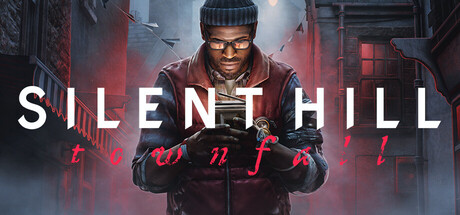
Strong Silent Hill resemblance: Many reviewers note that the game captures the iconic Silent Hill atmosphere and tension. It is often compared favorably to classic Silent Hill games.
Common complaints
Stealth Mechanics Poorly Executed: Many players criticize the stealth system as clunky, frustrating, and outdated, with forced stealth sections that are tedious and unrewarding. The stealth gameplay is often cited as a major flaw.
Performance and Stuttering Issues: Widespread reports of stuttering, frame drops, and freezes significantly impact the experience, even on high-end hardware. These performance problems occur frequently during gameplay.
Gameplay Considered Boring and Clunky: Many reviewers find the gameplay loop unengaging, describing it as a chore, frustrating, and unpolished. The overall gameplay is often labeled as the lowest point of the game.
Lack of Enemy and Boss Variety: The game features very few enemy types and only one boss fight, leading to repetitive and dull combat encounters. This lack of variety makes gameplay boring and reduces replayability.
Poor Character Development and Bland Protagonist: Characters, especially the protagonist Simon, are criticized as flat, uninteresting, and lacking depth. Their development is minimal and emotional engagement is low.
Gameplay and performance
Stealth-focused gameplay: The game emphasizes stealth over combat, with players avoiding enemies and using hiding spots. Many players note that combat is a last resort and stealth is central to the experience.
Multiple endings and New Game+: The game features five different endings influenced by actions such as enemy kills, and a New Game+ mode adds replayability with extra content and achievements.
Puzzle solving elements: Puzzles are a core gameplay mechanic, often requiring notes and clues. Some puzzles involve hospital and oil rig preparation knowledge.
Enemy variety and AI: There are four to five enemy types, including a stalker enemy, with cunning AI that patrols and tracks the player.
First-person perspective: The game is played from a first-person view, enhancing immersion in the stealth and horror gameplay.
Frequent game crashes reported: Players experience crashes at varying rates, from occasional to over 30 times in 13 hours. Crashes occur during saving, gameplay, cutscenes, and force replaying sections.
Stuttering and freezing issues: The game suffers from stuttering and freezes, with some players experiencing stutters every once in a while and others having frequent freezes after about half an hour.
Ray tracing causes crashes: Multiple users report that enabling ray tracing leads to crashes, often every 20 minutes. Disabling ray tracing fixes the issue for many, including AMD users.
Poor optimization on capable hardware: Optimization is terrible, with stutters and poor fluidity even on powerful PCs. Players must lower settings to medium or balanced to run smoothly, sacrificing quality.
UE5 traversal stutter: Stuttering occurs during traversal in many Unreal Engine 5 games, regardless of hardware. This is a common issue that makes the game unplayable for some.
Recommendations
Best enjoyed on sale: Many reviewers suggest waiting for a discount or buying only at a reduced price rather than full price.
Strongly recommended for Silent Hill fans: A large share of reviewers recommend the game specifically to Silent Hill and psychological horror fans, calling it a great series entry worth playing.
General recommendation to try it: Several reviewers give strong endorsements and encourage players to give the game a chance with an open mind.
Not worthy of Silent Hill name: Some reviewers reject the game as mediocre and argue it does not fit the Silent Hill franchise direction, advising against buying it.
Appeals to horror fans broadly: Reviewers recommend the game to horror and survival horror enthusiasts, saying genre fans will not be disappointed.
Buying context
Community fair range: $20.00 - $35.00.
Game completion: 17.0h.
Story completion: 10.0h.
Session length: 7.0h.
Endgame: 40.0h.
Reports most often describe strong initial atmosphere and story engagement that gives way to tedious stealth, waiting, and repetitive combat after the first hours. A minority either never finds fun or reports a pickup by chapter 3.
Friction: Waiting for enemy patrols in stealth sections; Breakable melee weapons; Clunky or unresponsive combat; Unintuitive or tedious puzzles; Performance stuttering; Repetitive backtracking.
Player profiles
Stealth Horror Tension Seeker: Moves slowly, uses the CRTV and sound cues, conserves resources, hides, and avoids enemies. Motivation: Sustained dread and tense cat-and-mouse avoidance rather than power-fantasy combat. Stance: buy.
Silent Hill Series Completionist: Compares entries, hunts endings and collectibles, and tolerates uneven mechanics for lore and atmosphere. Motivation: To see how each new Silent Hill entry fits the franchise and to support the series, even when it departs from the classic formula. Stance: sale.
Action-First Survival Horror Player: Seeks direct confrontation, uses melee and firearms, and dislikes resource starvation and scripted stalkers. Motivation: Wants responsive combat, boss fights, and power progression rather than forced evasion. Stance: no buy.
Platform notes
The largest Windows cohort shows performance problems clearly dominating, while the other five large Windows cohorts are mixed: many users report smooth high-FPS play, but stuttering, frame drops, and crashes remain substantial. Even high-VRAM and high-RAM systems are not consistently free of instability.
Windows 12-15GB VRAM / 16-31GB RAM: negative. Performance complaints dominate, with frequent stuttering, frame drops, and crashes reported even on strong hardware, though some users find it acceptable after patches or FPS caps.
Windows 8-11GB VRAM: mixed. Some users report smooth 70-90 FPS and generally playable performance, while others describe frequent stuttering, sharp frame drops, and crashes, especially on higher settings.
Windows <8GB VRAM / 16-31GB RAM: mixed. A portion of users finish the game smoothly at 60 FPS or with only minor stutters, but others report constant crashes, unstable frame times, and heavy optimization problems.
Steam Deck: The Steam Deck experience is not seamless: users report 15-40 fps only with low settings and ultra-performance FSR, frequent crashes every 20-60 minutes, startup black screens and DirectX12 failures, shader-compilation and traversal stutter, and controller double-input bugs. Some Linux users run the game smoothly, but the evidence shows configuration-dependent compatibility rather than out-of-box Deck readiness.
Linux and Proton: Linux and Proton feedback is mixed but leans usable: numerous users report smooth, flawless play and day-one Linux support, while a significant subset needs launch commands, Proton version switching, FSR disabling, or firmware and driver fixes. Some users encounter GNOME and Mesa freezes, Arch Linux crashes, and severe stutter compared with Windows. This supports a Tinkering Required rating rather than broken or out-of-the-box flawless.
Extra review signals
Monetization: The reviews contain complaints about preorder and DLC bonus fulfillment, perceived content padding, launch patch timing, and vague cash-grab rhetoric. None provides direct evidence that this game sells in-game purchases, paid currency, loot boxes, gacha pulls, battle passes, or paid power or convenience. Under the real-money gate and evidence threshold, no predatory monetization evidence is found, so the score remains in the fair range.
Mod reliance: The reviews show recurring performance and stutter complaints that users address through Nexus Mods, along with purchase caution and active sharing of community workaround links. There is no consensus of startup crashes or total nonfunctionality, so the evidence points to a game that is playable but often improved by community fixes.
External guides: User feedback is dominated by frustration with opaque puzzle design and hidden mechanics, with many players reporting that late-game solutions and ending conditions require guides or walkthroughs. Technical and navigation issues appear as secondary concerns, but the primary dependency is instructional data needed to learn systems, solve puzzles, and discover hidden content.
Other review notes
Mixed comparisons to Silent Hill series: Reviewers frequently compare the game to other Silent Hill titles, with opinions ranging from favorable to unfavorable. Some praise it as a great addition, while others find it weaker than entries like Silent Hill 2 and Silent Hill F.
Multiple endings and replayability: The game offers around five different endings, encouraging multiple playthroughs. New Game+ mode adds new endings, costumes, and powerful weapons.
Stealth compared to Alien Isolation: Several reviewers compare the stealth mechanics to Alien Isolation, often unfavorably, noting worse implementation and less charisma. Some mention that former Alien Isolation developers worked on the game.
Part of Silent Hill canon: The game is officially part of the Silent Hill series and follows its canon, though some reviewers feel it lacks connection to original lore.
Around 15-hour completion time: Most reviewers report a playthrough length of about 10-17 hours, with an average of 15 hours. Two playthroughs may take around 14 hours.