- Solid Metroidvania experience
- Fun and well-made game
- Three playable characters add variety
- Satisfying and responsive combat
- Bad graphics and character models
- Weak and unengaging story

Emotions
Archetypes
Hardware
What players like:
Common complaints:
Gameplay feedback:
Performance notes:
Recommendations:
Other player notes:
Similar games
Blend with other games



Review evidence
Why players say this
Review evidence
Why players say this
Steam review verdict
A fun, well-made Metroidvania with responsive combat and three varied playable characters, though its bad graphics and character models plus a weak story hold it back.
What players like
Solid Metroidvania experience: Many reviewers consider it a competent and high-quality Metroidvania that does the genre justice. It is often compared favorably to Iga-style and Castlevania games.
Fun and well-made game: Players consistently describe the game as fun, carefully made, and good overall. The gameplay is frequently praised as enjoyable and dynamic.
Three playable characters add variety: The three unique playable characters with distinct weapons and combat styles enhance replayability. Swapping between them during combat allows diverse playstyles.
Satisfying and responsive combat: Combat is often highlighted as fast, smooth, and engaging with good hit feel. The skill-based system feels well-rounded and fun.
Challenging and fun bosses: Boss battles are described as challenging yet fun, with a good number of them. Enemy variety is also praised for being surprisingly huge.
Common complaints
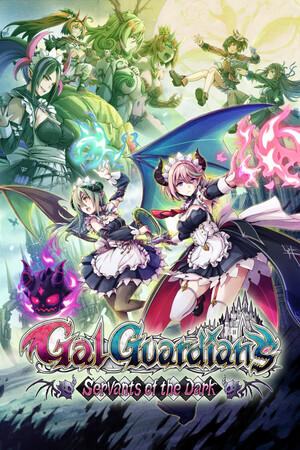
Bad graphics and character models: Graphics look outdated for 2024, and character models appear cheap, rough, and stiff, especially during cutscenes. Animations are janky and visual quality is inconsistent.
Poor map design overall: Reviewers widely criticize the map as immature, linear, confusing, and full of meaningless dead ends. Visibility is poor, making paths and platforms hard to distinguish.
Weak and unengaging story: The story is described as silly, generic, incoherent, and unfocused, with few interesting twists. Many find it bland and constantly trying to be funny at the expense of serious engagement.
Terrible boss design: Bosses suffer from bad hitboxes, zero-frame startup attacks, and excessive super armor. Many can be easily stun-locked or defeated with one button, lacking challenge and proper attack patterns.
Poor translation and localization: English, Korean, and Japanese subtitle translations are frequently wrong, missing parts, or mismatched with voice audio. This breaks immersion and makes the story hard to follow.
Gameplay and performance
Three Playable Characters: Three protagonists, including three female characters, are playable with unique abilities and weapons. They can be switched during combat or exploration.
Castlevania-Inspired Metroidvania: Feedback frequently describes the game as a Castlevania-style Metroidvania, often compared to Bloodstained. It blends classic Igavania design with RPG and action elements.
Metroidvania Exploration Focus: The game is a Metroidvania with a large interconnected map, gradual ability upgrades, and backtracking. Exploration and map revealing are central to the experience.
Extensive Weapon Variety: Each character has four distinct weapon types with unique combos and movesets, totaling around twelve weapons. This variety encourages experimentation and diverse combat approaches.
Combo-Based Combat: Combat revolves around chaining combos, counterattacks, and skill inputs. Hit reactions and enemy super armor add depth to the action.
Severe frame rate drops: Multiple players report significant frame rate drops, ranging from intermittent single-digit dips to general inability to maintain 60 FPS. Issues occur during area transitions, late-game map traversal, and even on capable hardware like an RTX 4060.
Crashes and instability: The game crashes frequently, sometimes within an hour, and can freeze the entire system. Launch failures and background process issues also occur.
Long loading times: Loading times are frequently described as long, particularly during fast travel and large scene transitions. Some suspect it may be hardware-dependent, but the issue is widely reported.
Small bugs and glitches: Various small bugs affect the experience, including animation glitches, stuck spots, texture-collision mismatches, and graphic glitches. These occur during exploration and other gameplay.
Optimization concerns: Several players feel optimization could be improved, describing it as average or slightly insufficient. The game is also called a poorly optimized Unity game, and low graphical customization may cause lag on older machines.
Recommendations
Generally recommended with caveats: Many reviewers give a qualified recommendation, stating the game is worth playing despite flaws or with reservations. Strengths are said to outweigh weaknesses for most players.
Great entry point for newcomers: Many reviewers highlight the game as an accessible, low-stress introduction to the Metroidvania genre with little backtracking. It is frequently recommended for players new to the genre or seeking a relaxing experience.
Appeals to Bloodstained and Castlevania fans: A consistent group of reviewers recommend the game specifically to fans of Bloodstained: Ritual of the Night and Castlevania, including veterans who accept grinding. Some suggest it works as a budget substitute after finishing Bloodstained.
Worth buying on sale: Numerous reviewers recommend purchasing the game at a discount rather than full price. The sale price is repeatedly cited as the point at which the game becomes a suitable purchase.
Highly recommended for Metroidvania fans: Reviewers strongly recommend the game to Metroidvania enthusiasts, some urging fans to buy it without hesitation. It is described as a must-buy for genre fans, especially those who enjoy anime-style aesthetics.
Buying context
Community fair range: $15.00 - $25.00.
Game completion: 26.0h.
Story completion: 20.0h.
Endgame: 60.0h.
The game often has a slow, friction-heavy opening, but multiple players report it clicking later once the second map, specials, and gear open up the combat and progression. A conflicting minority describe early fun that later turns into a slog, so the dominant profile is clicks after rather than universally immediate fun.
Friction: slow pacing and a boring opening or tutorial/fetch quest; early recipes requiring scarce silver bars; a flood of early drops and tedious re-socketing; a key boss with unavoidable damage that feels discouraging; invisible walls and geometry problems after the first planet.
Unlock drivers: reaching the second map, where difficulty settles; unlocking a few specials; acquiring nice gear; mid-to-late-game chain-combo combat; switching party members for varied abilities; accepting the game's unavoidable-damage boss design.
Player profiles
Igavania Loyalist: Explores interconnected maps, hunts enemy drops and movement upgrades, and builds a Castlevania-style arsenal. Motivation: Experiencing a familiar Igavania loop of exploration, ability unlocks, and enemy-drop powers. Stance: buy.
Anime Aesthetic Explorer: Explores a large map casually, collects gear and treasure, crafts meals and weapons, and avoids hardcore challenge. Motivation: Enjoying cute anime characters, costume and crafting flavor, and relaxed loot exploration. Stance: sale.
Core Buildcrafting Optimizer: Theorycrafts core layouts, experiments with weapon and magic combos, grinds selectively for materials, and tunes damage and survivability. Motivation: Optimizing gear, cores, and spell and weapon synergies into a satisfying build. Stance: buy.
Platform notes
Reviews from the Windows 12-15GB VRAM cohort are positive overall, with both included reports recommending the game and describing playable, smooth combat. One user notes controls feel slightly less fluid than the previous title, but says the impact is minor.
Windows 12-15GB VRAM: positive. Both included reviewers recommend the game on this hardware, reporting smooth combat and generally good playability, with only a minor caveat that controls feel somewhat less fluid than the predecessor.
Steam Deck: The Steam Deck audit is mixed: many users report smooth, even preferable play, but a substantial set report repeated crashes, freezes, lost saves, small UI and text, resolution workarounds, frame drops, and controller compatibility issues. Because crash-driven progression blockers and save loss meet the broken band, friction remains high despite positive Deck reports.
Linux and Proton: The available reviews are predominantly positive about Steam Deck/SteamOS compatibility: the game is described as mostly positive, running fine, and officially rated Playable. The only Linux-relevant friction is minor performance tuning, display border/resolution adjustments, and occasional input responsiveness on Deck. No reviews report Proton version switching, anti-cheat or DRM blocks, launcher failures, or Linux-only launch crashes. One vague cross-device play issue is not tied to Linux or Proton and was not weighted.
Extra review signals
Monetization: The reviews show direct evidence of paid cosmetic DLC and paid post-game DLC, including a named $3.99 fashion package and a low-price paid DLC. There is no evidence of pay-to-win, real-money gacha, loot boxes, currency obfuscation, or aggressive FOMO mechanics. The monetization is best described as standard cosmetic/add-on DLC rather than predatory.
External guides: The feedback is dominated by missing or insufficient instructional support: players rely on wikis and guides to find skills, resolve quest bottlenecks, and understand items and systems. There is no meaningful evidence of drop-rate farming, loot-table grinding, inventory management, or crafting blueprint planning. Under the strict hierarchy, the presence of instructional and content-finding complaints places the dataset in Tier 3.
Other review notes
Frequent Bloodstained Comparisons: Many reviewers compare the game to Bloodstained: Ritual of the Night, often noting similarities in style, engine feel, and framework. Some consider it a substitute or inspired by the Igavania formula.
Chinese and Japanese Voice-Overs: The game supports both Chinese and Japanese voice acting, with full Chinese voice-over for the main story. However, no English dub is available.
Bloodstained Comparison Mixed Opinions: While some reviewers find the game more fun or stronger in map and gameplay than Bloodstained, others feel it falls short in map design and overall quality.
Costume DLC Sold Separately: Many costume changes and outfits are available as paid DLC, which some reviewers note as monetized content.
Small Studio Development: The game was developed by a small Chinese studio, with visible capacity limits.