- Lovecraftian themes and atmosphere
- Stunning visuals
- Excellent sound and music
- Engaging narrative
- Impressive monster design
- Severe performance and stuttering issues

Emotions
Archetypes
What players like:
Common complaints:
Gameplay feedback:
Performance notes:
Recommendations:
Other player notes:
Similar games
Blend with other games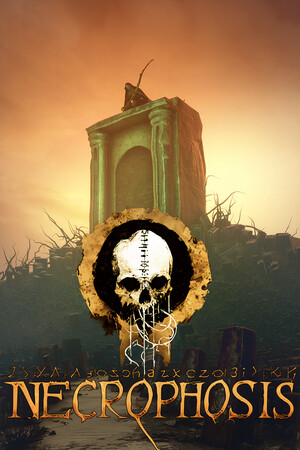 90%Necrophosis
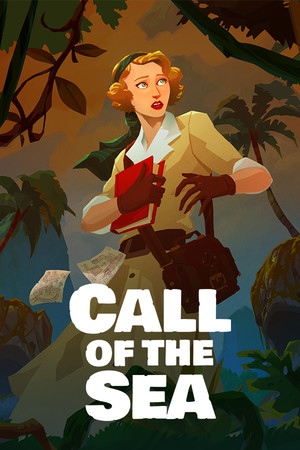 88%Call of the Sea
 86%The Last Door - Collector's Edition
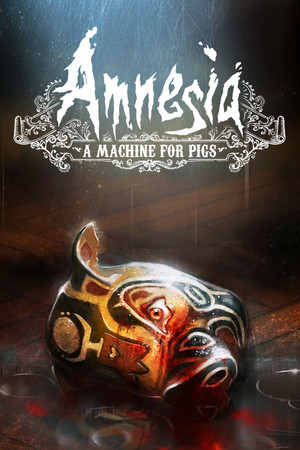 86%Amnesia: A Machine for Pigs
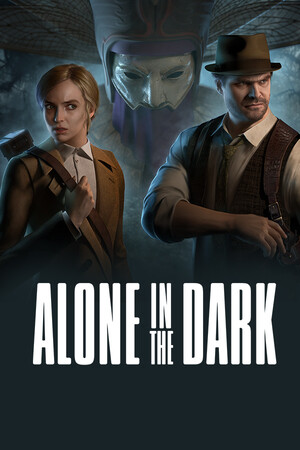 85%Alone in the Dark
 85%The Horror at Highrook
 85%Cthulhu: The Cosmic Abyss
 85%Stygian: Outer Gods
 84%The Sinking City Remastered
 84%Psychopomp GOLD
 84%Call of Cthulhu®: Dark Corners of the Earth
 84%ColdSide
Review evidence
Why players say this
Review evidence
Why players say this
Steam review verdict
Its Lovecraftian atmosphere, stunning visuals, excellent sound and music, engaging narrative, and impressive monsters are undermined by severe performance and stuttering issues.
What players like
Lovecraftian Themes and Atmosphere: The game strongly appeals to Lovecraft fans with its authentic Mythos references, creatures, and lore. It effectively captures the eerie and cosmic horror atmosphere of Lovecraft's work.
Stunning Visuals: The game's graphics and visual design are widely praised as beautiful, vibrant, and scenic. Many reviewers consider the visuals a major strength.
Excellent Sound and Music: The soundtrack, sound effects, and overall audio design are consistently praised as high quality and fitting the atmosphere. Music and sound design are considered top-notch.
Engaging Narrative: The story is often described as good, compelling, and well-told, with particular praise for its Lovecraftian style. The narrative and premise keep players engaged.
Impressive Monster Design: The design of monsters, especially the giant creatures, is frequently praised as phenomenal and awe-inspiring. Their immense scale adds to the horror and excitement.
Common complaints
Uninteresting story: The story is boring, lacks depth, and is generically told. Many find it dull and uninspired, with a tedious delivery.
Poor voice acting: Many players criticize the voice acting as terrible, lifeless, or amateurish. Some mention inconsistency, with a few good voices among terrible ones.
Confusing game direction: Players feel lost because the game provides no guidance or hints on what to do. This leads to frustrating trial and error and aimless wandering.
Puzzles too simple: Puzzles are often criticized as too easy, simplistic, and repetitive, becoming tedious and bland.
Illogical puzzle design: Some puzzles are nonsensical, illogical, and lack clear explanation, making them frustrating and confusing.
Gameplay and performance
Walking simulator gameplay: Many players describe the game as a walking simulator with exploration, puzzles, and item usage. Some note it starts as a walking sim and later adds action elements.
Lovecraftian Cthulhu setting: The game is heavily inspired by Lovecraft's Cthulhu mythos, featuring cosmic horror and references to his creatures. It is set in a maritime or island environment.
Puzzle solving included: Puzzle solving is a common element, though many find them simple. Puzzles often involve noticing details or finding specific items.
Chase sequences present: Chase sequences where the player must run from monsters are a notable feature, with monsters moving at sprinting speed.
First-person action adventure: The game is often described as a first-person action/adventure or horror game with exploration and shooting mechanics.
Severe performance and stuttering issues: Many players report framerate drops, stuttering, and lag, especially in specific areas or during events. The game is often described as poorly optimized and unplayable on some hardware.
Runs poorly despite meeting requirements: Even on hardware that meets or exceeds system requirements, the game stutters and runs poorly, indicating poor optimization. Some players with powerful machines still experience issues.
Graphical glitches and bugs: Various graphical issues such as floating rocks, water seams, clipping errors, and texture problems are reported. These detract from visual quality and can cause confusion.
Controls and input problems: Issues include the controller stopping after alt-tab, mouse not responding, and becoming unable to move after hitting TAB or minimizing. These control bugs severely impact gameplay.
General technical shortcomings: The technical part is not very good, with mediocre performance and various bugs and glitches. This encompasses broad dissatisfaction with the game's technical state.
Recommendations
Strong Lovecraft fan appeal: Many reviewers highly recommend the game specifically to fans of H.P. Lovecraft and the Cthulhu Mythos, citing its faithful atmosphere and references. It is often described as a must-play for enthusiasts of cosmic horror.
Best purchased on sale: A large number of reviews advise buying the game only during a discount, with many saying it is not worth the full price. The consensus is to wait for a sale before purchasing.
Mixed overall recommendations: While some reviewers give a straightforward recommendation, others do not recommend the game at all or find it not worth the price. The overall reception is polarized.
Ideal for walking sim fans: Reviewers note that the game appeals to those who enjoy narrative-driven walking simulators with a Lovecraftian twist. It is recommended for players who appreciate atmospheric exploration over action.
Only for dedicated Lovecraft fans: Several reviews state the game is only worthwhile for very dedicated Lovecraft fans, especially when bought at a low price. Others without that specific interest are advised to skip it.
Buying context
Community fair range: $5.00 - $10.00.
Game completion: 3.0h.
Story completion: 3.0h.
Endgame: 4.0h.
The Shore tends to land early through atmospheric exploration and Lovecraftian setpieces, then loses momentum once midgame artifact combat and late-game repetition take over. Some players never get past clunky controls and confusing puzzles, while a few click after the initial disorientation.
Friction: Confusing opening and lack of clear direction; Clunky controls and movement restrictions; Obscure or unintuitive puzzles; Slow pacing and repetitive chase sequences; Invisible walls that make traversal frustrating.
Unlock drivers: Getting past the initial island disorientation; Being captivated by the Lovecraftian atmosphere and creature designs; The atmosphere hooking the player.
Player profiles
Lovecraft Mythos Devotee: Explores slowly for lore, visuals, and cosmic-horror set pieces, forgiving underdeveloped combat and puzzles. Motivation: Experiencing Lovecraftian atmosphere, lore, creatures, and mythos references. Stance: buy.
Atmospheric Walking-Sim Explorer: Walks through environments, observes scenery, solves light puzzles, and avoids or ignores combat expectations. Motivation: Slow atmospheric exploration and narrative discovery in an art-driven world. Stance: sale.
Combat-Focused Horror Purist: Expects meaningful combat encounters, threat management, and difficulty rather than casual shooting or walking. Motivation: Satisfying combat, tension, and survival-horror challenge. Stance: no buy.
Platform notes
Steam Deck: The Shore is playable on Steam Deck but not seamless. The strongest barrier is Linux/Proton compatibility: pre-rendered cutscenes fail, placeholder signal-lost screens appear, and Proton GE is needed for some animations. Controller support is widely described as clunky with awkward bindings, and performance stutters are reported on PC hardware. A Steam Deck Verified/works-perfectly report exists, so the game is not completely broken, but manual tinkering is required.
Linux and Proton: Linux/Proton feedback is limited but consistent: the game is playable and enjoyable, yet Linux is not officially supported. The main compatibility issue is that pre-rendered cutscenes do not play, showing a "signal lost" placeholder at key moments. On Steam Deck, Proton GE is mentioned as necessary for some animations. There is no evidence of launch failure or anti-cheat/DRM blocking.
Extra review signals
Monetization: The reviews contain no direct evidence of predatory monetization in this game. Complaints focus on the upfront price being too high for a 2-4 hour experience and use 'cash grab' rhetoric subjectively, but they do not mention microtransactions, paid currency, loot boxes, battle passes, or pay-to-win systems. The game appears to be a one-time purchase with no observed in-game monetization.
External guides: The feedback is dominated by players needing external walkthroughs because required items, interaction points, and progression triggers are easy to miss or poorly signposted. A smaller set of complaints covers Alt-Tab instability and optimization. There is no evidence of drop-rate, farming, inventory, crafting, or blueprint data dependency, so the primary issue maps to Tier 3 instructional data.
Other review notes
Short 2-4 hour playtime: Many players report the game can be completed in roughly 2 to 4 hours, with some finishing under 2 hours. Completion time varies little across playthroughs.
Solo or small team development: The game was largely created by a single developer, Ares Dragonis of Dragonis Games, or a very small team. Reviewers highlight its indie, one-person origins.
Low price point: Players frequently mention the game's low base price and note it is even cheaper during sales. The affordable cost is seen as a positive given its short length.
Lovecraftian references and easter eggs: The game includes numerous hidden interactions, notes, and easter eggs that reference Lovecraft's stories and eldritch horror. These details reward exploration for fans of the mythos.
VR version available: A virtual reality version of the game exists, though some reviewers did not test it. Its availability adds an optional immersive experience.