- Well-balanced puzzle difficulty
- Varied and creative puzzle design
- Stunning visual aesthetics
- Puzzles often confusing and unintuitive
- Walking speed painfully slow
- Story and ending underwhelming
Emotions
Archetypes
Hardware
What players like:
Common complaints:
Gameplay feedback:
Performance notes:
Recommendations:
Other player notes:
Similar games
Blend with other games





Review evidence
Why players say this
Review evidence
Why players say this
Steam review verdict
Stunning visuals and creative, well-balanced puzzles are marred by confusing design, slow walking, and a weak story.
What players like
Well-balanced puzzle difficulty: Players frequently praise the puzzles for being challenging yet fair, with a difficulty curve that is satisfying without becoming frustrating. The puzzles require thinking but are never unfair or overly complex.
Varied and creative puzzle design: Puzzles are noted for being varied, unusual, and creative, with unique challenges that keep gameplay fresh. The thoughtful design ensures they are engaging without being repetitive.
Stunning visual aesthetics: The game's visuals are repeatedly described as beautiful, vivid, and colorful, with a hand-drawn art style that creates vibrant and stunning landscapes. The color palette and environments are particularly noted for their beauty.
Engaging and emotional story: The narrative is praised for being captivating, emotional, and well-told, with a compelling love story intertwined with Lovecraftian themes. Players find the story heartwarming and narratively rich, blending romance with cosmic horror.
Exceptional voice acting quality: The voice acting is consistently highlighted as outstanding, with particular praise for actors like Cissy Jones and Yuri Lowenthal. The performances are described as superb, entrancing, and top-notch, adding depth to the narrative.
Common complaints
Puzzles often confusing and unintuitive: Many reviewers found the puzzles to be confusing, unintuitive, and frustrating, with unclear solutions and questionable logic. This was the most frequently cited issue.
Puzzles inconsistently difficult: Reviewers noted that puzzle difficulty swings wildly between trivial and overly complex, with no gradual progression or clear signposting for harder challenges.
Walking speed painfully slow: The walking and sprinting speeds were widely criticized as being too slow, making traversal tedious and contributing to motion sickness for some players.
Story and ending underwhelming: The story is considered average and predictable, lacking impact and build-up, especially towards the ending, which feels rushed and unsatisfying.
Main character talks excessively: The protagonist provides constant narration, often stating the obvious or explaining puzzles after the player has already solved them, which breaks immersion.
Gameplay and performance
Narrative-driven experience: The game is story-rich, focusing on narrative and puzzle-solving. It is often described as a narrative-driven puzzle game or adventure, with a strong emphasis on story.
Lovecraftian puzzle adventure: The game is described as a puzzle/adventure game with strong Lovecraftian themes, combining narrative-driven puzzles with eldritch horror elements. Clusters highlight both the genre and the Lovecraftian inspiration, making it a core identity.
First-person exploration: The game is played from a first-person perspective, often described as a first-person adventure or walking simulator with puzzle elements. This viewpoint is consistently noted across clusters.
Casual adventure with puzzles: Described as a casual or light adventure game with puzzle elements, suitable for entry-level players. The puzzles are not overly complex, making it accessible.
Multiple endings: The story features choice-dependent endings, with at least one important decision at the end affecting the outcome. This adds replay value and narrative depth.
Multiple graphical and audio bugs: Various bugs include audio trigger zone overlaps, lighting issues on Linux, missing polygons/textures, blurry textures, clipping, blinding reflections, filter problems, and resolution/DPI scaling issues.
Runs well on diverse hardware: Multiple users report smooth performance on various hardware, including lightweight laptops and older systems, with good frame rates and no major issues.
High GPU usage and heat: High GPU usage is common, leading to temperature spikes, loud fan noise, and hardware strain, especially when FPS is uncapped or V-sync is off.
Motion sickness from camera: First-person perspective and camera movement cause motion sickness for some players, with issues like camera rotation delay and uncomfortable sensitivity settings.
Performance issues on weaker PCs: Performance drops on weaker hardware, including CPU maxing out at higher resolutions, slowdowns, and choppy gameplay in later chapters, indicating optimization issues.
Recommendations
Wait for a sale: Many reviewers recommend waiting for a sale due to the game's short length and high price, suggesting it is not worth the full price.
Appeals to puzzle fans: Players who enjoy atmospheric puzzle games, walking simulators, and narrative-driven exploration will find this game appealing, especially those who prefer a relaxed or meditative pace.
Great for Lovecraft fans: The game is highly praised for its Lovecraftian atmosphere and story, appealing to fans of the mythos and those seeking a narrative-driven experience without intense scares.
Strongly recommended by some: A subset of reviewers strongly recommend the game, calling it a must-play or highly recommended for its genre, indicating high satisfaction.
Short, story-driven experience: The game is recommended for those seeking a short, story-heavy, emotional experience that can be completed in one sitting, with multiple endings to explore.
Buying context
Community fair range: $5.00 - $15.00.
Game completion: 6.0h.
Story completion: 6.0h.
Endgame: 2.5h.
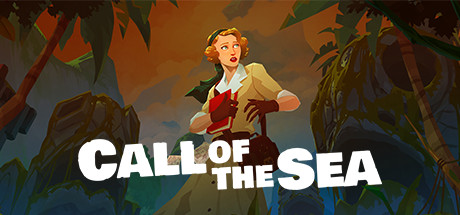
Call of the Sea's slow movement, repetitive narration, and tedious backtracking create significant early friction, but players who persist often find the story and puzzles engaging, though the fun may arrive too late for some.
Friction: slow movement speed (walking and sprinting); tedious backtracking and repetitive traversal; repetitive and obvious narration by the protagonist; boring monologues and cheesy dialogue; unclear puzzle logic leading to trial-and-error; invisible wall bug in Chapter 6 requiring V-Sync toggle.
Unlock drivers: story progression and mystery unfolding; variety in puzzle design; atmospheric environmental storytelling; curiosity about the Lovecraftian plot.
Player profiles
Story-First Explorer: Slow, thorough exploration; reads all notes; takes screenshots; focuses on story beats and atmosphere. Motivation: Emotional narrative and atmospheric exploration with a Lovecraftian twist. Stance: buy.
Casual Puzzle Relaxer: Casual, unhurried; uses in-game hints; enjoys simple spatial puzzles; plays for relaxation. Motivation: Relaxing puzzle-solving with low stress and a gentle difficulty curve. Stance: sale.
Puzzle Purist Critic: Seeks logical consistency; dislikes handholding; expects puzzles to be integrated into the world and require deduction rather than trial-and-error. Motivation: Challenging, logically integrated puzzles that reward critical thinking. Stance: no buy.
Platform notes
Performance is generally positive across hardware tiers, with reports of smooth gameplay and good optimization, though the 8-11GB VRAM cohort shows mixed feedback due to occasional odd performance issues.
Windows 12-15GB VRAM: positive. Users report beautiful, well-optimized graphics with no reliance on upscaling tech.
Windows <8GB VRAM: positive. Users report smooth performance and great frame rates, with the game being easy on the GPU.
Windows 8-11GB VRAM: mixed. One user experienced no issues, while another reported odd performance problems.
Steam Deck: User reviews reveal a split experience: some players enjoy flawless performance on Steam Deck, while others encounter frame drops, lighting glitches, and audio issues. The game is officially Verified but the feedback suggests it can require tinkering with settings to run smoothly.
Linux and Proton: The game runs on Linux via Proton and on Steam Deck with mostly positive results. A minority of users experience lighting bugs and audio hiccups attributed to the Linux/Proton environment, and Steam Deck performance can be inconsistent but remains playable. No anti-cheat, DRM, or launch blockers were reported. Overall, the game works well with minor graphical quirks and some need for performance tuning.
Extra review signals
External guides: The dominant user frustration is the game's failure to provide sufficient in-game instruction for puzzles and optional content, forcing players to rely on external guides. This aligns with Tier 3 'The Student' (Instructional Data).
Other review notes
Pay-to-win achievement anger: Players are frustrated by an achievement that forces them to buy all other games from the same publisher, which feels like an unfair monetization tactic rather than a genuine gameplay challenge.