- Beautifully Designed Open World
- Voxel-Based Building Freedom
- Fun and Rewarding Exploration
- Persistent 60 FPS struggle
- Stuttering and frametime spikes
- Low enemy variety
Emotions
Archetypes
Hardware
What players like:
Common complaints:
Gameplay feedback:
Performance notes:
Recommendations:
Other player notes:
Similar games
Blend with other games




Review evidence
Why players say this
Review evidence
Why players say this
Steam review verdict
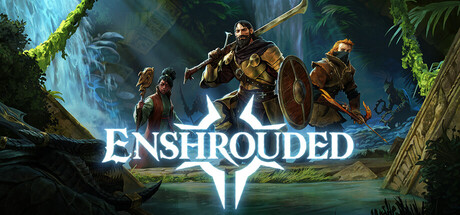
This beautiful voxel world offers rewarding exploration and building freedom, but it struggles to hold 60 FPS with stutters and has too few enemy types.
What players like
Beautifully Designed Open World: The open world is beautifully designed, inviting exploration with secrets, ruins, and resources. The map construction and world design are frequently commended.
Voxel-Based Building Freedom: The voxel-based building system allows precise editing of walls, roofs, floors, and terrain, offering immense freedom to sculpt the world. Players appreciate the ability to dig, build, and terraform with fluidity.
Fun and Rewarding Exploration: Exploration is consistently described as fun, exhilarating, and rewarding, with always something new to discover. Hidden ruins, caves, and secrets enhance the experience.
Seamless Solo and Co-op: The game works well both solo and in cooperative play, with seamless integration and high enjoyment in multiplayer. Many reviewers find it more enjoyable with friends, including 3-player co-op.
Varied and Flexible Skill Tree: The skill tree is varied, readable, and allows multiclassing and experimentation, supporting hybrid builds. Players enjoy the flexibility to develop characters freely.
Common complaints
Low enemy variety: Enemy models and attack patterns are highly repetitive, with the same Marauders, Chubbaks, and Mushroom Zombies appearing repeatedly, and mini-bosses differing only in health.
Excessive shader compilation: Players report that shader compilation takes 15-30 minutes on first launch and half an hour on subsequent launches, often exceeding actual playtime. Missing effects occur if compilation is not completed, and minor updates trigger lengthy recompilation.
Numerous unfixed bugs: The game has many bugs that are not being fixed, detracting from the overall experience.
Tedious crop harvesting: Harvesting requires pressing the 'E' key for each individual plant, which can be hundreds or thousands of times, making the process extremely tedious and repetitive.
Repetitive quests and gameplay: The quest structure and gameplay loop are repetitive, consisting of taking a task, running to a marker, clearing the same enemies, finding a note, and repeating with no new content.
Gameplay and performance
Voxel-based building system: The building system is voxel-based, enabling free construction and terrain manipulation. Players can edit walls, roofs, floors, and reshape the world.
Co-op multiplayer with friends: Co-op play is a major feature, allowing friends to team up, revive each other, and share loot. It supports both solo and cooperative play.
Large open world with biomes: The game features a massive, handcrafted open world with diverse biomes, ruins, dungeons, and secrets. Exploration is a core activity.
Combat with parry and dodge: Combat includes melee, ranged, and magic attacks, with mechanics like blocking, parrying, dodging, and rolling. Boss fights require mastering these skills.
Survival action-RPG with base building: Players describe the game as a blend of survival, action-RPG, and base-building mechanics. It combines open-world exploration, crafting, and RPG progression.
Persistent 60 FPS struggle: Many players report the game cannot maintain 60 FPS even on the lowest settings with upscaling such as DLSS at maximum performance. Frame drops occur below 60 FPS in various areas, and even 1080p on high settings is unattainable without severe drops.
High-end PCs still struggle: Even on powerful hardware like RTX 4090, RTX 5080, and Ryzen 7 7800X3D, performance is poor and does not meet expectations. The game runs worse than other demanding titles on the same systems.
Atrocious shader compilation times: Shader compilation is extremely long, taking 15-30 minutes on first launch and repeating on minor updates. The shader cache frequently breaks, forcing manual recompilation that can take half an hour each time.
Stuttering and frametime spikes: Players experience stuttering and frametime dips, which intensified after recent updates. Freezing for several seconds during movement or when opening new territories is common.
Runs smooth on some systems: Some players report incredibly smooth performance, even on older rigs like an 8-year-old PC at 1080p or via GeForce Now. The game is surprisingly well-optimized for these configurations.
Recommendations
Ideal for survival crafting fans: Players who enjoy survival, building, crafting, and open-world exploration consistently recommend the game. It scratches the same itch as Valheim, Conan, Outward, and Minecraft for many reviewers.
Best with friends or co-op: Many reviewers agree the game is far more enjoyable when played with friends, a partner, or a group. Solo play is described as boring or not recommended, while co-op is frequently highlighted as one of the best experiences.
Strong general recommendation: A large number of reviewers give a clear, unconditional recommendation, often with high praise or scores like 10/10. Words like 'definitely recommend' and 'strongly recommended' are common.
Base-building and decorating highlight: The building system is repeatedly praised as one of the best, and players who love base-building, decorating, or housing find it especially satisfying. Those not interested in building may get bored.
Not recommended in current state: A number of reviewers cannot recommend the game as it stands, citing bugs, lack of polish, or missing content. Some suggest waiting for the 1.0 release or more updates.
Buying context
Community fair range: $15.00 - $30.00.
Game completion: 226.0h.
Story completion: 150.0h.
Session length: 3.5h.
Endgame: 76.0h.
Enshrouded often delivers fun early, especially in co-op, but many players report mid- and late-game grind, repetition, and weaker progression reduce enjoyment.
Friction: Tedious gathering and resource management; Early-to-mid game too tedious to push through; Overwhelming crafting and inventory systems; Quest progression can feel like FedEx work; Disappointing enemy variety; Exploration bottleneck in the first few hours.
Player profiles
Co-op Social Player: Group exploration, coordinated base building, and tackling bosses together. Motivation: Shared adventure and social bonding with friends. Stance: buy.
Creative Builder & Explorer: Building elaborate bases, exploring diverse biomes, and gathering resources at their own pace. Motivation: Creative expression through building and the joy of discovery. Stance: buy.
Survival Crafting Veteran: Engaging in all survival pillars: crafting, building, combat, and exploration, often with high hours invested. Motivation: Finding the next great survival crafting experience with deep systems. Stance: buy.
Platform notes
Across the returned cohorts, performance varies by VRAM: higher-VRAM users mostly treat high GPU utilization as normal with isolated optimization complaints, while the 8-11GB and sub-8GB cohorts are dominated by stuttering, frame drops, and poor optimization.
Windows 12-15GB VRAM: positive. Most reports defend the game's high GPU utilization as normal and note ongoing optimization work, though a few users still report frame drops and poor optimization, including one who cannot run 1080p high settings smoothly.
Windows 8-11GB VRAM: negative. The cohort is dominated by reports of severe stuttering, FPS drops, and poor optimization, with only one user reporting smooth very-high 1080p performance on an older PC.
Windows <8GB VRAM: negative. Most low-VRAM reports say the game struggles to hold 60 FPS even on low settings with upscaling or DLSS, though one 6GB VRAM user reports improved optimization and stable 100 FPS.
Steam Deck: The audit finds severe friction for Steam Deck/Linux/Proton users: frequent crashes with save loss, recurring shader-cache corruption requiring manual recompilation, poor performance even on high-end hardware, and forced FSR reliance. No direct small-text, external-launcher, or battery-drain reports were found, but the Linux context and crash/performance evidence indicate the game is likely broken on Steam Deck.
Linux and Proton: The filtered reviews contain almost no Linux/Proton-specific compatibility evidence. One reviewer states they play on Linux Mint 22.3 with an RTX 3090 and jokes about Vulkan, reporting no launch, crash, anti-cheat, or compatibility blockers. All remaining complaints concern frame rates, FSR, and shader compilation times but never reference Linux, Proton, SteamOS, or Wine, making them generic cross-platform performance criticisms rather than Linux-specific friction. With no evidence of Linux launch failures or workaround-heavy Proton setups, the Linux/Proton experience appears to work without notable issues.
Extra review signals
External guides: Audit of the 'Wiki Tax' external data dependency shows the dominant barrier is instructional, not economic. Users report vague quest directions forcing frequent guide/wiki consultation for locating content and resolving bug ambiguity, while the wiki is praised for organizing quests and required materials. No evidence of repeatable resource farming (Tier 1) or inventory/crafting valuation management (Tier 2) appears. The recurring quest/content-discovery dependency triggers the Tier 3 rule (The Student).
Other review notes
Frequent Valheim Comparisons: Numerous reviews compare this game to Valheim, often noting similarities in building, exploration, and survival mechanics. Some consider it better in certain aspects, while others miss Valheim's procedural generation and structural integrity.
Regular Content Updates: The developers consistently add new content, biomes, items, and improvements through frequent updates. This ongoing support keeps the world fresh and players engaged.
Compared to Minecraft and Zelda: Frequent comparisons to Minecraft for building freedom and Zelda: Breath of the Wild for exploration and mechanics. Some also mention Terraria, Subnautica, and other open-world survival games.
Early Access Status: The game is currently in Early Access, with ongoing development and regular updates. Many reviewers note it is already very complete, but some expect improvements before full release.
Huge Content and Playtime: The game offers a massive amount of content, with hundreds of hours of gameplay. Reviewers report spending over 100 hours and still having much left to do.