- Strong audiovisual presentation
- Entertaining overall experience
- Fun space deckbuilder
- Ship variety enhances replayability
- Poor card balance
- Excessive RNG dependence
Emotions
Archetypes
What players like:
Common complaints:
Gameplay feedback:
Performance notes:
Recommendations:
Other player notes:
Similar games
Blend with other games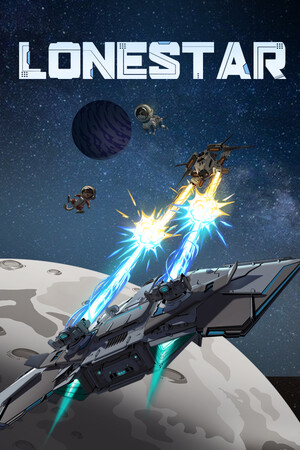




Review evidence
Why players say this
Review evidence
Why players say this
Steam review verdict
A visually and audibly strong, entertaining space deckbuilder with varied ships that boost replayability, though poor card balance and heavy RNG dependence can frustrate.
What players like
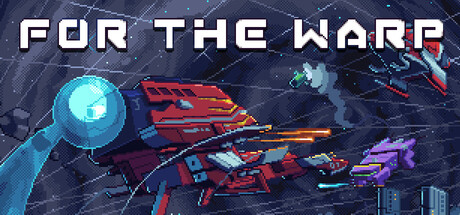
Strong audiovisual presentation: The game's art, pixel graphics, music, and sound design receive consistent praise. Reviewers often call the visuals gorgeous and the soundtrack excellent.
Entertaining overall experience: Many players find the game genuinely fun to play, with comments highlighting enjoyment and a pleasant rhythm. It is frequently described as entertaining and a good way to pass time.
Fun space deckbuilder: Reviewers strongly praise the deckbuilding mechanics and the space theme, often comparing it to Slay the Spire. The core card-battling loop is described as snappy, addictive, and satisfying.
Ship variety enhances replayability: Multiple ships with distinct abilities and playstyles are frequently mentioned as a key strength. This variety keeps runs fresh and supports high replayability.
Polished and competent roguelike: Reviewers describe the game as well-crafted and a solid entry in the roguelike genre. It is seen as a good example of the deck-building roguelike formula.
Common complaints
Poor card balance: Multiple reviewers report that cards are poorly balanced, with some cards requiring specific combos to be useful while others are overpowered or useless. Balance is repeatedly described as missing or in need of reworking.
Excessive RNG dependence: Gameplay is seen as too dependent on randomness, especially card draw. The absence of a discard pile and full-deck reshuffling each turn make outcomes feel luck-driven rather than strategic.
Insufficient content for price: Reviewers feel the game lacks content relative to its price, describing it as light on content and lacking story or character. Comparisons to Slay the Spire highlight a smaller scope.
Repetitive and monotonous gameplay: Combat and late-game play are described as dull, repetitive, and monotonous, with little variation between fights. Many reviewers find the game becomes boring quickly.
Limited card variety and synergy: The card pool is considered too small, with few meaningful synergies and limited viable strategies. Some runs depend on specific cards appearing, which feels unreliable.
Gameplay and performance
Space-themed deckbuilding roguelike: The game is consistently described as a deckbuilding roguelike set in space, often compared to Slay the Spire and FTL. Players highlight the combination of card-based combat with spaceship exploration and upgrades.
No discard pile mechanic: A distinctive feature is the absence of a discard pile; instead, cards are shuffled back into the deck each turn. This means the entire deck is available every turn, adding randomness and difficulty.
Roguelike structure with runs: The game follows a roguelike structure with runs, sector-based progression, and permadeath. Players grind to become strong enough for late-game challenges, with card combinations and boss decks.
Core deckbuilding mechanics: Many reviewers emphasize the deckbuilding aspect, where players collect and combine cards to build synergistic decks. The game is fundamentally a deckbuilder with card collection and deck construction as central mechanics.
Turn-based card combat: Combat is turn-based and card-driven, with energy costs, attack and shield cards, and various synergies. Players draw cards and play them using action points to deal damage or defend.
Frequent crashes and freezes: Players repeatedly report the game freezing and crashing, especially after boss fights and during events. These stability failures occur regularly enough to disrupt normal play.
Sluggish menus and UI: Menus, animations, and the interface feel slow, lerpy, and unresponsive. Players describe the UI as sluggish, which hampers navigation and overall responsiveness.
Crash-related progress loss: Crashes frequently cause lost progress and even deletion of saves, particularly after boss fights and area transitions. Combined with unreliable auto-save on Steam Deck, players can lose significant advancement.
Slow and unresponsive movement: Movement feels slow and sometimes becomes stuck in a random direction, while the game overall feels unresponsive. This hampers basic controls and combat flow.
Input and control problems: Players report missing d-pad support, touchpad controls causing RSI, and the game failing to detect inputs. These issues make controls uncomfortable or non-functional for some.
Recommendations
Generally worth the purchase: Many reviewers simply state the game is worth buying and worth playing. These endorsements are enthusiastic but often lack specific detail.
Not recommended in current state: A notable group of reviewers explicitly do not recommend the game as it currently stands, citing issues like poor balance. Several describe it as needing significant work before it is ready.
Appeals to Slay the Spire fans: The game is frequently compared to Slay the Spire and FTL, with many reviewers recommending it to fans of those titles. Players who disliked those games are often advised to skip it.
Buy on sale, not full price: Multiple reviewers recommend waiting for a discount, with several specifying around a 33% discount as the better value point. The game is generally not considered worth its full asking price.
Strong fit for deckbuilder fans: Reviewers repeatedly recommend the game to players who enjoy deck-building card games and are looking to expand their collection. However, several note it is not for those who dislike the genre.
Buying context
Community fair range: $10.00 - $15.00.
Game completion: 5.0h.
Session length: 0.8h.
Players often describe the game as immediately addictive or fun, but repetitive encounters and limited progression make enjoyment fade over longer sessions.
Friction: Repetitive early encounters; Grindy early game; Slow early pacing; Fuel system and large empty maps slowing progression; Clunky controls requiring multiple clicks; Limited enemy and encounter variety.
Unlock drivers: Adding enough decent cards to the starting deck.
Player profiles
Deckbuilder Genre Veteran: Methodically builds decks, compares systems, and waits for sales or content updates. Motivation: Finding a fresh, mechanically deep roguelike deckbuilder with enough meta progression to justify time. Stance: sale.
Casual Space Aesthetic Newcomer: Light turn-based runs, often while multitasking or listening to podcasts. Motivation: Relaxing, visually appealing space-themed pastime. Stance: buy.
Hardcore Challenge Seeker: Repeated hardcore or permadeath attempts, difficulty pushing, and achievement chasing. Motivation: Mastering punishing hardcore runs and overcoming difficult odds. Stance: buy.
Platform notes
Steam Deck: The game is technically playable for some users, but the Steam Deck experience is not out-of-box reliable. Reviews repeatedly cite missing or weak controller support despite Verified status, touch-style card dragging, small or overflowing card text that can be unreadable, and a quit workaround. Because unreadable UI and an inaccurate Verified rating appear in the evidence, friction is high.
Linux and Proton: Only one review is provided. It calls the game good and criticizes the Steam Deck compatibility rating as nonsense, but gives no details about launch reliability, performance, Proton versions, anti-cheat, DRM, or Linux-specific workarounds. There is no explicit evidence of Linux/Proton problems, so the findings are inconclusive but do not support high friction.
Other review notes
Heavily compared to Slay the Spire: The most frequent comparison is to Slay the Spire, with reviews calling it a reskin, a low-rent ripoff, or an uninspired version, while others note it shares just enough with unique ideas to justify playing.
Still in early access/alpha: Numerous reviews note the game is still in early access or alpha, with some describing it as a work in progress, an early alpha build, or not yet a full release.
Also compared to FTL: Many reviewers compare the game to FTL: Faster Than Light, often describing it as FTL meets Slay the Spire, though some find the FTL comparisons irrelevant or say it is inferior to FTL.
Lacks depth versus genre giants: A recurring criticism is that the game is simpler and less strategic than Slay the Spire and FTL, lacking their charisma, intricate design, and replayability, with some saying it has only the worst parts of both.
Potential for future improvements: Reviewers frequently mention that more content and updates are planned, expressing excitement and hope for future development and encouraging the developers to keep up the good work.