- Positively received hidden gem
- Engaging dynastic stories and roleplaying
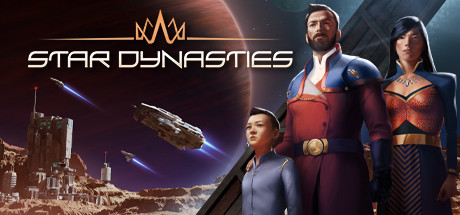
- Feudal politics in space setting
- Frustrating vassal and reputation systems
- Repetitive and shallow gameplay
- Poor and clunky user interface
Emotions
Archetypes
What players like:
Common complaints:
Gameplay feedback:
Performance notes:
Recommendations:
Other player notes:
Similar games
Blend with other games






Review evidence
Why players say this
Review evidence
Why players say this
Steam review verdict
An underrated hidden gem with engaging dynastic roleplaying and feudal space politics, though vassal and reputation systems frustrate amid repetitive, shallow gameplay and a clunky interface.
What players like
Positively Received Hidden Gem: Many reviewers describe the game as a great, enjoyable hidden gem with high recommendation. It is praised for being fun, entertaining, and worth playing.
Engaging Dynastic Stories and Roleplaying: Reviewers highlight the game's ability to generate complex, engaging dynastic stories and emergent narratives. The character-driven politics and relationships make the game immersive and memorable.
Feudal Politics in Space Setting: The game's unique blend of feudal dynasty building with a sci-fi setting is highly praised. It allows for deep politicking, intrigue, and relationship management within a space opera context.
Familiar Yet Unique Crusader Kings Alternative: The game is frequently compared to Crusader Kings but offers a distinct experience with more dynamism, control over dynasty, and easier digestion due to turn-based gameplay. It differentiates itself from Paradox titles while maintaining familiar mechanics.
Dynamic Galaxy and Living World: The galaxy feels alive due to fluid allegiances, trade, and AI actions. Actors trade colonies, demand vassalage, and war with each other, making the world dynamic.
Common complaints
Vassal and reputation frustrations: The vassal system and reputation mechanics are frustrating, with constant demands, illogical penalties, and limited tools to manage relationships. Players feel punished for actions that should be rewarding.
Repetitive and shallow gameplay: Many players find the core loop repetitive, with events and mechanics lacking variety. The game runs out of content quickly and fails to provide long-term engagement.
Poor and clunky UI: The user interface is widely criticized as unhelpful, clunky, and unintuitive. Information is buried in menus, and the UI lacks sorting and filtering options.
Lacks depth compared to competitors: The game is often compared unfavorably to Crusader Kings and Stellaris, with players noting it lacks the depth, complexity, and engaging systems of those games. Many feel it is a shallow clone.
Lack of empire management: The game offers minimal empire-building options, with limited control over planets, fleets, and vassals. Many expected 4X elements are missing or severely simplified.
Gameplay and performance
Turn-Based Gameplay Core: The game is fundamentally turn-based, with an End Turn button and action points per turn. Each turn represents 6 months and provides a limited number of actions.
Dynasty Management Focus: Players manage a dynasty rather than a nation-state, with dynastic politics and a household of distinct characters. You take on the role of a space king and expand your domain.
Vassal Interaction Systems: Vassals can demand territory, wage wars, secede, defect, and raid each other. They may also abandon a dishonorable liege.
Event and Decision Systems: The game features event systems with emergent events and an event pool. Gameplay is heavily text-based and decision-driven, creating a narrative turn-by-turn.
Turn-Based with Action Points: Each turn provides action points used as the primary resource for various actions. Unused action points automatically convert to money.
Frequent crashes and freezes: Players report random crashes over an hour into play, freezes during combat, and lock-ups on UI screens. These issues make the game unstable and interrupt gameplay.
Loading screen and progression stalls: The game frequently gets stuck on the loading screen, fails to load past character creation, and the DLC house design never loads even after 45 minutes. This prevents players from starting or continuing their games.
Slow turn processing in late game: Turn computations for the rest of the galaxy take a very long time, especially in later play. This significantly slows down the pace of the game.
Lock-up when ruler dies: The game becomes unresponsive when the ruler dies, causing a hard lock that halts gameplay. This is a critical bug that occurs at a key moment.
Resolution-related crashes: Crashes and other issues occur due to monitor resolutions, suggesting compatibility problems with certain display setups. This affects players with specific hardware configurations.
Recommendations
Negative recommendations and refunds: Some reviewers do not recommend the game in its current state, citing various issues, and some have requested refunds. They advise against buying.
Positive recommendations overall: A significant number of reviewers highly recommend the game, often with enthusiasm. They find it enjoyable and worth playing.
Recommend buying on discount: Many reviewers suggest waiting for a sale or buying at a discount, as the game may not be worth the full price. This is a common sentiment across multiple clusters.
Character-focused intrigue and diplomacy: The game is praised for its focus on character-driven stories, intrigue, and diplomacy. It appeals to those who enjoy role-playing and political maneuvering.
Niche appeal for specific tastes: Reviewers note that the game is not for everyone and appeals to specific niches, such as those who enjoy randomness, scarcity management, or tabletop-like complexity. It may not satisfy players seeking deep military mechanics.
Buying context
Community fair range: $11.00 - $20.00.
Game completion: 25.0h.
Story completion: 30.0h.
Session length: 4.0h.
Endgame: 40.0h.
Players often enjoy the opening, tutorial, and early strategic min/maxing, but the experience tends to become repetitive and notification-heavy after the mid game and as the realm grows.
Friction: Steep learning curve, especially for newcomers to the genre; Long, dense tutorial that may overwhelm or fail to explain basics; Poor UI with no sorting or filtering for long character lists; Early-game shortage of family members to fill council roles; Obvious bugs and tutorial lock-ups.
Player profiles
Paradox Dynasty Veteran: Applies Paradox habits to house expansion, diplomacy, and intrigue, relying on the in-game glossary to settle in quickly. Motivation: To manage a noble House in a familiar Crusader Kings-style feudal system without grind or DLC bloat. Stance: sale.
Character-Driven Space Feudalism Roleplayer: Roleplays rulers and families, follows narrative sub-plots and emotional events, and treats diplomacy and social drama as the main draw. Motivation: To experience emergent, character-focused stories and immerse in a Dune-like space feudalism setting. Stance: buy.
Systems-First Grand Strategist: Looks for interconnected mechanics, alliance webs, and strategic manipulation; evaluates the game against deeper military and political strategy titles. Motivation: To master deep economic, state-management, and military systems; when these are missing, the game loses them. Stance: no buy.
Platform notes
Steam Deck: Audit of the Steam Deck experience reveals that the primary friction is UI and menu readability: users call the interface 'a crime' and report that menus are unclear and make it hard to identify characters within event dialogs, a defect that is amplified on a compact handheld display. No external launcher, Proton toggle, anti-cheat, crash, or battery complaints appear in the evidence. The map and controls are reported as acceptable, and the title shows competitive potential, but an extremely early Early Access state and a narrow scarcity-management loop introduce maturity and stability risk. Net result: the game is playable but demands patience with on-screen text and menu navigation, placing it in the Tinkering Required band.
Extra review signals
Monetization: Audit of the filtered reviews finds no evidence of predatory monetization. The only monetization references concern an optional paid Bloodlines DLC and complaints about the base game's price and content scope. There are no reports of real-money gacha, loot boxes, pay-to-win, currency obfuscation, aggressive FOMO, or a cash shop. Under the provided scoring rules, traditional DLC and base-price complaints cannot exceed 20; the game appears fair with optional DLC.
Other review notes
Crusader Kings in Space Comparison: Most reviews describe the game as Crusader Kings in a space setting, emphasizing dynastic intrigue and character focus. This is the single most frequent comparison across all clusters.
Less Depth Than Stellaris/CK: Multiple reviews compare the game unfavorably to Stellaris and Crusader Kings, noting it has less depth, fewer choices, and a smaller scope. This is often attributed to the small development team.
Early Access Status: Many reviewers note the game is in Early Access, though some say it is polished or nearly complete. The developers have used Early Access to add features.
Paid Bloodlines DLC: A Bloodlines DLC exists that adds character customization and family events, but it is paid and required for some features that players expected in the base game.
Turn-Based and Streamlined Mechanics: Compared to Crusader Kings, the game is turn-based and less complicated, with a cleaner UI and more accessible character creation. Some find it more dynamic and better in several aspects.