- Outstanding Metroidvania design with rewarding exploration.
- Polished experience with excellent soundtrack and audio.
- Accessible yet challenging difficulty for broad appeal.
- Shallow, unappealing characters hinder emotional connection.
- Over-reliance on parry mechanics disrupts combat flow.
- Underwhelming boss design reduces excitement.
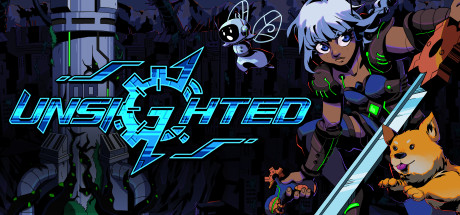
Emotions
What players like:
Common complaints:
Gameplay feedback:
Performance notes:
Recommendations:
Other player notes:
Similar games
Blend with other games




Review evidence
Why players say this
Review evidence
Why players say this
What players like
Outstanding Metroidvania Design: The game excels in map and puzzle design, offering interconnected areas, sequence-breaking, and rewarding exploration. Influences from classic Metroidvania and Zelda games are seamlessly integrated, creating a fresh and engaging experience.
Polished and Well-Crafted Experience: The game is highly polished, with fluid mechanics, responsive controls, and minimal bugs. Players consistently describe it as a passionately crafted and technically excellent title across all aspects.
Rewarding Exploration and Secrets: Exploration is a core and fulfilling aspect of the game, with richly detailed areas, hidden paths, and secrets. The interconnected world design and rewarding discoveries make it a highlight for players.
Accessible Yet Challenging Difficulty: The game offers configurable difficulty settings, including options to disable the time limit or enable invincibility. Boss fights and combat are balanced to be challenging but fair, with optional high-difficulty content for skilled players.
Excellent Soundtrack and Audio Design: The soundtrack is diverse, cohesive, and enhances the game's atmosphere. It is frequently praised for its quality, emotional impact, and ability to complement the gameplay and narrative.
Common complaints
Shallow and unappealing characters: NPCs and main characters lack depth, charisma, and meaningful development. Dialogue is often repetitive or poorly written, reducing emotional attachment and the impact of narrative choices, including the time-limit mechanic.
Over-reliance on parry/blocking mechanics: Combat is heavily dependent on parrying and blocking, which simplifies gameplay and reduces variety. This mechanic often makes encounters too easy or frustrating, especially against groups or bosses that require it.
Underwhelming boss design: Bosses lack challenge, lore relevance, or aesthetic appeal. Some designs are described as odd or annoying, and encounters often devolve into repetitive parry-spam or endurance tests.
Poor puzzle design and implementation: Puzzles are criticized for being either too simplistic, overly hand-holding, or frustratingly unsolvable. Some mechanics, like puzzle-specific items, slow pacing and feel neglected in the overall design.
Limited weapon and upgrade variety: The chip and upgrade systems are underwhelming, leading to repetitive strategies. Key items take up slots, restricting build diversity, and secondary weapons often feel useless in combat.
Gameplay and performance
Optional Time-Limit Mechanic: The game features a toggleable time-limit system affecting both player and NPCs, creating urgency. Players can disable it or extend time using rare resources like Meteor Dust, balancing pressure and accessibility.
Souls-like Parry Combat System: Combat emphasizes precise parrying, dodging, and stamina management, inspired by Soulsborne games. Mechanics like reaction windows and animation cues reward skill, with optional blocking or turn-based elements.
Puzzle-Integrated Map Design: Dungeons and maps feature puzzles, hidden terminals, and shortcuts, requiring exploration and problem-solving. Some puzzles gate progression or unlock secrets, blending challenge with discovery.
Chip/Weapon Customization System: Players customize builds via chips, weapons, and elemental upgrades, enabling diverse playstyles (e.g., melee/ranged hybrids). Crafting systems (e.g., cogs) further expand loadout options.
NPC Lifespan with Permadeath: NPCs have limited lifespans tied to a global timer, creating emotional stakes. Players can extend lifespans using resources (e.g., Meteor Dust), but deaths are permanent, affecting late-game content.
Co-op lag and performance: Players report occasional lag in local co-op mode, which disrupts gameplay smoothness. This affects the experience for two-player sessions, as noted in multiple clusters.
Save point placement impact: The placement of save terminals influences gameplay flow, with players noting its effect on pacing and progression. This design choice is critical for immersion and challenge.
Steam Deck FPS optimization: The game is locked at 60 FPS on Steam Deck when using 6W TDP, ensuring stable performance on the handheld device. This is a key technical feature for portable play.
Full controller compatibility: The game supports various controllers, including DualShock 4, enhancing accessibility for players who prefer non-keyboard inputs. This broadens the audience for the game.
Recommendations
Highly recommended for genre fans: The game is consistently recommended for fans of action, Metroidvania, and adventure genres, particularly those who enjoy parry mechanics or titles like *Hyper Light Drifter* and *Zelda*. Many reviews suggest it’s a must-play for these audiences.
Worth buying on sale: Many reviewers recommend purchasing the game during sales (e.g., at $15), emphasizing its value for money, especially for fans of the genre or those unsure about its mechanics.
Unique mechanics and emotional depth: The game stands out for its time-pressure mechanics, existential themes, and character-driven narratives. Fans of *Hyper Light Drifter* or *Nier Automata* are particularly encouraged to try it.
Best played with time mechanics enabled: Players debate the time-limit mechanic, with some advising to disable it for a stress-free first playthrough, while others argue it’s essential for the intended experience and replayability. Explorer mode is often suggested for beginners.
Accessible and flexible difficulty: Accessibility options, including difficulty modes (e.g., Explorer or Hard), make the game suitable for a wide range of players. Reviews highlight its adaptability to different playstyles and stress tolerances.
Other review notes
LGBTQ+ robot characters: The game features LGBTQ+ robot characters, particularly robot lesbians, which players describe as a unique and cute thematic element. This representation is frequently praised for its inclusivity.
Brazilian studio cultural pride: Players highlight the game's development by a Brazilian studio (Pixel Punk Studio), emphasizing its contribution to Brazilian game culture and creativity. Some also note the representation of trans developers as a point of pride.
Post-apocalyptic machine uprising: The game's setting involves a post-apocalyptic world where machines gain consciousness, leading to a war between humans and machines. A central tower covering the meteor that triggered this event is also noted.
Early access mention: Some players reference the game being in early access, though this is not framed as a critique or major point of discussion.