- Exceptional replayability and depth in gameplay
- Unique emergent storytelling experiences
- Challenging but rewarding progression system
- Steep and punishing learning curve
- Excessive bugs and glitches reported
- Poor UI and clunky controls design
Emotions
What players like:
Common complaints:
Gameplay feedback:
Performance notes:
Recommendations:
Other player notes:
Similar games
Blend with other games






Review evidence
Why players say this
Review evidence
Why players say this
What players like
Exceptional replayability and depth: Players consistently highlight the game's high replayability, depth, and engaging gameplay loop, often citing thousands of hours of gameplay. The depth of mechanics and emergent storytelling keeps the experience fresh across multiple playthroughs.
Unique emergent storytelling: The game is praised as the ultimate story generator, with procedurally generated worlds, histories, and emergent narratives that feel organic and unpredictable. Players love the humor, emotional engagement, and creativity of these stories.
Procedural world generation: The game's procedural generation creates rich, detailed worlds with histories, cultures, and ecosystems. This ensures that each playthrough feels unique and immersive, with endless possibilities for exploration and storytelling.
Challenging but rewarding: The game has a steep learning curve and can be frustrating initially, but players find it exponentially satisfying once they overcome the initial friction. The difficulty and complexity are part of its appeal for fans of deep simulations.
Steam version improvements: The Steam release is widely regarded as a significant upgrade over previous versions, with better graphics, UI, accessibility, and regular updates. Players appreciate the balance between convenience and the game's legendary chaos.
Common complaints
Steep and punishing learning curve: The game is widely criticized for its steep learning curve, which is described as overwhelming and unfriendly to new players. Many players struggle with basic mechanics due to poor in-game explanations and excessive complexity.
Excessive bugs and glitches: The game suffers from numerous bugs, ranging from minor annoyances to game-breaking issues. These include crashes, disappearing orders, dwarves getting stuck, and performance problems that severely impact gameplay.
Poor UI/UX design: The user interface is frequently described as outdated, clunky, and unintuitive, resembling designs from the late 1990s or early 2000s. Navigation, menu systems, and lack of basic features (e.g., hotkey displays) contribute to player frustration.
Clunky and unintuitive controls: Players frequently report frustration with the game's control scheme, describing it as clunky, unintuitive, and difficult to master. The lack of hand-holding and poor feedback exacerbates the learning curve, making early gameplay particularly frustrating.
Insufficient in-game tutorials: The game lacks effective in-game tutorials and explanations for basic mechanics, forcing players to rely on external resources. The tutorial is often described as unhelpful or nonexistent.
Gameplay and performance
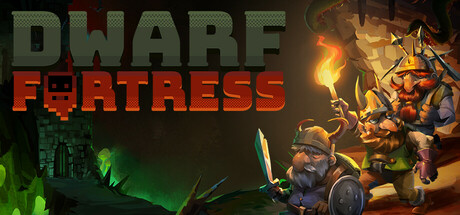
Fortress Management Core Gameplay: Fortress management is the central gameplay loop, involving resource gathering, construction, defense, and societal needs. Players build and manage dwarven colonies, often leading to cyclical rise-and-fall scenarios due to environmental or internal threats.
Dual Gameplay Modes: Fortress & Adventure: Players can switch between fortress management (colony sim) and adventure mode (roguelike exploration/combat). Each mode offers distinct mechanics and storytelling opportunities.
Dwarf AI and Personality Systems: Dwarves exhibit autonomous behaviors, personalities, and emotions, leading to dynamic interactions. Their actions (e.g., neglecting tasks, berserking, or forming relationships) drive emergent gameplay.
Combat & Creature Interactions: Combat is semi-turn-based and precision-focused, with dynamic threats (e.g., goblins, forgotten beasts). Creatures exhibit unique behaviors, adding depth to encounters.
Crafting & Industry Systems: Players craft thousands of items with material-specific properties (e.g., steel vs. featherwood axes). Advanced systems like artifact creation and guilds add complexity.
Severe FPS drops in large forts: Players report significant performance degradation when managing large populations (>300 dwarves) or complex sites, with FPS dropping to as low as 10. This issue is exacerbated by ambitious actions like emptying rivers or spawning excessive entities (e.g., rodent armies).
Frequent crashes in adventure mode: Adventure mode is particularly prone to crashes, especially in goblin sites or fortresses. Players report constant instability, making the mode nearly unplayable in some cases.
Game fails to launch on some systems: Players with modern hardware (e.g., RTX 3050, 32GB RAM) report the game failing to launch or displaying a black screen. This issue persists despite troubleshooting and updates.
Mod and compatibility issues: Players encounter errors related to duplicate mods and request MacOS binary support. Some report the game running on niche systems like Bazzite Linux, but compatibility remains inconsistent.
Recommendations
Highly recommended for genre fans: The game is strongly recommended for fans of complex systems, emergent storytelling, and deep simulations. Many players emphasize its unique experience and replayability, making it a must-play for enthusiasts of the genre.
Emergent storytelling and creativity: The game is praised for its emergent storytelling, humor, and replayability. Players enjoy creating unique scenarios and investing emotionally in characters, making it ideal for those who value creativity and long-term play.
Not for everyone, niche appeal: The game has a cult following but is not universally appealing. Players advise trying the free version first to gauge suitability, as it requires significant time investment and patience.
Worth the price and effort: Despite its challenges, players argue the game is worth its price tag, especially for those willing to push through the learning curve. The Steam Edition is recommended for newcomers due to its accessibility.
DFHack essential for quality of life: Many players suggest using DFHack, a modding tool, to improve performance, accessibility, and overall gameplay experience. It is considered a necessity for mitigating frustration and enhancing usability.
Other review notes
Unique development history: The game's development began in 2002 and has undergone changes in ownership, with a slow, methodical approach that continues to this day. The developer's backstory and dedication are often praised, including crowdfunding efforts for personal projects.
Cultural impact and legacy: The game has a long-standing cult following and significant cultural recognition, influencing the gaming industry and maintaining a dedicated player base over time. Its historical significance is frequently highlighted in reviews.
Free and remastered versions: Originally released as a free-to-play game in 2006, the game now has a remastered Steam version. Players compare the free and Steam versions, noting differences in accessibility and features.
Infinite and long-term playtime: The game offers infinite playtime potential, with some players reporting decades of engagement. Its depth and replayability are key attractions for its adult target audience.
Functional but minimalist design: The game's visuals are described as functional rather than flashy, with minimal sound and music. This design choice is often noted as part of its charm and focus on gameplay depth.