- Stunning art style
- Unique turn-based strategy
- Engaging tactical combat
- Gameplay is repetitive
- Combat is tedious
- Difficulty balancing inconsistent
Emotions
Archetypes
What players like:
Common complaints:
Gameplay feedback:
Performance notes:
Recommendations:
Other player notes:
Similar games
Blend with other games





Review evidence
Why players say this
Review evidence
Why players say this
Steam review verdict
Despite stunning art and unique turn-based strategy with engaging tactical combat, repetitive tedious gameplay and inconsistent difficulty balancing hold it back.
What players like
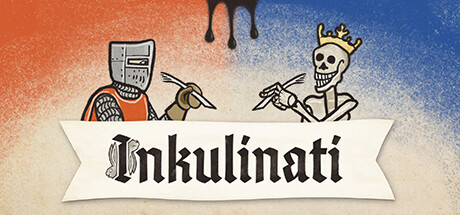
Stunning art style: The art is consistently highlighted as great, beautiful, and outstanding, with a unique hand-drawn medieval manuscript aesthetic. This visual identity is a major draw.
Unique turn-based strategy: The game is praised for its fun and unique take on turn-based tactics, combining strategic depth with a refreshing style. Players appreciate the chess-like positioning and board game feel.
Engaging tactical combat: Turn-based tactical combat is described as engaging and not dragging on, with battles that are tactically deep. The arena-based format is well-received.
Brilliant overall game: Several reviews call the game brilliant, amazing, and even a masterpiece, indicating high overall satisfaction. This sentiment reinforces the game's quality.
Great strategy possibilities: Players note the enormous range of strategy possibilities and tactical options, allowing for deep and varied gameplay. The game offers plenty of strategic depth.
Common complaints
Gameplay is repetitive and boring: Players consistently report that the gameplay loop is tedious, monotonous, and lacks variety, leading to a loss of interest over time. This is a widespread complaint across multiple clusters.
Combat is tedious and fatiguing: Combat mechanics are described as tedious, causing fatigue due to slow animations and lack of engagement. This contributes to the overall repetitive experience.
Difficulty balancing is inconsistent: The game's difficulty is often too easy or too difficult, lacking a smooth progression curve. This leads to frustration for players seeking a fair challenge.
Poor AI reduces gameplay quality: The AI is considered unintelligent, making encounters less challenging and more predictable. This diminishes the strategic depth and enjoyment.
Awful user interface design: The user interface is criticized as atrociously bad and awful, hindering navigation and overall player experience. This adds to frustration.
Gameplay and performance
Turn-based tactical combat: The game is fundamentally a turn-based strategy title with tactical, grid-based combat that often draws comparisons to chess and Worms. Players command units, push opponents, and leverage positional advantages, emphasizing thoughtful planning over real-time action.
Ink resource management: Ink is the primary resource used to summon and draw units onto the battlefield, regenerating each turn. This ink management system adds a layer of strategy, requiring players to decide which creatures to field at any moment.
Roguelike campaign structure: The game features roguelike progression elements such as a branching map, random events, and shops that modify each run. This structure provides high replayability by forcing different tactical approaches each playthrough.
Diverse creature abilities: Each creature in the game has distinct abilities, attacks, and special powers that create a wide variety of strategic options. Players must learn and combine these unique traits to succeed in battle.
Deckbuilding strategic elements: In addition to creature abilities, the game incorporates deckbuilding mechanics where players build their roster of units and strategic options before battles. This adds a layer of strategic planning and customization to the turn-based combat.
Game fails to launch: A notable number of reports indicate that the game is failing to launch on PC or Steam Deck, preventing access entirely.
Runs smoothly on systems: Some players report that the game runs smoothly on their systems, indicating satisfactory performance for certain configurations.
Works well on Steam Deck: Users note positive experiences specifically on the Steam Deck, suggesting decent compatibility with the handheld device.
Recommendations
Recommended for turn-based fans: Many reviewers recommend the game to fans of turn-based strategy, tactics, and roguelite genres. It is seen as a good fit for players who enjoy strategic thinking and logic puzzles.
Recommended overall: Several reviewers give a general strong recommendation, finding the game completely worth it and definitely worth playing. The positive sentiment is clear and consistent.
Worth it on sale: A number of reviewers advise purchasing the game during a sale, noting it offers good value at a discount. Some caution that it may not be worth the full price.
Not recommended currently: A few reviewers find the game difficult or impossible to recommend in its current state. This suggests significant issues or dissatisfaction with the present version.
Recommended to everyone: Some reviewers give a broad recommendation to all players, indicating the game has wide appeal and is suitable for a general audience.
Buying context
Community fair range: $3.00 - $5.00.
Game completion: 37.0h.
Story completion: 11.5h.
Inkulinati requires enduring a lengthy and complex tutorial (around 3 hours) before the gameplay clicks and becomes deeply engaging, offering a rewarding strategy experience for patient players.
Reported time to anchor: 3h.
Friction: very long tutorial (3+ hours); steep learning curve; heavy initial information load; complex mechanics overwhelming at start; slow pacing early on; lack of user-friendly popups.
Unlock drivers: completing the tutorial / Battle Academy; understanding core mechanics; getting past the initial hurdle; learning unit abilities and ink management; unlocking meta-progression upgrades.
Player profiles
Tactical Strategist: Carefully plans unit and talent synergies, values positioning and movement, enjoys trial and error to discover powerful combinations. Motivation: Optimizing synergies and mastering positioning in tactical battles. Stance: buy.
Casual Aesthetic Enjoyer: Plays at normal or easy difficulty, enjoys the atmosphere, may not seek deep optimization. Motivation: Relaxation and enjoyment of the charming medieval art and light tactical puzzles. Stance: sale.
Disappointed Mechanic Critic: Not satisfied; likely tried to engage deeply but hit frustrations. Motivation: Initial interest in tactical gameplay, but frustrated by procedural repetition and bugs. Stance: no buy.
Platform notes
Steam Deck: The game runs well for most Steam Deck users, with several completing it entirely on Deck. However, some report a steep controller learning curve and one user encountered a launch failure, indicating occasional tinkering may be needed.
Linux and Proton: The user reviews primarily report positive Steam Deck experience, with users completing the game and praising its compatibility. One isolated report of a launch failure on both PC and Steam Deck exists, but the dominant evidence shows successful gameplay without Linux-specific friction.
Extra review signals
Monetization: The user feedback focuses on the base price and optional cosmetic DLC, which are not considered microtransactions under standard definitions. There is no evidence of in-game purchases, pay-to-win mechanics, or aggressive monetization. The score reflects a fair one-time purchase model with DLC, staying well within the non-predatory range.
Other review notes
Varied campaign completion time: Players report a wide range of playtimes for the campaign, from 2.6 hours for a first clear to 25 hours, with most completing a single playthrough in 4-10 hours.
Full content after three runs: Multiple playthroughs (2-3) are required to unlock all content, units, the sixth act, and the full story, which may be demanding for some players.
Often acquired on discount: Many players accessed the game through subscriptions like Xbox Game Pass, discounted bundles such as Humble Bundle, or during sales at a low price.
Created by small Polish studio: The game is developed by a small Polish studio (Yaza Games, formerly Daedalic), and players appreciate the developers' passion and attention to detail.
Full completion in 17-23 hours: Completing the campaign and earning all achievements typically takes 11-23 hours, with one player finishing the highest difficulty in 17 hours.