- Exceptional traditional roguelike experience
- Excellent user interface
- Visually stunning ASCII and tiles
- Steep learning curve
- Artificial difficulty
- Complex mechanics overwhelming
Emotions
Archetypes
What players like:
Common complaints:
Gameplay feedback:
Performance notes:
Recommendations:
Other player notes:
Similar games
Blend with other games





Review evidence
Why players say this
Review evidence
Why players say this
Steam review verdict
An exceptional traditional roguelike with a superb interface and gorgeous ASCII/tiles, though its steep curve, artificial difficulty, and overwhelming mechanics may deter newcomers.
What players like
Exceptional Traditional Roguelike Experience: Cluster 1 and Cluster 6 both highlight that the game is one of the best traditional roguelikes ever played, with unique visuals, lore, and high replayability. Players consistently describe it as a standout example of the genre.
Excellent User Interface: Clusters 3, 15, 16, and 50 praise the UI as excellent, intuitive, and mouse-friendly. It stands out among roguelikes with modern polish and a layout that works for both mouse and keyboard users.
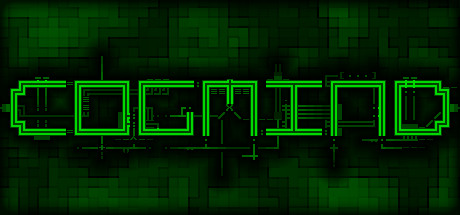
Visually Stunning ASCII and Tiles: Clusters 11, 13, 23, 40, and 46 celebrate the gorgeous ASCII art that renders each part of the game, as well as the option for tiles. Players find the visuals vivid, atmospheric, and soulful.
Outstanding Sound Design: Clusters 4, 43, and 47 highlight top-notch sound design that immerses players, with each weapon and explosion distinct. The audio plays a major role in making the world feel alive.
Excellent Mouse and Keyboard Controls: Clusters 12, 44, and 59 highlight that the game controls extremely well with mouse and keyboard, and can be played exclusively with mouse or keyboard. The mouse interface is intuitive and hotkeys are easy to learn.
Common complaints
Steep learning curve: The game is not easy to pick up and requires significant time and effort to understand its complex systems. Even experienced roguelike players find it tough to get good.
Difficulty is artificial: Some players feel the difficulty is based on increased numbers and RNG rather than meaningful choices. The game punishes mistakes that could not have been anticipated.
Complex mechanics overwhelming: The game has an overwhelming number of mechanics that are not intuitive, such as parts, energy, and overheating. This complexity can be difficult to grasp without external help.
Combat is discouraged: The game heavily favors stealth and avoidance over combat, making combat builds less viable. Players are often overwhelmed by endless waves of enemies if they engage in fights.
Insufficient tutorials and guidance: Many players report a lack of tutorial or in-game explanations, forcing them to rely on external resources like wikis and guides. The game does not teach players what matters, leading to confusion.
Gameplay and performance
Turn-based traditional roguelike: The game is a turn-based traditional roguelike with permadeath, procedural generation, and no meta-progression between runs. Difficulty stems from understanding game mechanics rather than twitch reflexes.
ASCII and tileset visual modes: The game offers both ASCII art and a tileset mode, with detailed ASCII representations of items and an ASCII gallery collection. Players can toggle between the two display styles.
Play as customizable robot: Players control an awakened robot core of unknown origin, rebuilding themselves with parts scavenged from enemies or the environment. The robot can be customized with different parts, including flight units and hacking suites.
Tactical grid-based combat: Combat is tactical and turn-based on a grid, with difficult choices. Weapons include shooting, lasers, rockets, and electromagnetic effects that corrupt enemies from within.
Multiple adjustable difficulty options: Players can choose from multiple difficulty settings, including easier modes for the first few runs and a very challenging Rogue difficulty. Lower difficulties help soften the experience for newcomers.
Runs on low-end hardware: Players note the game can run on very low-spec systems, even humorously saying it can run on a toaster. This suggests very low system requirements and good accessibility for older or weaker devices.
Recommendations
Recommended for roguelike fans: The overwhelming majority of positive reviewers recommend this game specifically to players who already enjoy roguelikes. Fans of the genre are told it is a excellent choice and worth adding to their collection.
Complex mechanics require patience: The game has opaque mechanics and demands patience and commitment to learn. Several reviewers warn that it takes many hours to grasp and players may drop it before that.
Not for everyone: Many reviewers note the game will not appeal to all players due to its difficulty, ASCII graphics, and deep systems. It is best for those who can overcome these barriers.
Recommended for experienced roguelike players: The game is best suited for veterans of traditional roguelikes who enjoy mastering difficult, complex games. It is not ideal for newcomers to the genre.
Appeals to fans of similar games: The game appeals to fans of games like FTL, Into the Breach, Caves of Qud, Dwarf Fortress, and other deep, complex titles. Those who like such games will feel at home.
Buying context
Community fair range: $20.00 - $25.00.
Game completion: 50.0h.
Story completion: 500.0h.
Session length: 2.0h.
Endgame: 300.0h.
Cogmind often starts with a steep, obtuse early phase, but for many players it clicks after they push through the learning cliff, understand the systems, and unlock build variety. Conflicting reports describe a smoother early game or persistent tedium, but the strongest direct evidence supports delayed enjoyment.
Reported time to anchor: 30h.
Player profiles
Systems-Mastery Roguelike Veteran: Analyzes parts, slots, hacking, combat, and resource management; debates balance and optimizes runs for tactical advantage. Motivation: Mastering deep, interlocking roguelike systems and discovering many viable builds across long-term play. Stance: buy.
Traditional Roguelike Newcomer: Learns by play and in-game guidance, experiments cautiously, and may use easier difficulties or beginner guides. Motivation: Getting into traditional roguelikes through a polished, readable game that does not require constant wiki use. Stance: buy.
Stealth-Information Tactician: Stealth and evasion builds, hacking, sensor use, patrol avoidance, and tactical diversion of enemies. Motivation: Using intel, sensors, and map knowledge to avoid or manipulate enemies and survive through superior information. Stance: buy.
Platform notes
Steam Deck: The audit finds that Steam Deck compatibility is hampered primarily by the game's fixed UI scaling and font size. Reviewers warn that the interface cannot be made readable on smaller screens and requires a large monitor, which makes the Deck's screen effectively unusable for comfortable play. Proton compatibility is reported as flawless, and Steam Cloud saves support cross-device continuity, but the unreadable UI remains the dominant friction point.
Linux and Proton: Linux/Proton feedback for this game is overwhelmingly positive and consistent. Reviewers report that it runs flawlessly under Proton, works well under WINE, and is playable on a Linux laptop with cloud saves carrying progress between machines. The only Linux-specific negatives are a minor WINE limitation where the game attaches only to the primary display, and a single isolated complaint about the lack of a native Linux build that is contradicted by other users' successful Proton and WINE sessions. No anti-cheat, DRM, launcher, or driver blockers tied to Linux appear in the evidence, and no workarounds or special launch options are reported as necessary.
Extra review signals
External guides: The filtered reviews center on the wiki as a source of instructional knowledge about hidden and complex game mechanics. Users describe needing to study wiki entries and external guides to understand systems that the game only hints at, while others praise Cogmind for being transparent enough to play without a wiki. No complaints reference farming, drop rates, loot tables, crafting requirements, inventory management, or navigation/bug issues, so the primary barrier is learning systems rather than resource grinding, valuation, or spatial navigation.
Other review notes
Feels like finished game: Reviewers consistently state that the game feels like a 1.0 release despite its early access status. Some mention it is feature-complete and could be sold as a full game with future content as DLC.
Long-term early access status: Many reviewers note the game remains in early access even after years of development, with some pointing out it has been in early access since 2020. Despite this label, the game is often described as fully playable and content-rich.
Compared to Caves of Qud: Several reviewers compare the game to Caves of Qud, often favorably, noting similar polish and appeal. Some mention it as a point of reference even if they haven't played Caves of Qud.
Comparable to classic roguelikes: The game is frequently compared to other traditional roguelikes such as Dwarf Fortress, Kenshi, Noita, and TOME. Reviewers highlight its complexity and depth as a modern take on the genre.
DRM-free purchase with Steam key: Buying from the developer's website provides a DRM-free version and also includes a Steam key. This option is appreciated by players who prefer DRM-free copies while still having Steam access.