- Fresh roguelike twist
- Great pixel art style
- High build variety
- UI and visibility issues
- Balance issues and overpowered characters
- Frequent crashes and freezes
Emotions
Archetypes
What players like:
Common complaints:
Gameplay feedback:
Performance notes:
Recommendations:
Other player notes:
Similar games
Blend with other games






Review evidence
Why players say this
Review evidence
Why players say this
Steam review verdict
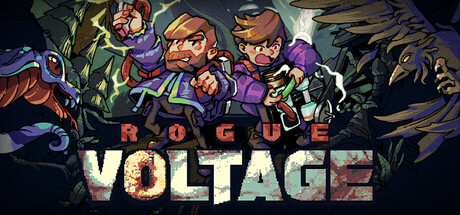
A fresh roguelike twist with great pixel art and high build variety, but suffers from UI and visibility issues, balance problems with overpowered characters, and frequent crashes.
What players like
Fresh roguelike twist: Players praise the game for offering a refreshing and unique take on the roguelike genre, blending traditional elements with puzzle and engineering mechanics.
Distinct character playstyles: Each character plays completely differently, with unique skills and synergies, providing distinct gameplay experiences and rewarding varied strategies.
Great pixel art style: The pixel art style is widely appreciated for its appeal and polish, contributing positively to the game's atmosphere.
Solid gameplay fundamentals: The core gameplay is described as solid, well-designed, and fun, with a good balance of mechanics.
Good value for price: Players feel the game offers good value due to its content volume and reasonable price, supported by a demo and early access quality.
Common complaints
UI and visibility issues: The user interface is described as unintuitive, clunky, and hard to read. Problems include similar-looking ports, overlapping wires, and poor visual clarity.
Balance issues and overpowered characters: Some characters are seen as overpowered or completely OP, while others are unviable. Balance adjustments are widely requested.
Repetitive and boring gameplay: Gameplay becomes routine and boring after a few runs, with similar strategies and limited variety. Late-game homogenization and lack of replay value are noted.
High learning curve: The game is considered complex and obscure, especially for beginners. Players find the first hours steep, with confusing mechanics and poor explanations.
Wiring and connections tedious: The wiring mechanic is frequently called tedious, cumbersome, and cramped. Players find constant rewiring and manual connections frustrating, reducing enjoyment.
Gameplay and performance
Roguelike with module wiring: The game is a roguelike that focuses on module wiring, engineering, and circuit-connecting mechanics. Players build and connect modules on a character rack to create synergies and power their abilities.
Deckbuilding with circuits: The game combines deckbuilding with circuit and wiring mechanics, offering a unique twist on traditional deckbuilding roguelikes. Players collect cards or modules to build their deck and wire them together for effects.
Turn-based tactical combat: Combat is turn-based with tactical planning and automation elements. Players engage in strategic battles that involve module management and circuit wiring.
Time axis manipulation: A time track or timeline system determines turn order, and players can manipulate it through modules and gravity charge mechanics. This adds a strategic layer to combat pacing.
Module synergy and combinations: Players can combine modules to create synergies, build machines, or form giant mechs for battle. The synergy between characters, skills, and modules is central to the gameplay.
Frequent crashes and freezes: Multiple users report the game crashing or freezing, including startup crashes, freezes when viewing effects, and crashes that erase run progress. These issues significantly harm the gameplay experience.
Performance degraded since early access: One user specifically notes that game performance has worsened compared to the early access version, indicating potential regression in optimization or updates.
Steam Deck performance praised: A user reports that the game runs smoothly on Steam Deck, highlighting good compatibility and performance on the handheld platform.
Recommendations
Highly recommended overall: Many reviews explicitly recommend the game, using phrases like 'definitely recommend', 'highly recommended', and 'wholeheartedly recommend'. This indicates a strong positive reception.
Recommended for roguelike fans: The game is particularly recommended for fans of roguelike and roguelite games, especially those seeking something new or unique. This suggests it fits well within the genre.
Demo recommended for fence-sitters: Multiple reviews strongly advise trying the demo first if unsure about purchasing the full game. They state that the demo is a good metric for enjoyment and that the full game is even better.
Unique mechanics highlighted: Reviewers praise the game's unique mechanics, wild combos, and synergy systems. It stands out for its creative combat and innovative gameplay loops.
Good for deckbuilder enthusiasts: Reviews recommend the game to fans of deckbuilding games, particularly those who enjoy Slay the Spire or similar titles. It is seen as a strong entry in the genre.
Buying context
Community fair range: $10.00 - $15.00.
Session length: 1.0h.
Endgame: 16.0h.
The game initially presents significant friction through cluttered UI, precise wiring, and lack of undo, but once players understand the module synergies and adjust to the mechanics, it becomes highly addictive. Fun typically begins after a short learning period, often within minutes for motivated players.
Reported time to anchor: 5m.
Friction: confusing visual clutter with items that look like jumbled engines; tedious wiring and micromanagement of cables; lack of undo function and accidental swaps; tiny backpack limiting inventory; imprecise mouse clicks leading to unintended selections; frustrating progression where losing can feel more rewarding than winning.
Unlock drivers: discovering powerful module synergies; becoming comfortable with precise placement and wiring; unlocking meta-progression options that increase choices per run; experiencing varied builds across runs preventing repetition.
Player profiles
Mechanics Innovator: Experimental tinkerer who enjoys setting up elaborate chain reactions and watching them execute, often in short bursts. Motivation: Discovery and optimization of complex module synergies. Stance: buy.
Roguelite Strategist: Tactical and adaptive, carefully managing turn order and timing of abilities to overcome enemies. Motivation: Strategic mastery and variety of viable builds across runs. Stance: sale.
Cautious Early Adopter: Cautiously engaged, often trying the demo or playing early builds, but holding back on full commitment until key issues are resolved. Motivation: Potential of the game's unique mechanics, tempered by current limitations. Stance: deep sale.
Platform notes
Steam Deck: The game shows a mixed Steam Deck experience: it is officially verified and runs great for some users thanks to a native Linux build, but suffers from clunky default controls, poor dpad navigation in the base camp, and a critical stability bug that causes progressive lag and total failure to launch after a few rounds. These issues make the game unreliable for a significant subset of users.
Linux and Proton: The game features a native Linux build, is Steam Deck verified, and runs without any reported compatibility issues, delivering an excellent out-of-the-box experience for Linux users.
Other review notes
Localization quality appreciated: Players are grateful for the Japanese translation available during early access and also note that Spanish translation is present despite Steam's indication to the contrary, highlighting good localization support.