- Fun core gameplay and co-op
- Great variety of weapons and missions
- Unique atmosphere and graphics
- Poor stability and frequent crashes
- Grindy gameplay and poor balance
- Negatively impacted by developer decisions
Emotions
Archetypes
Hardware
What players like:
Common complaints:
Gameplay feedback:
Performance notes:
Recommendations:
Other player notes:
- -
No data available
Similar games
Blend with other games




Review evidence
Why players say this
Review evidence
Why players say this
Steam review verdict
Engaging co-op with varied weapons and missions and a unique atmosphere, but frequent crashes, grind, and poor balance are worsened by questionable developer decisions.
What players like
Core gameplay is fun: Multiple reviews highlight that the core gameplay loop is enjoyable, especially during the initial experience or tutorial. The game is described as fun and amazing at its foundation.
Co-op with friends is great: Playing with friends in co-op is a major positive, with mentions of cooperative gameplay being fun and cool explosions. The game is highly cooperative, except for the Galactic War mode.
Graphics and atmosphere praised: The graphics, sound, aesthetic, and unique atmosphere are praised. The spectacle is described as awesome, contributing to an incredible experience.
Good variety in weapons and missions: The game offers lots of weapons, diverse biomes and modes, and each mission is unique. This variety is appreciated by players.
Optimization and file size improved: Optimization is good, and the file size has been reduced from 150 GB to just over 20 GB with patches. This technical improvement is noted positively.
Common complaints
Game stability is poor: Players report frequent crashes, including full system crashes, and bugs that persist across updates and even after reinstalling the game.
Developers ruin the experience: Each update is seen as making the game worse, with nerfs to fun weapons and strategies, and a feeling that developers actively make the game less enjoyable.
Gameplay is boring and grindy: The gameplay is described as lackluster, monotonous, and dull, with tedious grinding for premium currency and sidegrade items.
Community is toxic: The community is polarized and filled with hate, particularly on Discord and Reddit, creating a negative atmosphere.
Weapons are poorly balanced: Many weapons are useless or broken, with only a few viable options, and balancing changes often nerf effective gear without addressing issues.
Gameplay and performance
Cooperative third-person shooter: The game is a cooperative third-person shooter with chaotic gameplay and stratagems. Players work together in a squad to complete objectives against hordes of enemies.
Progression passes and equipment: The game has progression passes and equipment systems that gate content. Players must grind or pay to access new items, which can be tedious.
Horde shooter mechanics: The game features horde shooter mechanics with a leveling system, battle pass progression, and a weapon store. Players fight waves of enemies while managing resources and upgrades.
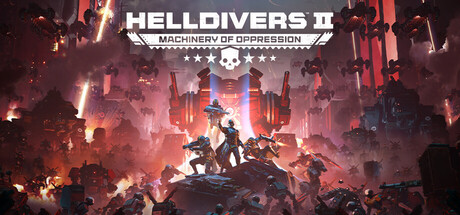
Unique atmosphere and graphics: The game has a unique atmosphere and beautiful graphics that enhance immersion. The spectacle of explosions and enemy hordes is visually impressive.
Support system with exosuits: Players can use exosuits and stratagems, like an elite shock trooper with overhead support. This adds strategic depth and spectacle to combat.
Frequent PC crashes on launch: Many players report that the game crashes and shuts down their entire PC at startup or when entering the main menu, with no error notification. This issue has persisted since release.
Poor optimization on various hardware: The game is widely criticized for poor optimization, causing severe lag, stuttering, and performance issues on both low-end and high-end PCs, as well as on Steam Deck and Xbox. High GPU temperatures and frame rate drops are common.
No error messages for crashes: Many crashes occur without any error notification, making troubleshooting difficult. The game simply shuts down or goes to a black screen without explanation.
Unplayable due to crashes: Multiple users describe the game as unplayable because it crashes before or during gameplay, including after tutorials, with some experiencing hard system freezes. Attempted fixes like reinstalling, verifying files, and disabling overlays have failed.
Crashes during gameplay: Players experience frequent crashes when selecting missions, at the ship screen, or during combat, often leading to full system shutdowns. These occur on high-end hardware with proper drivers.
Recommendations
Strongly not recommended overall: The vast majority of feedback advises against purchasing the game, citing crashes, developer neglect, toxic community, and poor value. Many users explicitly say 'not recommended' or 'do not buy'.
Toxic community and developer issues: Many reviews highlight a toxic community and poor developer communication, with nerfs and balance changes making the experience worse. Some accuse developers of actively ruining the game.
Technical issues and crashes: Frequent crashes and performance problems are major turnoffs, with multiple users reporting that the game is unplayable on low-end PCs and Steam Deck. Some mention unresolved sound and upscaling bugs.
Not for solo or casual players: The game is heavily recommended for group play, but unsuitable for solo or casual players due to lack of guidance, punishing mechanics, and slow progression. Playing with friends is essential for fun.
Monetization and paywall concerns: The game is described as a 'ripoff' with paywalled content, shallow progression, and questionable quality. Users warn about constant spending for new content or time grinds.
Buying context
Community fair range: $20.00 - $35.00.
Helldivers 2 delivers immediate fun, particularly in co-op, but enjoyment fades after the first hours due to repetitive loops, technical problems, and sparse endgame content, resulting in a distinct drop-off.
Friction: Steep learning curve; Technical instability (bugs, crashes, optimization); Repetitive mission structure; Solo play is less enjoyable; Grindy progression and paywalled content; Friendly fire can cause frustration.
Unlock drivers: Playing with friends; Learning game mechanics and stratagems; Unlocking new weapons and upgrades; Active and helpful community; Mastering higher difficulties.
Player profiles
Grind-Weary Completionist: Methodically plays missions to maximize currency and XP gain, often on lower difficulties to farm efficiently. Motivation: Unlocking all weapons, stratagems, and cosmetics through in-game progression. Stance: sale.
Cooperative Chaos Seeker: Plays in a squad, communicates, embraces friendly fire as a feature, and focuses on team coordination. Motivation: Experiencing emergent, hilarious, and intense cooperative moments with friends or friendly randoms. Stance: buy.
Disenfranchised Veteran: Has mastered high-difficulty missions, often uses meta loadouts, but feels forced into a narrow playstyle. Motivation: Long-term engagement and mastery, but driven away by perceived anti-player balance changes and lack of meaningful endgame. Stance: no buy.
Platform notes
Performance varies widely across hardware cohorts; high-end Windows and all Linux/Steam Deck cohorts predominantly report poor performance and crashing, while mid-range Windows cohorts show mixed results with both stable and problematic experiences.
Windows 8-11GB VRAM: mixed. Users report both stable performance and frequent crashes, with performance often worsening after updates.
Windows <8GB VRAM / <16GB RAM: mixed. Some users find it surprisingly optimized on low-end PCs, while others report unacceptable performance and bugs.
Windows 12-15GB VRAM / 16-31GB RAM: mixed. Experiences vary widely; some have smooth gameplay while others face severe crashes and performance degradation.
Steam Deck: Helldivers 2 suffers from severe technical issues on Steam Deck: frequent crashes, poor optimization that fails even on high-end PCs, a kernel-level anti-cheat that blocks or damages systems, and a lack of proper upscaling support. While some users report limited playability after extensive tinkering, the overall experience is unstable and frustrating.
Linux and Proton: Helldivers 2 has inconsistent Linux/Proton compatibility. Recent updates frequently break the game on Linux, forcing users to rely on community Proton patches and custom launch options to regain functionality. While some players achieve great performance, many face launch failures, crashes, and anti-cheat related hassles. The developer has not maintained reliable Linux support.
Extra review signals
Monetization: Helldivers 2 features a monetization system where almost all new gameplay content (weapons, stratagems, vehicles) is locked behind Warbonds, which require premium Super Credits. While the currency is technically farmable in-game, the rate is extremely slow, encouraging either tedious grinding or real-money purchases. This combination has generated strong negative sentiment among players who feel the game is pay-to-win and exploitative for a full-priced title.
Mod reliance: The game has notable bugs (crashes, mission incompletion) and performance issues that partially rely on community mods to mitigate. Audio quality also benefits heavily from mods, though updates break them. While not universally broken, the experience is significantly improved by mods, and some users consider them necessary for enjoyment.
External guides: Players are heavily dependent on the Helldivers wiki for essential game information, including hidden mechanics, stats, and undocumented balance changes. Performance issues such as system freezes when alt-tabbing further degrade the experience. While resource grinding is explicitly mentioned, the overarching complaint is a lack of in-game transparency across multiple aspects.