- Top-tier hacking simulator
- Highly realistic hacking mechanics
- Challenging and well-designed puzzles
- Poor UI and usability
- Buggy and incomplete
- Persistent online server issues
Emotions
Archetypes
What players like:
Common complaints:
Gameplay feedback:
Performance notes:
Recommendations:
Other player notes:
Similar games
Blend with other games




Review evidence
Why players say this
Review evidence
Why players say this
Steam review verdict
Top-tier hacking sim with realistic mechanics and challenging puzzles, but poor UI, bugs, incompleteness, and persistent server issues hold it back.
What players like
Top-tier hacking simulator: Reviewers consistently praise the game as one of the best hacking simulations available, striking a perfect balance between fun and realism. Many consider it a must-buy for fans of the genre.
Fun and engaging gameplay: Players find the game enjoyable, fun, and addictive, with a good mix of hacking and puzzles. The gameplay keeps them engaged for hours.
Highly realistic hacking mechanics: The game accurately replicates real-life hacking tools and methods, based on real algorithms and software. This realism makes players feel like they are performing actual hacking tasks.
Challenging and well-designed puzzles: The puzzles are challenging, well thought out, and require critical thinking and detective work. They are a highlight of the game.
Beautiful graphics and UI: The graphics are beautiful, and the user interface is one of the best reviewers have seen, with pleasing aesthetics and smooth animations.
Common complaints
Poor UI and Usability: Players frequently complain about the cluttered interface, numerous UI bugs, and poor usability. Issues include multiple terminals for each command, inability to select text, unresponsive clicks, and a steep learning curve due to the interface.
Buggy and Incomplete: The game is riddled with bugs and feels like a beta rather than a finished product. Players encounter progression-breaking bugs, mission bugs, and missing content that hampers the experience.
Persistent Online Server Issues: Many players report that the game is unplayable due to dead servers, constant online requirements, connection drops, and endless loading. The always-online requirement also affects single-player content and causes frequent server-related blocks.
Linear Forced Solutions: The game often requires a specific solution intended by the developer, ignoring alternative valid approaches. This linearity makes missions feel restrictive and forces players to use exact tools and methods, leading to frustration.
Unclear Tutorial and Onboarding: The tutorial is often broken, confusing, or incomplete, leaving players stuck or unsure of how to proceed. Many players report getting stuck in the tutorial or finding it overly long and tedious.
Gameplay and performance
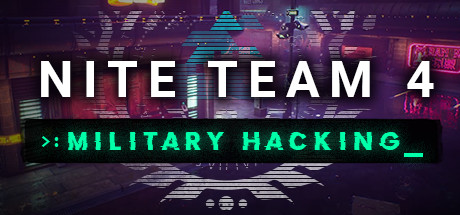
Hacking Simulation Game Identity: The game is strongly identified as a hacking simulation with missions, terminals, and tools. It features realistic penetration testing mechanics and a NITE Team 4 intelligence agency setting.
Out-of-Game Research Required: Open world missions require extensive external research using Google and real websites. This creates a deep, immersive experience but can be time-consuming.
Tutorial and Academy Missions: Tutorial missions and an academy mode provide structured instructions for new players. The tutorial includes many steps and basic missions to ease learning.
Open World with Bounties: The game features an open world with bounty missions. Bounties have timers and require perfect answers regarding character and case details.
Realistic Cybersecurity Tools: Players use tools inspired by real cybersecurity such as Kali Linux, including password crackers, social engineering toolkits, and VHOST mapping. The game focuses on reconnaissance and exploitation.
Loading and server issues: The game often fails to load dialogue or assets on slow connections, and servers are sometimes unavailable, preventing play. Even on good internet, the game can stop working.
Connection required for single player: Players report that the game requires an internet connection even for single-player mode. Some use a VPN to play smoothly in the China region.
Good performance on low-end hardware: The game runs smoothly even on older low-performing notebooks. Multi-monitor setups show almost no performance drawback.
Delays after login before missions: After logging in, players must wait for a payload to download before they can select a mission. This delay can be several minutes.
Images fail to load: Some images remain as white-tile placeholders because they never load. This indicates asset loading problems.
Recommendations
Highly recommended hacking game: Many reviewers highly recommend this game, especially for those who enjoy hacking and puzzle games. It is often described as a must-play for fans of the genre.
Mixed opinions on value and issues: Some reviewers are negative, stating the game is not worth it or do not recommend it. Others mention issues with the GUI and trial-and-error, leading to mixed recommendations.
Great for puzzle and logic fans: The game is highly suggested for players who love puzzles, especially those that require thinking outside the box and solving logic challenges. It is a must-play for puzzle enthusiasts.
Appeals to hacking game fans: Players who enjoyed Hacker Evolution, Hacknet, Uplink, or similar hacker simulators find this game to be a worthy next step. It is frequently recommended for fans of those titles.
Not for casual or impatient players: Reviewers warn that the game is not recommended for lazy, casual, or impatient players. It requires patience, a willingness to learn, and a certain frustration tolerance.
Buying context
Community fair range: $10.00 - $20.00.
Game completion: 45.0h.
Story completion: 20.0h.
Session length: 2.5h.
Endgame: 35.0h.
The game is reported to click after players push through the separate Academy/tutorial and learn the toolset; early friction includes repetition, unclear feedback, and a long onboarding. Once certifications and basic tools are in place, missions and hacking gameplay become enjoyable, though some reviewers report much longer onboarding or broken tutorial servers.
Reported time to anchor: 2h.
Player profiles
Hacking Sim Genre Veteran: Navigates consoles, solves hacking puzzles, and benchmarks mechanics against classic hacking sims. Motivation: To experience a next-level hacking simulator that builds on familiar genre mechanics. Stance: buy.
Cybersecurity/Pentest Enthusiast: Explores realistic vulnerabilities, password attacks, and tool-based puzzles through a security-analyst or pentester lens. Motivation: To engage with realistic hacking and security concepts in a puzzle-simulation format. Stance: buy.
Hardcore ARG Investigator: Uses in-game tools, consoles, metadata, and web searches to piece together objectives; avoids casual hand-holding. Motivation: To unravel deep, multi-step hacking mysteries that demand patience and outside research. Stance: buy.
Platform notes
Steam Deck: The filtered reviews describe a text-heavy hacking simulator whose core loop runs through GUI tools and terminal-style interfaces inspired by Kali Linux. The strongest Steam Deck-relevant findings are two concrete technical barriers: a mandatory always-online dependency that at least one player says has already left the game non-functional, and recurring small font-size issues that would be amplified on the Deck's 7-inch display. On the positive side, users report clean operation on Fedora Linux 43 with no troubleshooting and no required Linux or coding background, suggesting the underlying build is natively compatible. No Proton Experimental toggling, external launcher navigation, or anti-cheat errors were reported in this sample, so the Linux compatibility is not the source of friction; the blockers are the server dependency and UI legibility.
Linux and Proton: The only explicit Linux compatibility report indicates the game runs without issues on Fedora Linux 43. Other mentions of Linux refer to the game's hacking theme and do not signal any compatibility problems. No Proton, Steam Deck, or Linux-specific launch, performance, or anti-cheat issues were found in the reviews.
Extra review signals
Monetization: The reviews show no evidence of real-money microtransactions, paid gacha, loot boxes, or cash shops. The only monetization concern is a paid expansion, the Network Administrator DLC, which is described as expensive relative to the base game and reportedly required to continue the main story. Under the scoring rules, traditional DLC and expansion concerns cannot push the score above 20. The game appears to be a one-time purchase with paid DLC.
External guides: The reviews highlight a strong dependency on external data, particularly instructional information (wikis, walkthroughs, YouTube) required to understand game mechanics and progress. Players report being stuck due to obscure puzzle design and ARG elements that force real-world research. This aligns with Tier 3: The Student, as the primary barrier is learning systems and finding content.
Other review notes
Realistic hacking simulation and learning: The game accurately simulates hacking concepts and teaches real-world computer science, with references to actual tools and techniques. Reviewers appreciate the educational value despite some unrealistic elements.
Frequent comparison to Hacknet: Many reviewers compare the game to Hacknet, often as a spiritual successor or similar experience. It is frequently mentioned alongside other hacking simulators in the same lineage.
Frequent updates and future plans: Developers regularly update the game and have many plans for future content, including monthly missions and new features. However, some reviewers feel that updates have slowed recently.
Set in The Black Watchmen universe: The game is a spin-off or part of The Black Watchmen universe, sharing lore, characters, and themes with the earlier investigation puzzle game by the same developers. This connection is noted as a significant element of its identity.
Favourable comparison to other hacking simulators: Reviewers often rank the game highly among hacking games, placing it alongside or above titles like Uplink, Grey Hack, and Bitburner. It is praised for being more serious and refined than many others in the genre.