- Stunning visuals and graphics
- Engaging and deep story
- Outstanding sound design
- Repetitive combat experience
- Repetitive puzzle design
- Lackluster gameplay overall
Emotions
Archetypes
Hardware
What players like:
Common complaints:
Gameplay feedback:
Performance notes:
Recommendations:
Other player notes:
Similar games
Blend with other games






Review evidence
Why players say this
Review evidence
Why players say this
Steam review verdict
Stunning visuals, engaging story, and outstanding sound design shine, but repetitive combat and puzzles plus lackluster gameplay hold it back.
What players like
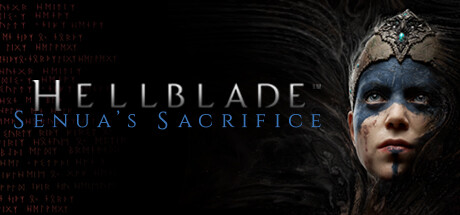
Stunning Visuals and Graphics: Players consistently praise the amazing, photorealistic graphics and incredible attention to detail. The visuals are described as some of the best, with a beautiful and immersive world that holds up even years after release.
Engaging and Deep Story: The narrative, centered on Senua's journey, is widely praised as incredible, moving, and well-written. It masterfully blends Norse mythology with a respectful portrayal of psychosis, creating a captivating and unforgettable experience.
Outstanding Sound Design: The binaural audio and sound design are exceptional, with voices in Senua's head being a standout feature. The audio creates deep immersion and is highly recommended to be experienced with headphones.
Satisfying and Impactful Combat: Combat is described as weighty, brutal, and visceral, with satisfying parries and impactful hits. While some find it simple, many appreciate its raw and heavy feel that complements the game's tone.
Deep Immersion and Atmosphere: The game creates an incredibly immersive and atmospheric experience that few games achieve. The combination of visuals, sound, and storytelling pulls players deeply into Senua's world.
Common complaints
Repetitive Combat Experience: Players across multiple clusters consistently describe combat as one-note, repetitive, and monotonous. This is a dominant complaint with specific mentions of limited variety and stale mechanics.
Repetitive Puzzle Design: Puzzles are frequently criticized as repetitive, monotonous, and tiresome, with some dragging on too long. This is a major recurring theme across several clusters.
Lackluster Gameplay Overall: Many reviewers find the gameplay bare-bones, boring, and tedious, with some calling it almost non-existent. This broad dissatisfaction spans numerous clusters and is a core issue.
Slow Pacing And Boring Start: The beginning is often described as boring and not captivating, and the overall pacing is slow and heavy. This affects initial engagement and overall enjoyment.
Confusing Story And Characters: The narrative is described as confusing, fragmented, and nonsensical, while characters are seen as underdeveloped and lacking evolution. This combination detracts from the overall experience.
Gameplay and performance
Puzzle Solving Core Mechanic: Puzzles are a core gameplay element, often involving finding hidden runes, symbols, or patterns in the environment. They are reasonably challenging and fit the world.
Combat System Basics: Combat involves parrying, dodging, light and heavy attacks, with a simple but weighty and visceral feel. It is a core gameplay element, though not deeply complex.
Story-Driven Experience: The game is narrative-driven, focusing on Senua's journey through Norse mythology, with a strong emphasis on story and character development. It is a cinematic experience with action elements.
Norse Mythology Setting: The game is deeply anchored in Norse and Celtic mythology, influencing the story, characters, and bosses. This setting is a central part of the narrative and world.
Voices in Head Mechanic: A distinctive mechanic where players hear multiple voices whispering in Senua's head, creating a unique and sometimes annoying experience. It is a core part of the gameplay.
Stuttering and Frame Drops: Many players report stuttering, frame-pacing issues, and occasional FPS drops even on high-end systems. These issues can occur in specific scenes or zones.
Mixed Optimization Performance: Feedback is highly polarizing, with some players reporting smooth performance and others experiencing poor optimization. The game demands high-end hardware for stable framerates.
FSR Boosts Performance: Using FSR significantly improves frame rates on lower-end GPUs like the GTX 1050Ti. Without FSR, performance is often unplayable.
Bugs Cause Progression Blocks: Several bugs can cause the player to get stuck, requiring a reload or workaround. Examples include getting stuck in the tunnel during the Fenrir sequence and Senua becoming immobile.
Crashes and Stability Issues: Some players experienced crashes and system instability, including a report of a burned M.2 SSD. Others had no crashes at all.
Recommendations
Strongly recommended overall: Many reviewers give strong recommendations, with some stating everyone should play it at least once. It is often described as a must-play experience.
Play with headphones: Many reviewers emphasize that headphones are essential to fully experience the game's audio. Some go as far as calling it an obligation, not just a recommendation.
For story-driven adventure fans: Reviewers recommend the game to those who enjoy atmospheric, emotional, and story-driven experiences. Deep storytelling is a key selling point.
Buy on sale only: A recurring theme is that the game is best purchased during a discount. Reviewers suggest waiting for a sale before committing to a purchase.
Not for action-focused players: Several reviewers warn that players seeking nonstop action or flashy gameplay should look elsewhere. The game prioritizes story and atmosphere over combat.
Buying context
Community fair range: $10.00 - $20.00.
Game completion: 10.0h.
Story completion: 8.0h.
Session length: 2.0h.
Early sections are often described as slow, boring, or drawn-out, but one direct report says the gameplay improves after the first part through more interesting puzzles and greater variance. The community is split because many other players find the repetitive loop tedious and never fun.
Friction: Slow narrative pacing in the first hours; Boring or incomprehensible opening; Tutorial that drags before exciting events; Drawn-out first hour with too little to do; Repetitive combat; Tedious or repetitive puzzles.
Unlock drivers: Passing the first part of the game; Puzzles becoming more interesting later; More gameplay variance later, including stealth levels; Later enemy waves that some players find more engaging; Story and gameplay aligning in intense, memorable sequences; Discovering mechanics without a tutorial.
Player profiles
Immersive Narrative Enthusiast: Plays with headphones in a dark room, focuses on story and atmosphere, often in one sitting. Motivation: Experiencing a powerful, artistic narrative and deep emotional immersion. Stance: buy.
Gameplay-Focused Critic: Evaluates combat depth, progression, and puzzle variety, often comparing to other action RPGs. Motivation: Seeking engaging action combat and puzzle mechanics, but often disappointed by shallow systems. Stance: no buy.
Value-Conscious Patient Gamer: Waits for sales, buys at deep discounts, evaluates length and replayability. Motivation: Getting good value for money by purchasing at a deep discount. Stance: deep sale.
Platform notes
Performance reports vary by hardware cohort: lower-VRAM systems with 16-31GB RAM generally run well, while 12-15GB VRAM and 16GB+ VRAM Windows systems frequently report stuttering, FPS drops, and optimization problems. The 8-11GB VRAM cohort shows mixed results with both smooth DLSS performance and severe DX12 stutter.
Windows 12-15GB VRAM: negative. Users frequently report stuttering, frame pacing problems, FPS drops, crashes, and poor optimization, though some praise the visuals.
Windows <8GB VRAM / <16GB RAM: positive. Most reports describe decent or acceptable performance with only occasional frame drops and no major bugs.
Windows <8GB VRAM / 16-31GB RAM: positive. The game generally runs well at high settings, with some reports of occasional drops or blurriness.
Steam Deck: Hellblade: Senua's Sacrifice is generally playable on Steam Deck but not seamless. Users report frame drops in demanding scenes, significant battery drain and heat, small-screen immersion tradeoffs, reliance on FSR or Lossless Scaling, occasional stutters and bugs, and missing cloud saves. Positive reports confirm it can look and play well after tuning, but the experience often requires settings adjustments and comes with portable-mode limitations.
Linux and Proton: The Linux/Proton evidence is overwhelmingly positive. Users report flawless performance on Nobara Linux, playable 1440p performance on a Steam Machine, and strong Steam Deck/SteamOS playability across lower settings. No review reports Proton launch failures, anti-cheat/DRM blockers, native port breakage, or required Proton Experimental/GE fixes. The only caveats are optional Deck performance tuning and lower graphical settings; cloud-save sync complaints are not Linux/Proton compatibility issues.
Extra review signals
External guides: The audit shows the dominant Wiki Tax complaint is reliance on external walkthroughs, guides, and wikis to learn puzzle solutions, controls, story context, and hidden collectible locations. There is no evidence of farming or drop-rate dependency and no evidence of inventory or crafting valuation dependency. The issue fits Tier 3, The Student, with a score of 50.
Other review notes
Very short game length: Many reviewers note that the game is quite short, with most completions taking around 8 hours or less. The main story can be finished in a single sitting, and even 100% completion rarely exceeds 12 hours.
Mental health consultation in development: The developers collaborated with mental health professionals, neuroscientists, and individuals with lived experience of psychosis to ensure an authentic portrayal. This extensive research spanned nearly two years.
Binaural audio enhances immersion: The use of binaural audio, especially with headphones, significantly enhances the immersive experience. Many reviewers strongly recommend using good headphones to fully appreciate the sound design.
Narrative over gameplay: The game prioritizes storytelling over complex combat or gameplay mechanics. It is described as a story wrapped in a game, where the narrative is the core focus.
Nearly 10 years old, still impressive: Despite being almost a decade old, the game's graphics and presentation remain impressive. Some reviewers note it looks better than many recent titles.