- Excellent music and sound
- Strong Lovecraftian horror atmosphere
- Engaging story and narrative
- Charming pixel art style
- Unclear and frustrating puzzles
- Weak and incoherent story
Emotions
Archetypes
What players like:
Common complaints:
Gameplay feedback:
Performance notes:
Recommendations:
Other player notes:
Similar games
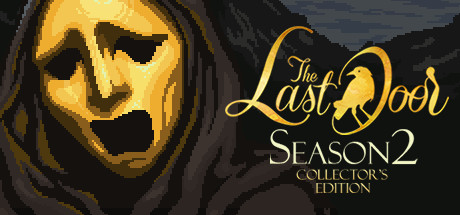
Blend with other games 91%The Last Door - Collector's Edition
 85%The Excavation of Hob's Barrow
 84%Paper Lily - Chapter 1
 84%Yuppie Psycho: Executive Edition
 83%Kathy Rain 2: Soothsayer
 83%Layers of Fear 2 (2019)
 83%Call of the Sea
 82%Related
 82%Magnus Positive Phototaxis
 82%Call of the Elder Gods
 82%Sucker for Love: Crush Landing
 82%Tormentum II
Review evidence
Why players say this
Review evidence
Why players say this
Steam review verdict
Excellent music, Lovecraftian atmosphere, and charming pixel art shine, but while the narrative engages, the story feels incoherent and puzzles are frustratingly unclear.
What players like
Music and sound are excellent: The music is frequently highlighted as atmospheric, masterfully made, and enhancing the overall experience. Sound design and ambiance are also praised for their quality and contribution to immersion.
Lovecraftian horror atmosphere: The game successfully captures Lovecraftian cosmic horror, with a strong presence of the genre's atmosphere. Reviewers note it as one of the best Lovecraftian games they have encountered.
Story is strong and engaging: Reviewers consistently praise the game's narrative as compelling, well-crafted, and catchy. The story is described as neatly packed and interesting, making it a standout feature.
Pixel art is charming and effective: The simple pixel art is well-crafted, evocative, and leaves enough to the imagination. It is described as distinct, charming, and surprisingly effective in conveying the game's mood.
Atmospheric and immersive experience: The game is praised for its superb atmosphere and sense of place, with a dark and fantastic ambiance. The combination of visuals, sound, and storytelling creates a deeply immersive experience.
Common complaints
Puzzles are unclear and frustrating: Many players found the puzzles obtuse, counter-intuitive, and sometimes requiring illogical leaps. This led to frequent getting stuck and reliance on guides.
Story is weak and incoherent: The narrative was often described as not good, hard to follow, fragmented, and lacking cohesion. Many players felt it was a downgrade from the first season and failed to deliver a compelling or understandable plot.
Pixel art hurts readability: The pixel art style was frequently criticized for being too coarse, hurting eyes, and making objects and characters hard to recognize. This negatively impacted puzzle-solving and overall enjoyment.
Ending is disappointing and confusing: The ending was widely criticized as unsatisfying, anticlimactic, and confusing, with rushed or nonsensical developments. Multiple endings were nearly identical, and many questions remained unanswered.
Pacing is too slow: The game's pacing was criticized for being too slow, with excessive walking, backtracking, and tedious sections. Some episodes dragged on, and the overall rhythm was broken by frequent location changes.
Gameplay and performance
Pixel art graphics style: Players frequently mention the old-school pixel art and pixellated visual style, which is a defining aesthetic feature. The pixelated look is noted across multiple clusters.
Point-and-click adventure game: The game is consistently described as a point-and-click adventure, with an episodic, story-driven structure. This genre definition is central to the player experience.
Puzzle-based gameplay: The gameplay revolves around solving puzzles, often involving item collection and use. Puzzles are a core mechanic, though some find them convoluted.
Horror genre with psychological focus: The game is a horror point-and-click, but it emphasizes psychological tension over jump scares. This creates a more atmospheric and cerebral experience.
Multiple endings based on choice: The game offers two endings that branch at the last choice, requiring replaying chapter four to see both. This adds replay value.
Achievements missing on Linux: Achievements do not pop up on the Linux version of the game, indicating a platform-specific issue. This prevents Linux players from receiving proper feedback for their in-game accomplishments.
Intel GPU graphical glitch: Players with Intel GPUs experience a diagonal slash down the screen, indicating a rendering problem on certain hardware. This can be distracting and may require driver or game updates to resolve.
Cloth texture popping bug: There is a specific bug where a cloth's textures pop in and out of a birdcage, causing visual inconsistency. This appears to be a localized rendering issue that affects immersion.
No bugs or crashes reported: One player explicitly stated that they encountered no bugs or crashes during their playthrough. This suggests the game is generally stable for at least some users.
Game uses Unity engine: A player noted that the game is built on the Unity engine, which may influence expectations regarding performance and graphical fidelity. This is a technical observation rather than a complaint.
Recommendations
Play Season 1 first: Many reviewers stress that playing Season 1 before Season 2 is essential because the story is a direct continuation. Without prior knowledge, players will be lost and miss the narrative payoff.
Must-play for series fans: Reviewers who enjoyed the first game consider this an almost obligatory purchase to complete the story. It is described as a highly recommended sequel that provides closure for the narrative.
Great for point-and-click fans: The game is highly recommended for fans of classic point-and-click adventures, especially those who enjoy horror and dark storytelling. Reviewers highlight its old-school gameplay and atmospheric tension.
Perfect for Lovecraftian horror lovers: Fans of H.P. Lovecraft, cosmic horror, and eldritch mythos will find this game particularly appealing. The dark, psychological themes and gothic atmosphere are frequently praised as ideal for this audience.
Strong recommendation overall: The game receives a general strong recommendation from many players, who describe it as a must-buy and a great choice for fans of the genre. It is praised for its quality and atmosphere.
Buying context
Community fair range: $10.00 - $15.00.
Game completion: 6.0h.
Story completion: 6.0h.
Endgame: 3.0h.
The game starts with a confusing story and tedious puzzles, but the narrative improves later, making it enjoyable for patient players. Some players praise it highly from the start, but the explicit 'gets better later' indicates a clicks-after profile.
Friction: tedious back-and-forth; tedious puzzles; confusing story; slow pacing.
Unlock drivers: story becomes clearer.
Player profiles
Series Closure Seekers: Plays through the point-and-click narrative, focusing on story progression. Motivation: To complete the story arc and get closure for the series. Stance: sale.
Lovecraftian Horror Enthusiasts: Immersive, story-driven play, appreciating pixel art and sound. Motivation: To experience cosmic horror, atmosphere, and literary storytelling. Stance: buy.
Achievement Hunters: Replays the game, explores thoroughly, and tracks achievements. Motivation: To unlock all achievements and discover all secrets and endings. Stance: buy.
Extra review signals
External guides: The primary external data dependency is for hidden secrets, achievements, and story comprehension, which falls under Tier 3 (The Student). Players need guides and wikis to fully experience the game, but not for farming or inventory management.
Other review notes
Direct sequel to Season 1: The game is a direct continuation of The Last Door Season 1, requiring prior knowledge of the first season to fully understand the story. It serves as the second part and conclusion of the saga.
Lovecraft and Poe influences: The game is a tribute to Edgar Allan Poe and H.P. Lovecraft, with strong Lovecraftian and cosmic horror elements. It is considered more faithful to Lovecraft's style than other Lovecraftian games, including Bloodborne.
Four episodes with extras: The game is divided into four main episodes, each about an hour and a half, with additional minisodes. All episodes are seamlessly connected, forming a complete adventure.
Developed by The Game Kitchen: The game is developed by The Game Kitchen and published by Phoenix Online Publishing, the same studio behind Blasphemous. This connection is noted by several reviewers.
Ending leaves cliffhanger: The ending leaves a big cliffhanger and some questions, though the story is well closed with loose ends for potential future stories. There are two endings depending on the player's last choice.