- Fun and enjoyable gameplay
- Beautiful and charming visuals
- Co-op enhances gameplay experience
- Controls clunky and unintuitive
- Multiplayer broken and unstable
- Gameplay becomes repetitive
Emotions
Archetypes
Hardware
What players like:
Common complaints:
Gameplay feedback:
Performance notes:
Recommendations:
Other player notes:
Similar games
Blend with other games






Review evidence
Why players say this
Review evidence
Why players say this
Steam review verdict
Despite fun gameplay and charming co-op visuals, clunky controls, broken multiplayer, and repetitive gameplay hold it back.
What players like
Game is fun and enjoyable: Players consistently describe the game as fun, engaging, and addictive, with many noting it is particularly enjoyable with friends and in multiplayer. The positive sentiment dominates the feedback, emphasizing the game's charm and entertainment value.
Beautiful and charming visuals: The game's graphics are frequently praised for being beautiful, cute, and visually appealing. Players appreciate the unique low-poly style, vibrant colors, and the pleasing visual presentation that enhances the overall experience.
Co-op enhances gameplay: The cooperative mode is highly praised for making the game more fun and memorable when played with friends. It turns the experience into a chaotic adventure, though many note it also works well solo.
Exploration across unique planets: Players enjoy exploring the large universe with multiple planets, each offering unique landscapes, resources, and climates. The sense of discovery and the variety of environments make exploration a captivating and rewarding activity.
Satisfying progression and automation: The game provides a rewarding sense of progression, with balanced and satisfying advancement. Additionally, automation mechanics are addictive and help reduce manual work, adding depth and engagement.
Common complaints
Controls are clunky and unintuitive: Players consistently report that controls feel clunky, awkward, and poorly designed, with particular issues around the camera. The control scheme differs from other games and has a steep learning curve that requires adaptation and external guides.
Multiplayer is broken and unstable: Multiplayer mode is severely bugged, causing disconnects, crashes, and gameplay-breaking issues. Problems include players getting stuck in space, ground inconsistencies, and instability after updates, making the mode frustrating or unplayable.
Gameplay becomes repetitive and boring: The game tends to feel repetitive and same-y after a while, especially in mid-to-late game and across planets/quests. This leads to boredom and a lack of motivation to continue playing.
Many persistent bugs and glitches: The game suffers from numerous bugs and glitches that persist despite its age, with complaints spanning over seven years. These bugs range from minor irritations to game-breaking issues that affect overall polish and enjoyment.
Insufficient game guidance and tutorials: The game provides minimal guidance or explanation for its mechanics, leaving players lost and confused, especially in the early game. The tutorial is widely criticized as atrocious, and players often need external guides to understand basic systems.
Gameplay and performance
Base building core mechanic: Base building is consistently mentioned as a primary gameplay element, including construction, expansion, and research. Players frequently note it as a central activity across multiple planets.
Cooperative multiplayer support: The game offers co-op play for up to four players, with options for peer-to-peer and dedicated servers. Players can divide tasks and assign roles in cooperative sessions.
Space exploration focus: Exploration is a major theme, with players traveling to different planets and engaging in interplanetary travel. The game is described as a space exploration sandbox with non-linear progression.
Automation systems prevalent: Automation for resource collection and crafting is a key part of gameplay, often integrated with base building. Players highlight automated extractors and auto-crafting as significant features.
Missions and achievements included: The game features missions, quests, achievements, and a progression system, providing structured objectives. These guide early gameplay and offer unique rewards.
Crashes and save rollbacks: Multiple reports of game crashes that roll saves back, causing loss of progression. Crashes occur frequently, sometimes every 20 minutes, making the game hard to play, and can happen in co-op worlds.
Multiplayer stability issues: Multiplayer suffers from poor optimization, freezes, server glitches, disconnects, and item loss during shuttle travel. Co-op can cause crashes and visual glitches.
FPS drops in specific actions: FPS drops occur during takeoff/landing, teleporting, using vehicles, approaching planet cores, and loading certain things. Large explosions and resource pits also strain performance.
Large bases cause lag: Players report performance degradation when building larger bases or structures, with FPS drops and stuttering. This includes issues like severe FPS drops when turning camera quickly in a large base and lag on systems like a 3060Ti despite low-poly graphics.
Vehicles trigger FPS drops: Flipping rovers or vehicles, leaving the ground, or entering vehicles causes severe FPS drops and freezes. Vehicle physics consume high performance, and freezes occur when entering vehicles or when they flip.
Recommendations
Buy on sale: Multiple reviewers recommend purchasing the game only when discounted, often at 50% or more. The game is considered good value at a reduced price.
General recommendation: Many reviewers simply recommend the game to everyone, with some giving it a 10/10. It is seen as a must-play for a broad audience.
Great with friends: The game is highly recommended for playing with friends, as it enhances the experience and helps new players understand mechanics faster. Solo play is less recommended.
Worth full price: Some players feel the game is worth its full price and would buy it again. They emphasize the game's value and quality.
Recommended for sandbox fans: Players who enjoy sandbox, exploration, space, and creativity will find the game appealing. It is especially suited for those who like open-world building and astronomy.
Buying context
Community fair range: $10.00 - $20.00.
Game completion: 90.0h.
Session length: 12.0h.
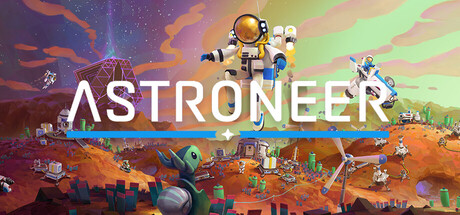
Astroneer starts with frustrating friction from poor tutorials and controls, but clicks after about 2 hours of learning or when played with friends, turning into an engaging sandbox.
Friction: lack of tutorial or guidance; poor UI and inventory management; clunky controls and movement; unintuitive mechanics; no clear direction or objectives.
Unlock drivers: learning the controls and UI; understanding the progression system; playing with friends; getting past the initial 2-hour confusion phase; experimenting with mechanics.
Player profiles
Chill Space Explorer: Slow-paced exploration, base building, resource gathering, enjoying visuals and music. Motivation: Relaxation and exploration without pressure. Stance: buy.
Co-op Crew Player: Collaborative building, resource gathering, role division, chaotic fun with friends. Motivation: Shared exploration and cooperation with friends. Stance: sale.
Automation Tinkerer: Systematic resource gathering, base organization, logical problem-solving, optimizing automated production lines. Motivation: Creating efficient automated systems and seeing them run. Stance: buy.
Platform notes
Performance is generally positive across most hardware tiers, with low-end systems showing mixed stability due to crashes, while higher VRAM setups run well except for occasional lag in large bases or save-file–related freezes.
Windows <8GB VRAM / <16GB RAM: mixed. Runs on very old hardware but some users report frequent crashes, freezes, and world corruption, making performance inconsistent.
Windows <8GB VRAM / 16-31GB RAM: positive. Most players get stable frame rates even on modest systems, though a minority experience crashes and lag on low settings.
Windows 8-11GB VRAM: positive. Game runs well overall with occasional frame drops in large bases and rare crash on vehicle entry.
Steam Deck: Astroneer on Steam Deck suffers from severe stability problems including system-wide freezes and crashes, compounded by the lack of auto-save. Additional issues include unreadably small UI text, poor controller support, and performance degradation after updates. While some users find it playable with tinkering, the overall experience is broken for many.
Linux and Proton: Astroneer on Linux/Proton suffers from system-freezing crashes that often require selecting a specific Proton version or applying hotfixes. Official updates have not fully resolved the issue, and there is no native Linux port. However, many users can play after workarounds, crossplay functions, and performance is generally well-optimized across platforms. The experience is playable but demands tinkering.
Extra review signals
Monetization: The game's monetization combines a base price, paid DLCs, and an in-game shop with premium currency for cosmetics. Players strongly criticize the aggressive DLC integration into quests and the presence of microtransactions in an already paid game. The currency obfuscation and high skin costs further amplify the perception of greed.
External guides: The majority of user feedback indicates a strong dependency on external wikis, particularly for understanding crafting recipes, resource requirements, and printer usage. The game's lack of in-game explanation for its crafting chain creates a barrier that forces players to constantly consult external sources, detracting from the intended exploratory experience.
Other review notes
Paid DLC and expansions: Several reviews note that the game is paid and has additional paid DLC, including Megatech and Glitchwalkers. Some players find it excessive that DLC costs extra on top of the base game price.
Comparable to survival sandbox games: Players often compare the game to Subnautica, Minecraft, and No Man's Sky, noting similarities in exploration and crafting. However, some say it is simpler than these titles.
Long-term content additions: The game has received numerous content updates since early access and over its many years of support. This long-term evolution is well received.
Cosmetic microtransactions present: Reviews consistently mention an in-game store with purchasable cosmetic items and premium currency. This monetization appears across multiple clusters and is a notable aspect for players.
Long playtime and content: Reviews indicate the game offers dozens to hundreds of hours of content, with some players spending 60 hours or more. This long lifespan is a key strength.