- Cute and appealing art style
- Fun and engaging gameplay
- High item variety and combinations
- Poor game balance issues
- Difficult to build intended strategies
- Limited variety and content
Emotions
Archetypes
What players like:
Common complaints:
Gameplay feedback:
Performance notes:
Recommendations:
Other player notes:
Similar games
Blend with other games


Review evidence
Why players say this
Review evidence
Why players say this
Steam review verdict
Charming art and engaging gameplay with deep item combos are undermined by poor balance, frustrating strategy building, and limited content.
What players like
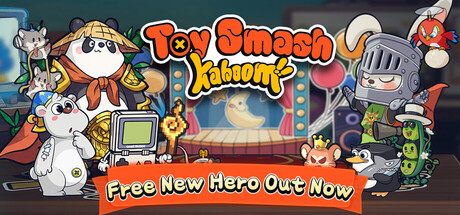
Cute and appealing art style: The cartoon art style is widely praised for being cute, lively, and charming. It is described as a key strength that makes the game attractive and enjoyable.
Gameplay is fun and engaging: Players consistently report the core gameplay as fun, addictive, and easy to understand. The game is praised as both enjoyable and a solid foundation for fans of the genre.
High variety of items and combinations: Players appreciate the wide range of toys, items, and possible combinations, which fosters creativity and diverse builds. This variety contributes to replayability and strategic depth.
Toy battles are entertaining to watch: Players enjoy spectating toy fights, finding the animations and interactions fun and engaging. Watching toys shoot, slash, and knock each other adds to the game's charm.
Backpack management and auto-battler combine well: The unique fusion of backpack management and auto-battler mechanics is highlighted as a successful and engaging design. Players find this combination smooth, fun, and interesting.
Common complaints
Poor game balance issues: Multiple reviews report consistently poor balance, with some noting it worsens after updates and persists over a month post-release. Specific complaints include overpowered plants, weak alien and rat characters, and strong hamster ball builds.
Difficult to build intended strategies: The item pool is described as polluted or too large, making it hard to assemble desired builds. Randomness and low drop rates for key items force players to rely on luck rather than skill.
Limited variety and content: Players note limited build variety, few strategies, and low replayability. Content feels insufficient, lasting only about 20 hours, and there are only two playable characters with four styles.
Inferior to Backpack Battles: Reviewers compare the game unfavorably to Backpack Battles, citing less content, higher price, less innovation, and worse balance. The game is seen as an inferior version with higher randomness and less strategic depth.
Poor matchmaking experience: Matchmaking is criticized for matching players against opponents with superior or rare items early on, leading to frustrating losing streaks. It feels random rather than based on win records or skill level.
Gameplay and performance
Core gameplay is backpack auto-battler: The dominant theme is that the game merges backpack inventory management with auto-battler combat, often compared to Backpack Battles. Players prepare in a grid-based backpack and battles proceed automatically.
Asynchronous PvP against player builds: The game features asynchronous PvP where players battle snapshots or ghosts of other players' setups, including a ladder ranking system. This mode is highlighted as a distinctive feature.
Four characters with eight classes: There are four playable characters, each offering two distinct classes or builds, resulting in eight total playstyles. Some clusters note variations in how these are described, but the count is consistent.
Roguelike and deckbuilding elements: The game incorporates roguelike progression and deckbuilding mechanics, adding strategic depth beyond simple item management. Cards and item combinations are central to building effective setups.
Card-based class mechanics exist: Each class has its own deck or set of cards, including summons, weapons, and spells. Despite this, all characters share a common card pool, which influences build variety.
Steam Deck performance issues: One player confirmed Steam Deck Verified status, noting core functionality works via handheld controls and runs well. However, another player reported FPS drops when many summons are thrown, and a third mentioned frame drops and stuttering during animations and screen transitions.
Performance varies by hardware: Performance is described as acceptable by some, with stable 30 FPS on integrated graphics (i5-6500 mobile). However, demanding visual settings may require adjustments, and overall performance seems inconsistent across different setups.
Stability and crash problems: A player experienced a game crash during play, and another found that after restarting, the game gets stuck at half the loading bar. These stability issues can disrupt gameplay and may require troubleshooting or patches.
Recommendations
Backpack and auto-battler fans: Multiple reviews recommend the game to players who enjoy backpack-style management games and auto-battlers, often citing similar titles like Backpack Battles. This indicates a strong alignment with the expectations of these genres.
Casual and short sessions: Several reviews note the game is well-suited for casual players, offering short play sessions and a unique art style. This positions the game as accessible for those picking up a game for relaxed, brief play.
Strong purchase recommendation: Multiple reviews give a straightforward recommendation to buy the game, with phrases like 'Buy it' and 'Buy it without hesitation'. This reflects a highly positive sentiment towards the purchase decision.
Excellent value for money: Players believe the game is worth its price and even more than worth it, indicating high perceived value. Some suggest it is a steal below $10, reinforcing that it provides great content relative to cost.
Demo available before purchase: Reviewers encourage trying the demo to help decide whether to buy, suggesting a low-risk way for potential players to evaluate the game. This indicates the game's value can be assessed easily before spending money.
Buying context
Community fair range: $5.00 - $8.00.
The game is consistently described as immediately addictive and enjoyable from the start, with no evidence of a delayed fun trigger. Minor tutorial issues do not prevent early engagement.
Friction: tutorial needs more work, things not well explained.
Player profiles
Backpack Battle Veteran: Strategic space planning, crafting combos, and seeking efficient item placement. Motivation: Mastering inventory management and optimizing synergistic builds. Stance: buy.
Casual Relaxed Player: Playing in short sessions, experimenting without pressure, appreciating visuals. Motivation: Relaxation and enjoyment of cute art style and easy-going gameplay. Stance: buy.
Competitive Balance Critic: Analytical, meta-optimizing, seeking challenging but fair opponents. Motivation: Competitive integrity and balanced gameplay for fair ranking. Stance: no buy.
Platform notes
Steam Deck: The game runs smoothly on Steam Deck with verified status, excellent controller support, and no major technical barriers. A small number of users report occasional frame drops or stuttering, but these are manageable through settings adjustments.
Linux and Proton: The sole user review reports a positive Steam Deck experience with no Linux-specific friction, suggesting the game runs well under Proton without requiring workarounds.
Other review notes
Comparisons to Backpack Battles frequent: Many reviewers compare the game to Backpack Battles, often preferring this title due to better visual clarity, more interesting combat, and improved mechanics. Some note less depth or balance issues, indicating mixed but significant genre comparisons.
Active development and updates praised: Reviewers frequently mention the developers' active engagement, regular patches, and responsiveness to player feedback. This ongoing support is seen as a positive aspect, with expectations for future improvements.
Full version adds significant content: Compared to the demo, the full version introduces more classes, items, playstyles, and modes, increasing replayability. Reviewers highlight this expansion as a major improvement, offering around 20-30 hours of content.
Art style inspired by personal sources: The art style draws inspiration from the developer's daughter's hand-drawn works, adding a personal touch. Some reviewers compare the visuals to Cuphead or other games, noting its distinctive look.
Multiple game modes available: The game features ranked, casual, and challenge modes, with ranked mode offering rewards. Each character has a separate ranking system, requiring individual progression.