- Stunning graphics and visuals
- Vast open world exploration
- Engaging and fun combat
- Abundant content and activities
- Story is weak and uninspiring
- Controls are clunky and unintuitive
Emotions
Archetypes
Hardware
What players like:
Common complaints:
Gameplay feedback:
Performance notes:
Recommendations:
Other player notes:
Similar games
Blend with other games 86%Age of Reforging: The Freelands
 86%SWORD ART ONLINE Alicization Lycoris
 85%ELDEN RING
 85%Darksiders II Deathinitive Edition
 85%BIOMUTANT
 85%Pine
 85%Gedonia
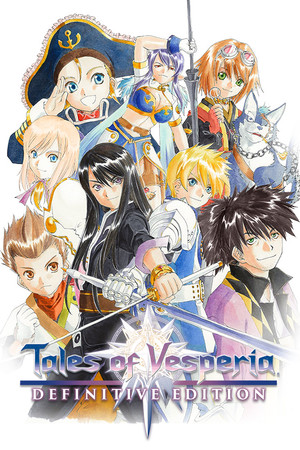 85%Tales of Vesperia: Definitive Edition
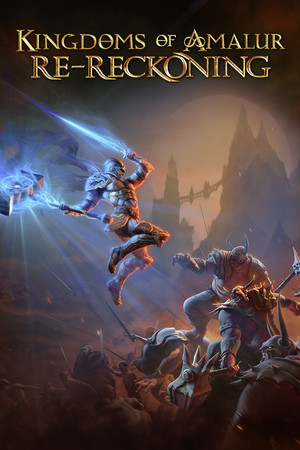 84%Kingdoms of Amalur: Re-Reckoning
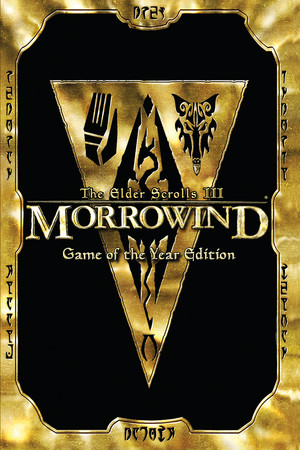 84%The Elder Scrolls III: Morrowind® Game of the Year Edition
 84%Avalom: Ancestral Heroes
 84%Of Ash and Steel
Review evidence
Why players say this
Review evidence
Why players say this
Steam review verdict
Stunning visuals, vast open world, engaging combat and abundant content, though the uninspiring story and clunky controls drag the experience down.
What players like
Stunning graphics and visuals: Players consistently praise the game's graphics, describing them as beautiful, stunning, and breathtaking. The visuals are considered a major strength, with detailed landscapes and living environments.
Vast open world exploration: The game's open world is highly praised for its size, freedom, and rewarding exploration. Players enjoy wandering, discovering secrets, and engaging with the environment.
Engaging and fun combat: Combat is frequently highlighted as enjoyable, satisfying, and engaging. Players appreciate the variety, combos, and cinematic feel of the combat system.
Abundant content and activities: The game offers a huge amount of content, with diverse activities and mechanics. Players feel there is always something to do, contributing to high replayability.
Deep and varied gameplay mechanics: The game features a wide range of mechanics and ways to play, offering depth and variety. Players enjoy the mix of activities and the freedom to choose how to engage.
Common complaints
Story is weak and uninspiring: The narrative is frequently criticized as uninteresting, poorly developed, and lacking depth. Many players find the story generic, disjointed, and not engaging, with weak characters and a lack of coherence.
Controls are clunky and unintuitive: Players consistently report that the controls are awkward, complex, and require many button presses for basic actions. The control scheme is described as gimmicky, painful, and counterintuitive, with a steep learning curve.
Puzzles are poorly explained and frustrating: Players often need external guides due to unclear puzzle guidance and obtuse mechanics. The puzzles are described as annoying, tedious, and infuriating, with some being nearly unplayable without hints.
Game is buggy with visual glitches: Players report numerous visual artifacts, glitches, and performance issues that break immersion. The game feels unpolished and unfinished due to these bugs.
Side quests are repetitive and annoying: Side quests are often described as stupid, repetitive, and padding, with many fetch quests and escort missions. They fail to add meaningful content and are seen as time-wasters.
Gameplay and performance
Vast open world exploration: The game features a massive open world with diverse biomes, creatures, and secrets, offering high exploration freedom and many activities. Players can freely explore almost everything visible, with a seamless world and photo mode.
Deep combat system: Combat is dynamic and powerful, with a huge number of tools, combos, dodging, blocking, and abilities. It requires strategy and skill, avoiding button mashing simplicity, and is satisfying and addicting.
Dragon riding mounts: Players can ride dragons and wyverns for aerial travel, as well as ground mounts like horses and bears. Taming and riding various animals is a key traversal mechanic, including using dragons to burn down castles.
Puzzle-filled world: The game includes a huge world full of puzzles and mini-games, with puzzles scattered all over the map. They range from logic puzzles to those requiring precise angles and ability unlocks, adding variety to exploration.
Challenging boss fights: Bosses are far beyond normal enemies, with increased difficulty, multiple phases, and fast attack patterns. They are souls-like and can be rechallenged, providing a significant challenge.
Mixed performance reports: While some players experience excellent performance with high FPS on max settings using DLSS and frame generation, others report terrible performance, constant crashes, and poor optimization. This indicates inconsistent experiences across different hardware configurations.
Ray Reconstruction performance heavy: Enabling Ray Reconstruction significantly reduces FPS, with some users reporting a 40 FPS drop and halved performance. The feature appears to be heavily tuned for, requiring powerful hardware.
Ray tracing visual bugs: Ray tracing is poorly implemented, causing noise artifacts, flickering, pixelation, and weird light and shadow changes, especially in caves and poorly lit areas. Visual issues also occur without Ray Reconstruction.
DLSS quality issues: DLSS implementation is criticized for poor quality, with DLSS 4.5 degrading image quality compared to DLSS 4.0. Some users also report flickering, shimmering, and ghosting with any DLSS preset.
Long loading times: Multiple players report that the game takes a very long time to load, with slow loading screens. This is a common complaint affecting user experience.
Recommendations
Highly recommended overall: A significant number of reviewers strongly recommend the game, calling it a must-play and worth every cent. The game is praised for its unique and grand experience.
Wait for a sale: Several reviewers advise waiting for a sale before purchasing, suggesting the game is better value at a discounted price. Some recommend a 50% or higher discount.
Recommended for open-world fans: Many reviewers recommend the game to players who enjoy open-world exploration, freedom, and side quests. The game is praised for its vast world and rewarding exploration.
Weak story is a drawback: Reviewers note that the game's story is boring or uninteresting, and it is not recommended for players who prioritize a strong narrative. This is a common criticism.
Worth the price: Reviewers state the game is worth its price, especially considering the amount of content and playtime. Some even recommend it at full price.
Buying context
Community fair range: $30.00 - $60.00.
Game completion: 257.0h.
Story completion: 100.0h.
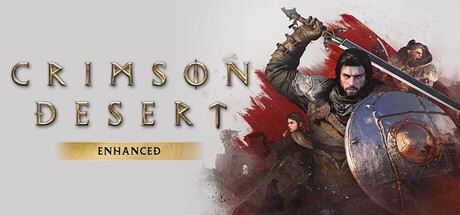
Crimson Desert has a rough, slow start with steep learning curves and clunky controls, but after roughly 10-15 hours it opens up into a deeply engaging and rewarding open-world experience for most players who persist.
Reported time to anchor: 10h.
Friction: awkward controls; long tutorial; slow pacing; confusing systems; steep learning curve; boring first few hours.
Unlock drivers: getting used to controls; game opening up; learning mechanics; passing the tutorial; adapting to the world.
Player profiles
The Immersive Explorer: Slow, thorough exploration, side quests, collecting, admiring scenery, and avoiding rushing the main story. Motivation: To explore a vast, living world and discover secrets at their own pace. Stance: buy.
The Combat Master: Focuses on combat optimization, boss fights, build experimentation, and skill-based play. Motivation: To master deep combat and overcome challenging bosses. Stance: buy.
The MMO Sandbox Veteran: Engages in grinding, crafting, gathering, and exploring many interconnected systems over long sessions. Motivation: To experience a single-player MMO with deep systems and grind. Stance: buy.
Platform notes
Performance reports across the six largest hardware cohorts are generally positive on higher-end Windows systems, but lower-VRAM and lower-RAM systems show more mixed to negative results, with many users relying on upscaling and frame generation.
Windows 12-15GB VRAM / 16-31GB RAM: positive. Most users report smooth high-FPS performance at high settings, with some caveats about ray tracing and DLSS artifacts.
Windows 8-11GB VRAM: positive. Performance is generally good, though Intel Arc GPUs are unsupported and some users report visual issues with DLSS.
Windows <8GB VRAM / 16-31GB RAM: mixed. Reports are split: some users with mid-range GPUs get stable 60+ FPS, while others require aggressive upscaling and still see performance drops.
Steam Deck: The game is playable on Steam Deck but only after significant tinkering: users must select custom Proton versions (e.g., Proton GE), lower graphics settings, and often use third-party upscaling tools like Lossless Scaling to maintain 30-50 FPS. Performance is inconsistent, dropping to 17 FPS in demanding areas. A recent update broke the game on SteamOS, requiring a downgrade, and there is no official Steam Deck support. Overall, the experience is far from seamless and demands technical intervention.
Linux and Proton: The Linux/Proton experience for this game is mixed but generally workable. Many users report smooth performance with specific Proton builds (CachyOS, GE, hotfix), but there are recurring issues: ray tracing crashes and must be disabled, Denuvo DRM can lock users out when switching Proton versions, and a recent update temporarily broke Linux support before being patched. Overall, the game requires tinkering and workarounds, but most Linux users can reach and enjoy gameplay.
Extra review signals
Monetization: The audit finds no evidence of predatory monetization. The game is a single-player one-time purchase with no microtransactions, cash shop, or pay-to-win mechanics. Reviews consistently praise the lack of monetization hooks and the provision of free updates. Some concerns about paid DLC and base price exist, but these are traditional DLC and price complaints, not MTX.
Mod reliance: The game exhibits a heavy reliance on community mods to address visual quality, controls/UI, performance, and general polish. While not broken (no consensus on crash-on-startup), many users describe the vanilla experience as messy and recommend mods for acceptable gameplay. The modding community is active and provides fixes, but the need for them is a recurring theme.
External guides: The dominant user complaint is the game's severe lack of explanation and guidance, which forces players to constantly consult external resources such as wikis, Google, and YouTube for puzzles, quests, and mechanics. This aligns with the 'Student' tier, as players need instructional data to understand systems and progress. The issue is pervasive across languages and significantly impacts player satisfaction.
Other review notes
Comparisons to major RPGs: Reviewers frequently compare the game to acclaimed titles like The Witcher 3, Red Dead Redemption 2, and Skyrim, highlighting its open world and RPG elements. These comparisons are generally favorable, though some note the game has its own style.
Frequent developer updates: The developers are highly active, releasing patches and new content regularly, often on a weekly basis. This ongoing support is seen as a major positive, fixing bugs and adding features based on community feedback.
Huge amount of content: Players consistently praise the game for its massive content volume, with many reporting hundreds of hours of playtime. The game is described as generous and lengthy, offering extensive unique content at launch.
Improved by post-launch patches: Many players note that the game has significantly improved since launch due to numerous updates and an enhanced version. The ongoing patches have fixed issues and added content, making the current experience much better.
No microtransactions: Players appreciate the absence of microtransactions and pay-to-win mechanics, which is considered rare in the current market. The game has no in-game store or battle passes, making it feel fair and consumer-friendly.