- Fun and addictive trading gameplay
- Solid smooth performance overall
- Well-implemented family inheritance system
- Late game becomes boring
- Excessive clicking required
- Poor English translation
Emotions
Archetypes
What players like:
Common complaints:
Gameplay feedback:
Performance notes:
Recommendations:
Other player notes:
Similar games
Blend with other games






Review evidence
Why players say this
Review evidence
Why players say this
Steam review verdict
Fun, addictive trading and a solid inheritance system run smoothly, but late game drags, clicking gets excessive, and the poor English translation hurts.
What players like
Fun and Addictive Gameplay: Many reviewers find the game unexpectedly fun and addictive, with simple yet engaging gameplay. The addictive charm makes players want to keep playing.
Solid Gameplay Performance: The gameplay is described as solid, enjoyable, and runs smoothly. It provides a good experience overall.
Worth Playing Overall: Reviewers agree that the game is worth playing, especially compared to similar games. It offers a good overall experience.
Substantial Early Game Content: Early game content is relatively substantial and very interesting. Early exploration is entertaining and fun.
Good Value for Price: The game offers good value for its low price. It is worth the current price.
Common complaints
Late game becomes boring: Many reviewers report that the late game becomes monotonous and boring after sweeping all goods or dominating. This is a frequent complaint indicating a lack of engaging end-game content.
Excessive clicking required: The game demands constant clicking, which is annoying and even causes physical discomfort like tenosynovitis. Simple tasks require too many clicks, such as checking cities or managing carts.
Poor English translation: The English translation is criticized as horrible, machine-translated, and needing editing. Multiple clusters highlight issues with mistranslations and lack of proofreading.
Monotonous linear gameplay: The gameplay is described as too monotonous and linear, with insufficient variety to keep players engaged. This issue persists throughout the game, making it feel repetitive.
Little late game content: Reviewers note there is not much to play in the late game, with little content remaining after the main progression. This contributes to the game feeling empty toward the end.
Gameplay and performance
Trading and merchant gameplay core: The game revolves around buying and selling goods to build a merchant empire. Players start small and expand through trade routes and resale.
Family and inheritance system: Players can marry, have children, and manage family members across generations. This includes choosing an heir and continuing the family business.
Small-scale casual management sim: It is a lightweight management simulation that is easy to pick up and doesn't require deep strategy. Often described as a casual business game.
Buy low sell high loop: The core gameplay loop involves purchasing goods at low prices and selling them at higher prices for profit. This is the primary way to accumulate wealth.
Competition with other merchants: Players compete with AI-controlled merchants for market share and territory. Pushing rivals out of the market is part of the game.
Smooth performance overall: Many players find that the game runs smoothly during normal play. This indicates good performance for most users.
Optimization issues cause lag: Players report that game optimization is not great, with noticeable lag when saving and loading. This can disrupt the gameplay experience.
Lag in very late game: Performance degrades significantly in the very late stages of the game, causing lag. This can affect players who invest many hours.
Lightweight presentation boosts accessibility: The game's lightweight presentation makes it accessible across a wide range of hardware configurations. This allows more players to enjoy the game regardless of their system specs.
Recommendations
Mixed purchase recommendations: Opinions are split on whether the game is worth buying; some explicitly say not to purchase or that it is not worth buying with one's own money, while others recommend buying at full price or when discounted. Several reviewers only recommend it at a lower price or on sale.
Recommended for simulation management fans: Many reviewers recommend the game to fans of simulation management, merchant simulators, life-management, trading, economics, and strategy simulation games, including ancient history and cultural exploration enthusiasts. Some specify it is for those who enjoy old-fashioned business simulations or building their own empires.
Positive recommendations overall: A large number of reviewers give positive or highly recommended reviews, with some saying it is worth the current price and recommended for support, while others are happy to recommend it to friends. A few express strong enthusiasm, calling it a must-play or highly recommended for specific audiences.
Good for passing time: Reviewers frequently describe the game as a good simulation for passing time or a casual entertainment, suitable for playing a few hours after work, one person passing weekend time, or when bored with nothing else to play. Some note it is acceptable as a casual game but simple with no deep mechanics.
Worth playing while free: A recurring theme is that the game is worth picking up, trying, or playing specifically because it is free, with some suggesting adding it to the library at no cost. Some note that free-to-play is okay but not worth paying for.
Buying context
Community fair range: $5.00 - $15.00.
Game completion: 20.0h.
Story completion: 10.0h.
Endgame: 24.0h.
Players consistently describe the trading and management loop as easy to start and immediately addictive, with timely positive feedback and rapid progression. Some report tutorial confusion, manual tedium, and late-game repetition, but these generally do not prevent the initial fun.
Friction: Confusing or vague tutorial instructions; Min-max progression unclear on first playthrough; Many manual clicks for carts, upgrades, and quest checks; Poor English translation can hinder understanding; Cumbersome manual operations and repetitive buy/sell loop; No automated trade caravans, keeping trade hands-on.
Unlock drivers: Discovering profitable trade loops; Expanding operations aggressively; Figuring out a strong strategy later; Learning mechanics by fumbling through the tutorial; Route planning and documenting city demands; Collectibles and generational progression.
Player profiles
Trade Empire Builder: Optimizes trade routes, expands merchant alliances, and pushes rivals out of local markets. Motivation: Build and dominate a merchant empire through trade, alliances, and market share. Stance: buy.
Completionist Achievement Hunter: Uses guides and optimized routes, tracks achievements, and grinds or idles when needed for completion. Motivation: Complete all achievements and end goals as efficiently as possible. Stance: buy.
Relaxed Management Time-Killer: Plays casually and patiently, progressing without heavy optimization or competitive pressure. Motivation: Relax and pass time with a simple management game that does not demand deep mechanical study. Stance: sale.
Other review notes
Game was free originally: Many reviewers highlight that the game was free to obtain, either permanently or during specific periods. This includes giveaways, free releases, and limited-time promotions.
Short playtime around 10-30 hours: The game length is reported to be relatively short, with playtimes ranging from 10 to 30 hours for completion, including 100% achievements.
Compared to similar games: Reviewers compare the game to titles like Jiuzhou Shanglv (described as identical), Kairosoft games (inferior integration), and other trading simulations, noting both similarities and differences.
Free due to publisher issues: The game was released for free temporarily due to issues with the previous publisher, including allegations of fraud, allowing previous purchasers to access it.
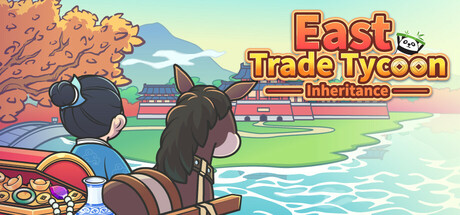
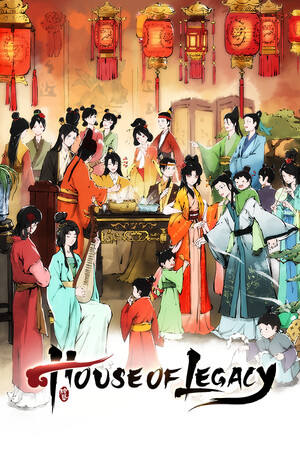
Chinese historical setting: The game is set against an ancient Eastern backdrop, specifically during the Ming and Qing dynasties, focusing on Chinese commercial civilization with historical elements like pawnshops, teahouses, banks, and docks.