- Faithful Mega Man-inspired action platformer
- Exceptional nostalgic chiptune soundtrack
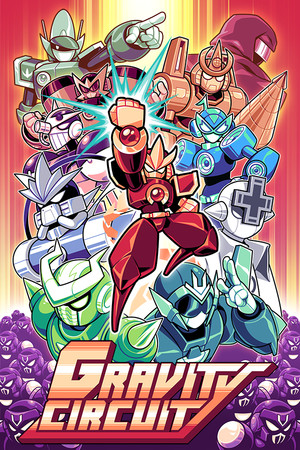
- Charming cute pixel art style
- Well-polished, well-made indie game
- Harsh final stage difficulty spike
- Unfair enemy knockback into pits

Emotions
Archetypes
What players like:
Common complaints:
Gameplay feedback:
Performance notes:
Recommendations:
Other player notes:
Similar games
Blend with other games




Review evidence
Why players say this
Review evidence
Why players say this
Steam review verdict
A faithful, polished Mega Man-inspired action platformer with charming pixel art and a nostalgic chiptune soundtrack, though its harsh final stage spike and unfair knockback into pits can frustrate.
What players like
Cute pixel art and characters: Players adore the adorable pixel art aesthetic, unique color palette, and charismatic character designs, frequently citing Rei-Bo and the GALs as highlights.
Faithful Mega Man homage: Reviewers consistently describe the game as an authentic Mega Man-like that captures the spirit of the classic series, with several calling it the best classic Mega Man-style game they have played.
Exceptional nostalgic soundtrack: The soundtrack is repeatedly praised as the best part of the game, with reviewers highlighting its quality and nostalgia and comparing it to the PSX-era Mega Man 8 music.
Polished and well-made game: Reviewers find the game well polished for its price, delivering on its promises with excellent gameplay and a fun, well-made overall experience.
Challenging fast-paced boss fights: Boss battles are widely praised as amazing, challenging, and fast-paced, and creative boss stages introduce fresh ideas and remixed mechanics.
Common complaints
Harsh final stage difficulty spike: Many reviewers report a severe difficulty spike in the final stages, combining precise platforming, insta-kill spikes, water sections, and boss rushes. This endgame challenge is often described as tedious rather than fair.
Unfair enemy knockback into pits: Enemies frequently knock players into death pits, causing instant life loss. This is seen as unfair, especially combined with retro-style enemy placement and instant-kill spikes.
Limited lives and sparse checkpoints: Limited lives and lack of checkpoints force long replays of familiar sections, breaking practice flow. Checkpoints are only available around boss rematches, and no health recovery exists before bosses.
Boss rush overstays welcome: The endgame boss gauntlet is criticized for being the worst part, with rematches offering no new bosses and only one checkpoint. Boss weaknesses may not work during the rush, adding frustration.
Level design full of traps: Poor level design is criticized for being full of traps, many of which are instant-death. This makes platforming feel unfair and unsatisfying.
Gameplay and performance
Mega Man-inspired action platformer: The game heavily imitates classic Mega Man, following its formula of 2D side-scrolling action platforming with stages and bosses. Many reviewers describe it as literally Mega Man-style gameplay.
Multiple difficulty modes available: The game offers several difficulty options, including Casual/Relaxed (infinite lives, no spike instant death), Classic/Normal, and Lunatic mode for hardcore players. Difficulty levels adjust the experience from beginner to veteran.
Boss weapons and weaknesses system: Defeating bosses grants special weapons that are useful and can exploit other bosses' weaknesses. Weapons consume ammo and require resource management, encouraging strategic use of acquired abilities.
Challenging but fair level design: Levels are designed to be difficult yet fair, with gimmicks the player learns and adapts to, similar to classic Mega Man. The difficulty is high but within genre expectations, and later stages significantly increase skill demands.
Boss rush and remix stages: The game includes boss rematches and a boss rush concept, often featuring remixed boss stages in the final areas. This replaces traditional capsule rooms and tests all learned skills.
Fullscreen mode causes jitter: Players report the game becomes jittery when played in fullscreen mode. This is a performance or rendering issue tied to fullscreen settings.
DXVK fixes jitter issue: Using DXVK resolves the jitter experienced in fullscreen. This gives affected players a practical workaround.
Recommendations
Strong Appeal to Mega Man Fans: The overwhelming majority of recommendations target fans of the Mega Man series, especially classic NES-era titles. Reviewers repeatedly describe the game as a must-play for anyone who enjoys Classic Mega Man or similar 2D action platformers.
General Strong Recommendation: Many reviewers give unqualified high praise, urging players to buy the game now, play it immediately, or give it a chance. The overall tone is enthusiastic and broadly positive across audiences.
Worth Buying at Low Price: Several reviewers highlight the affordable price as a major reason to purchase, calling it good value and saying you cannot go wrong at this cost. The low price reinforces the overall positive recommendation.
Appeals to 2D Platformer Fans: Beyond Mega Man devotees, reviewers recommend the game to anyone who enjoys 2D platformers and side-scrollers, including fans of the broader genre. Some even suggest it works for people who do not usually like Mega Man.
Challenging Retro Difficulty: Multiple reviewers note the game offers a tough, retro-style challenge suited to players who enjoy difficulty and frustration. It is recommended for those seeking a challenging action platformer experience.
Buying context
Community fair range: $5.00 - $10.00.
Game completion: 4.0h.
Players report fun moments, but the dominant profile is persistent tedium from stage hazards, overlong levels, and tiring design rather than a later turning point.
Friction: Stage hazard combinations require time-consuming, boring muscle-memory unlearning; Levels overstay their welcome with tedious rather than difficult challenges; Level themes after the initial six do not follow the early progression; Design becomes tiring and fast for some players.
Player profiles
Classic Mega Man Veteran: Seeks tough retro platforming, learns boss patterns, and accepts repeated failure as part of the challenge. Motivation: To conquer classic Mega Man-style difficulty and prove platforming and boss mastery. Stance: buy.
Difficulty-Option Platformer Fan: Uses lower difficulty or Chill mode when needed and evaluates whether the game remains balanced for casual and hardcore players. Motivation: To enjoy platforming with adjustable difficulty and reduced frustration. Stance: buy.
Aesthetic and Soundtrack-Driven Buyer: Appreciates presentation and music while playing, and treats aesthetic quality as a major part of the game's value. Motivation: To experience the cute visual style and enjoy the soundtrack. Stance: buy.
Other review notes
Strong Mega Man inspiration: Reviewers repeatedly describe the game as heavily inspired by, modeled after, or a tribute to the classic Mega Man series, with many drawing direct comparisons to its style, attacks, and sound.
Faithful to classic Mega Man: The game is praised as a faithful homage that succeeds at capturing the classic Mega Man experience, with some saying it rivals or surpasses the best classic entries.
Comparisons to specific Mega Man games: Feedback frequently compares the game to specific titles like Mega Man 4-8 and 10, NES-era entries, and Mega Man X, highlighting similarities in game feel, art style, and boss rush concepts.
Short but satisfying length: Multiple reviewers note the game is fairly short, with playthroughs taking about 2-4 hours, but many see the brevity as intentional and appreciate that it does not overstay its welcome.
Excellent soundtrack: The music is widely praised, with reviewers highlighting its quality, stage-fitting compositions, and nostalgic vibes reminiscent of Mega Man 8 and Dreamcast-era soundtracks.