- New classes add replayability
- Great DLC for franchise fans
- High value for low price
- Doombringer class underpowered and boring
- New content too difficult for newcomers
- Harsh start causes frequent deaths
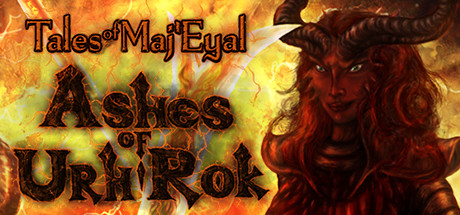
Emotions
Archetypes
What players like:
Common complaints:
Gameplay feedback:
Performance notes:
- -
No data available
Recommendations:
Other player notes:
Similar games
Blend with other games 88%Tales of Maj'Eyal - Forbidden Cults
 83%Heroes of Hammerwatch II - Celestial Ruins
 82%Tales of Maj'Eyal - Embers of Rage
 82%Grim Dawn - Ashes of Malmouth Expansion
 80%Symphony of War: The Nephilim Saga - Legends
 80%The Binding of Isaac: Afterbirth
 80%Grim Dawn - Fangs of Asterkarn
 79%Grim Dawn - Forgotten Gods Expansion
 78%Titan Quest: Eternal Embers
 78%God of Weapons: Eternal Nightmare
 78%Darkest Dungeon®: The Fire's Edge
 78%Barony
Review evidence
Why players say this
Review evidence
Why players say this
Steam review verdict
New classes boost replayability, and the low price makes it great DLC value for franchise fans, but Doombringer feels weak and boring while the harsh, difficult start kills newcomers often.
What players like
New classes add replayability: The expansion introduces two new classes—Doombringer and Demonologist—that integrate seamlessly with the existing system and offer unique playstyles. The Demonologist, in particular, provides a Pokemon-like feel and can be played legitimately, while both classes are strong and interesting.
Great DLC for fans: Fans of ToME consider this a great DLC that provides more content and is worth buying to support the developer. It adds more to the main campaign than Embers of Rage and maintains the game's status as a bang-for-buck title.
High value for low price: Many reviewers highlight the extremely high amount of content relative to the price, calling it one of the best bang-for-buck games. The DLC is cheap and adds substantial value even if it adds less content than other expansions.
Rich lore and story: The expansion adds substantial lore about demons, including a fleshed-out story for the demon race and their god Aroluk. Reviewers call it the best writing in the game, with powerful and compelling narrative that expands the demonic invasion mythology.
Deep and complex gameplay: Players praise the amazing depth and complexity of the gameplay despite simple graphics. The turn-based tactical combat rewards precise decision-making and punishes complacency, appealing to those who enjoy complexity and masochistic difficulty.
Common complaints
Doombringer class underpowered and boring: Multiple clusters highlight that Doombringer is weak, squishy, and deals insufficient damage, making it unviable compared to other classes. It is also described as boring, like a weaker version of Berserkers.
New content too difficult for newcomers: New players might find the new content much more difficult than the base game, with a rough starting area featuring teleporting, fireball-shooting enemies that can jump and pull players. Combined with new mechanics having a steep learning curve and initial stat overload, this can overwhelm less experienced players.
Harsh start leads to frequent deaths: Starting in essentially hell does not help, and a new player may easily overplay their hand and die without understanding what they did wrong. Even the greatest of heroes will die again and again, requiring a devious mind just to escape from the demons and survive.
DLC lacks content compared to Embers: The DLC adds very little content: one race, two classes, and a few artifacts, and doesn't have anywhere near the total content of Embers. The two new zones are very similar and only accessible to the new race and classes.
Demonologist resource management overwhelming: Demonologists must juggle multiple resources and minions in chaotic battle, which can be overwhelming. Additionally, many skills are useless and the demon seed mechanic has a lot of randomness.
Gameplay and performance
DLC adds new classes and race: The expansion introduces two new classes (Doombringer and Demonologist) and a new race (Doomelf). These additions expand strategic possibilities and are frequently highlighted.
New classes and strategic depth: The new classes, Doombringer and Demonologist, offer unique playstyles: Doombringer mixes melee with magic and fire, while Demonologist combines summoning and close combat. Their skills and talent trees enhance strategic depth.
Roguelike with experimentation and replayability: The game is a true roguelike with randomly generated equipment, typical RNG, and a design that encourages experimentation and replayability. Death is frequent but drives learning.
Demon-themed content and lore: The DLC focuses on demons, adding new demonic enemies, lore fragments, and reading material about the Demon race and Aroluk. The campaign now includes more demon-related areas and stories.
Complex and punishing gameplay: The game is described as complex, difficult, and punishing, with numerous statistics that can be overwhelming initially. Heroes will die repeatedly, emphasizing challenge.
Recommendations
Essential for base game fans: Many reviewers state that this DLC is a must-have for anyone who enjoys the base game, describing it as a natural evolution of the core experience. They highly recommend it to existing players looking for more content.
Good value for money: Several clusters highlight that the DLC is easily worth its price, especially when bought together with the base game or as part of a package. Reviewers find the content justifies the cost.
Recommended for specific tastes: Reviewers recommend the DLC for players who enjoy complex roguelikes, retro graphics, and challenging experiences, as well as those who wanted more fire-based content in the base game. It caters to niche preferences within the roguelike community.
Supports developer and community: A few reviewers recommend buying the DLC primarily to support the developer and the community, even if they are not deeply interested in the new content. They see it as a way to give back to a dedicated creator.
New class appeal: Some players mention that the Demonologist class alone might be worth the purchase for those who enjoy new playstyles. Others note that the Lovecraft-inspired DLC offers more fleshed-out class kits, suggesting class content is a key draw.
Buying context
Community fair range: $10.00 - $20.00.
Game completion: 30.0h.
Reports on the Doombringer class are largely negative, describing it as boring even after reaching level 35 and weaker than comparable classes. A minority of comments praise the added lore and zones, so the class-focused time-to-fun profile leans toward never clicking.
Friction: steep learning curve for new mechanics; balance quirks; class feels weak and squishy compared to other classes; class design described as boring.
Player profiles
Hardcore Roguelike Systems Veteran: Carefully managing heat, stamina, minions, and multiple resources while exploring deep, old-school content. Motivation: Mastery of hardcore roguelike systems and complex class builds. Stance: buy.
Community-Focused Single-Player Socializer: Plays single-player but actively uses in-game chat to link items, discuss progress, and view others' deaths and achievements. Motivation: Social interaction and supporting the game's community and developer. Stance: buy.
Cautious Newcomer Intimidated by Complexity: Learning basics, experimenting cautiously, and trying to understand mistakes after deaths. Motivation: To get past the steep learning curve and discover the deeper game. Stance: buy.
Other review notes
Favorable comparison to other DLCs: The DLC is compared favorably to all other expansions for the game, which are also called excellent. It adds more to the main campaign than Embers but has less total content and was made first.
Compact expansion, strong experience impact: Despite its relatively small size, this expansion significantly changes how the overall game is experienced. It is described as a first major expansion that was released after the base game.
Supportive developer and community: Darkgod is the developer and regularly interacts with players online. The DLC supports a great community and developer, and the developer is considered great.
Released after base game: The DLC was released after the base game and is the first large expansion for the game. It is the first major expansion to Tales of Maj'Eyal.
Distinct demonic environmental aesthetics: Demonic environments have a distinct aesthetic identity through color, lighting, and enemy design. The presentation uses a utilitarian style with functional visuals over high-end graphics.