- Excellent board game adaptation
- Strong Lovecraftian atmosphere
- Fun and enjoyable gameplay
- Heavy reliance on RNG
- Game is very difficult
- No multiplayer support
Emotions
Archetypes
What players like:
Common complaints:
Gameplay feedback:
Performance notes:
Recommendations:
Other player notes:
Similar games
Blend with other games







Review evidence
Why players say this
Review evidence
Why players say this
Steam review verdict
A polished board game adaptation with strong Lovecraftian atmosphere and fun gameplay, though heavy RNG, high difficulty, and no multiplayer may frustrate some.
What players like
Excellent Board Game Adaptation: Players consistently praise the digital version as a faithful and well-executed adaptation of the original board game, capturing its core mechanics and feel.
Strong Lovecraftian Atmosphere: The Lovecraftian theme and atmosphere are well realized, immersive, and highly atmospheric, appealing to fans of the mythos.
Fun and Enjoyable Gameplay: The game is widely described as very fun, entertaining, and addictive, providing an enjoyable experience for players.
Great Solo Play Option: Many players appreciate the solo mode, which allows enjoying the board game without needing others, solving the problem of finding players.
Appeals to Lovecraft Fans: The game is particularly recommended for H.P. Lovecraft and Call of Cthulhu enthusiasts, offering a must-have experience for fans.
Common complaints
Heavy reliance on RNG: Many players find the game overwhelmingly dependent on random outcomes, which often leads to frustration. The randomness is perceived as central to gameplay and can make success feel out of the player's control.
Game is very difficult: Many users describe the game as hard or insanely difficult, with frequent losses and a steep challenge even on easy settings. The difficulty can be frustrating for new players.
No multiplayer support: A common complaint is the absence of any multiplayer mode, including online play and local hotseat. Players miss the social experience of playing with others around a table.
Differs from board game: The digital version is often compared unfavorably to the physical board game, with reviewers noting missing components, rule changes, and an overall harder feel. Some say it barely scratches the surface of the tabletop experience.
RNG feels rigged against player: Several reviews state that the random number generator appears biased, with dice rolls and other outcomes frequently favoring the game over the player. This perceived unfairness exacerbates frustration.
Gameplay and performance
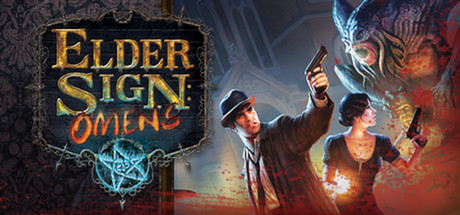
Digital board game adaptation: The game is a digital adaptation of a physical board game, specifically the Elder Sign board game, allowing players to experience the tabletop game electronically.
Dice-rolling core mechanic: Gameplay revolves around rolling dice to determine outcomes, with mechanics similar to Yahtzee, often requiring specific symbols or combinations.
High randomness and luck: Outcomes are heavily dependent on random dice rolls and RNG, making luck a significant factor in gameplay.
Single-player only: The game is designed for solo play only, with no multiplayer support, although it is a port of a cooperative board game.
Investigator team selection: Players choose a team of four investigators, each with unique abilities and equipment, to undertake adventures.
Save system crashes on load: Loading a saved game systematically causes the game to crash, making progress unreliable.
High GPU usage despite simple graphics: The game uses 100% of the GPU even though the graphics are not that good, suggesting inefficiency.
Excessive power consumption: The game is excessively power hungry despite low PC requirements, leading to high energy use.
Poor optimization causes fan noise: Desktop fans start whirling, indicating poor optimization that strains hardware.
Glitches on Windows 10: Players experience glitches on Windows 10, affecting gameplay stability.
Recommendations
Lovecraft fans highly recommend: Many reviewers strongly recommend the game to H.P. Lovecraft and Cthulhu mythos enthusiasts. It is seen as a must-have for those who enjoy Lovecraftian horror.
Board game fans enjoy: Fans of the original board game and similar titles like Arkham Horror recommend this digital adaptation. It appeals to those who enjoy tabletop games and the Cthulhu theme.
Wait for sale: Many suggest waiting for a discount before purchasing. The game is considered a good deal when on sale, though some find it not worth full price.
RNG may frustrate: Players who dislike luck-based outcomes or get frustrated easily may not enjoy the game. It is recommended for those who can tolerate randomness.
Not recommended by some: Some reviewers do not recommend buying or playing the game, advising to save money. They feel it is not worth the cost.
Buying context
Community fair range: $5.00 - $10.00.
Game completion: 28.0h.
Session length: 0.8h.
Endgame: 160.0h.
The game tends to click after players understand how to succeed; before that, the poor tutorial and steep learning curve are the main friction. Reports conflict, with some finding it fun quickly and others finding it repetitive or never fun.
Friction: poor or missing in-game tutorial; steep learning curve with complex rules; luck-heavy dice rolls that can feel unfair; clunky mobile-port interface; no online multiplayer or full co-op; repetitive missions and limited variety.
Unlock drivers: understanding how to succeed at the game; looking up official game overview videos; playing same-screen co-op or hot-seat with friends; solo play without tabletop setup.
Player profiles
Solo Board-Game Convert: Plays solo, controls multiple investigators, and optimizes moves and dice probabilities. Motivation: Convenient solo play with deep replayability and strategy without tabletop setup. Stance: buy.
Luck-Tolerant Dice Strategist: Calculates probabilities, adjusts strategy, and tolerates swingy luck while pursuing better outcomes. Motivation: Challenge and mastery through dice odds, strategy, and difficult encounters. Stance: buy.
Curious Newcomer: Casual short sessions with external tutorial help, often trying the game to evaluate a tabletop purchase. Motivation: Low-commitment curiosity about the board game and casual Cthulhu-themed dice play. Stance: deep sale.
Platform notes
Steam Deck: The reviews provide positive evidence for Steam Deck readiness: the game is reported to work well on Linux, run acceptably on slower hardware, and offer touchscreen-friendly controls. No technical barriers such as Proton tinkering, external launchers, unreadable text, battery drain, anti-cheat problems, or crashes are mentioned.
Linux and Proton: The Linux-specific evidence is uniformly positive: users report native Linux availability, smooth operation on Ubuntu, and good performance on slower hardware. No Proton tweaks, launch failures, anti-cheat friction, or Linux driver blockers are reported. Other complaints concern game design and board-game adaptation rather than Linux compatibility.
Other review notes
Elder Sign Board Game: The game is a digital adaptation of the Elder Sign board game published by Fantasy Flight Games. It is specifically a port of the dice game and is part of Fantasy Flight's Cthulhu board game series.
Harder than Tabletop: Several reviewers find the digital version harder than the physical board game. Some compare the difficulty unfavorably to Dark Souls for being rage-inducing.
Faithful to Board Game: Players note that the digital version is very faithful to the original board game, with some describing it as doing justice to the physical adaptation. However, others feel it is superficially similar but not exactly the same.
Compared to Arkham Horror: Reviewers compare the game to Arkham Horror, noting it has less depth than Arkham Horror and Mansions of Madness. Some describe it as a mini version of Arkham Horror.
Cheaper than Physical: The digital version is significantly cheaper than the physical card and dice game. It offers more content than the physical board game box at a lower price.