- Charming art style stands out
- Polished and fun roguelite
- Diverse enemies and characters
- Balance issues across characters
- Lack of enemy level variety
- Chaotic and unpredictable combat

Emotions
Archetypes
What players like:
Common complaints:
Gameplay feedback:
Performance notes:
Recommendations:
Other player notes:
Similar games
Blend with other games




Review evidence
Why players say this
Review evidence
Why players say this
Steam review verdict
A charming, polished roguelite with diverse enemies and characters, though uneven balance, limited enemy level variety, and chaotic, unpredictable combat can frustrate.
What players like
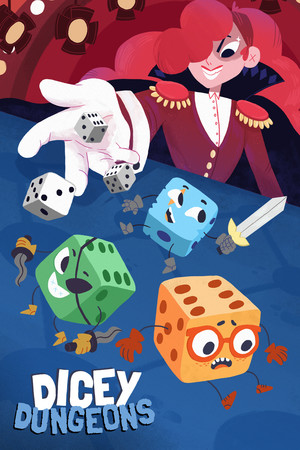
Charming art style: The adorable, charming, and quirky cartoon art style is frequently praised. It has a distinctive identity that appeals to many players.
Polished and fun roguelite: Players consistently describe the game as a small but polished roguelite with a tight, creative design that is an underrated gem. It offers an interesting take on the genre and is highly enjoyable.
Diverse enemies and characters: Players note a diverse variety of enemies and characters, with creative enemy designs and interesting characters. This adds to the game's appeal.
Addictive gameplay loop: Many reviewers find the gameplay loop addictive and inventive, with a charming and quirky style. The game is frequently called very fun and extremely fun.
Varied character strategies: Different characters and skill combinations create varied strategies to defeat enemies, with each character playing uniquely. This leads to diverse gameplay experiences.
Common complaints
Balance issues across characters and skills: Significant balance problems exist, with some characters and skills being vastly stronger or weaker than others. This forces players into specific builds and reduces strategic diversity.
Lack of enemy and level variety: Players consistently report that the variety of enemies, biomes, and levels is insufficient, leading to repetitive experiences. Many note that all normal enemies are seen in one run and all bosses and arenas within three runs.
Chaotic and unpredictable combat: Combat can become chaotic, especially with many enemies, leading to unavoidable damage and frustrating deaths. Players often feel they cannot control the outcome.
Lack of content and progression: Players feel the game lacks sufficient content in terms of characters, items, enemies, and levels. Progression systems are often seen as grindy and unrewarding, with slow unlocks and minimal impact.
Repetitive gameplay and runs: Many players find the game becomes repetitive quickly, with runs feeling identical due to lack of randomization in maps, enemies, and events. This reduces replayability and long-term engagement.
Gameplay and performance
Extensive Difficulty System: Difficulty levels range from 1 to 20, with higher levels introducing tougher enemies and curses. Additional modifiers and ascension-like systems further increase challenge.
Varied Characters And Weapons: Multiple characters are available, each with unique abilities, weapons, and relics. This variety encourages different playstyles and team compositions.
Flick-Shot Core Mechanic: The game's central gameplay involves flicking characters across the board, similar to pinball or billiards. This mechanic is used for both movement and combat.
Roguelike Structure: The game incorporates roguelike elements such as permadeath, procedural generation, and run-based progression. It is often described as a roguelite with tactical combat.
Progression And Unlocks: The game features meta-progression, unlocking new heroes, trinkets, powers, and upgrades over time. Achievements and level progression contribute to unlocking content.
Game fails to load: Some users report the game does not load at all, preventing access to content.
Frequent black screens require alt+F4: Users experience repeated black screens that necessitate force-quitting the game, disrupting play sessions.
Recommendations
Overall positive recommendations: Many reviewers explicitly recommend the game, with clusters 1, 8, 10, 20, 33, 39, 43, 47, 56, and 60 expressing strong positive sentiment. The feedback is uniformly favorable.
Physics-based gameplay praised: The physics-based mechanics, including bounce physics and positioning, are highlighted as engaging and unique. Clusters 3, 4, 14, 24, 31, 35, and 58 mention these aspects positively.
Short but enjoyable experience: Some reviewers appreciate the game for short sessions or a single playthrough, though a few note it may not be worth full completion. Clusters 9, 11, 13, 21, 23, 26, 40, and 46 comment on length and pacing.
Worth the price: Multiple reviewers find the game worth its price, especially at a low cost or on sale. Clusters 2, 19, 34, 44, 50, and 61 discuss value for money.
Great for roguelike fans: Several reviewers recommend the game specifically for fans of roguelikes or roguelites, noting its appeal to that audience. Clusters 15, 17, 28, 35, 55, and 64 mention roguelike elements as a key draw.
Buying context
Community fair range: $12.00 - $18.00.
Game completion: 3.0h.
Session length: 1.5h.
Endgame: 26.0h.
Early runs are repetitive and gated by slow meta-progression, but the game reportedly opens up and shines once players reach higher Doom levels and unlock more characters, abilities, trinkets, and items.
Friction: Repetitive from the start; Slow meta-progression gates content; Near-identical runs with the same biomes and encounters; Lack of strategic depth early; Weak early-to-mid skill scaling; Unforeseen or unavoidable damage.
Unlock drivers: Unlocking new characters, abilities, trinkets, and items; Reaching higher Doom levels and difficulty modifiers; Meta-progression relics and difficulty modifiers expanding the mechanical palette; Relics, upgrades, and modifiers that dramatically alter runs; Fast progression with interesting characters and weapons; Meta progression reducing the pain of unavoidable damage.
Player profiles
Build-Crafting Theorycrafter: Experiments with buffs, curses, and relics; seeks perfect combos; shares overpowered build tips. Motivation: Optimizing synergistic builds and discovering powerful combos. Stance: buy.
Chill Roguelite Newcomer: Plays casually in short sessions, appreciates the relaxed pacing and visual/music design. Motivation: Enjoying a relaxing, easy-to-pick-up roguelite. Stance: buy.
Physics/Dexterity Arcade Fan: Aims shots with precision, uses momentum and angles, enjoys arcade-like physics interactions. Motivation: Experiencing skill-based, physics-driven dexterity combat. Stance: buy.
Platform notes
Steam Deck: The filtered reviews show a strongly positive Steam Deck experience. Users praise seamless compatibility, smooth performance, good battery life, and tight controls. No evidence of small text, external launchers, anti-cheat errors, crashes, or required Proton tweaks. Only a minor control learning curve is mentioned, which does not create meaningful friction.
Linux and Proton: The filtered feedback contains only positive Steam Deck runability and performance comments. No Linux or Proton-specific friction is reported: users do not mention launch failures, crashes, anti-cheat or DRM blockers, required launch options, Proton version switching, or workaround-heavy setup. Under the scoring criteria, the evidence indicates the game works well on Steam Deck/Linux-compatible environments.
Other review notes
Active developer support: The developers are actively updating the game, listening to feedback, and planning content updates to address issues and improve difficulty balance. This shows strong post-launch support.
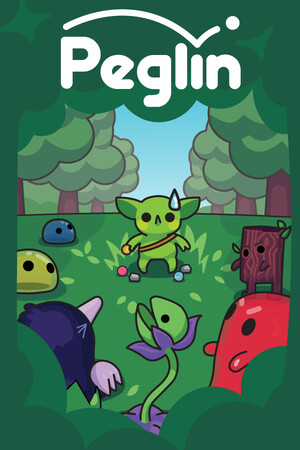
Compared to other games: Reviewers compare it to various titles like Peglin, Balatro, Hades, and Monster Strike, noting similarities in addictiveness, upgrade systems, and combo feel. It is also compared to Catacombs and Into the Breach.
Optimized for Steam Deck: Multiple reviewers highlight that the game feels perfectly at home on the Steam Deck and plays great on it. It is highly recommended for handheld play.
Comparisons to Slay the Spire: Reviewers frequently compare the game to Slay the Spire, describing it as an interactive version with chip-throwing combat instead of deck-building. It is praised for offering many playstyle options.
Limited variety and randomness: Some players feel the game lacks long-term variety and randomness, making it feel like a chore compared to other roguelites. The short content volume and repetitive nature are common criticisms.