- Relaxing and chill experience
- Visually beautiful and pleasing
- Puzzle and city-building hybrid
- Boring and lacking depth
- Insufficient guidance and explanation
- Frequent Game Crashes
Emotions
Archetypes
What players like:
Common complaints:
Gameplay feedback:
Performance notes:
Recommendations:
Other player notes:
Similar games
Blend with other games





Review evidence
Why players say this
Review evidence
Why players say this
Steam review verdict
Relaxing, beautiful puzzle-city hybrid, but boring, shallow, poorly explained, and crash-prone.
What players like
Relaxing and chill experience: Many players highlight the game as highly relaxing, calming, and ideal for unwinding without stress. The soothing atmosphere and simple gameplay make it a go-to choice for chill gaming sessions.
Visually beautiful and pleasing: Feedback consistently praises the game's beautiful graphics, pleasant aesthetics, and charming visual details. The art style is a major draw for players.
Puzzle and city-building hybrid: The blend of puzzle mechanics with city-building or tile-placement is frequently mentioned as a unique and enjoyable twist. Players appreciate the synergy between these genres.
Multiple modes and replayability: The variety of modes (puzzle, free play, scenarios, challenges) and the replay value offered by endless modes and weekly challenges are well-received. Players enjoy the different ways to play.
Fun and enjoyable gameplay: Players find the game fun, addictive, and easy to pick up, with many describing it as a lot of fun. The engaging loop keeps them coming back.
Common complaints
Boring and lacking depth: Multiple reviewers found the game boring, with low depth and little replay value. It quickly becomes repetitive once all decks are unlocked.
Insufficient guidance and explanation: Many players note that the game lacks sufficient tutorials and explanations of mechanics, forcing reliance on external guides. The tutorial itself is often described as weak, frustrating, and unclear.
Merge failures due to terrain: Buildings cannot merge if they are on different terrain heights, and height markers are hard to read. This leads to placement and merging failures that feel unfair.
Excessive card draw randomness: Players frequently complain that randomness in card draws leads to frustration and wasted turns. This RNG can cause friction and ruin the experience for some.
Deck unlocking limitations: Players are frustrated that not all decks can be unlocked in a single playthrough, and unlocked decks may not appear when needed. Deck strength is also uneven, making some decks not worth unlocking.
Gameplay and performance
Building merging core mechanic: Players repeatedly mention merging buildings as a central mechanic, where placing basic buildings adjacent to each other creates larger, improved structures. This merging is often required to complete levels and is described as a key part of the fun.
Multiple game modes available: Reviewers highlight the presence of various game modes, including scenario, puzzle, story, challenge, free play, and weekly challenges. These modes offer different experiences and cater to different playstyles.
Puzzle city-builder hybrid: The game is frequently described as a blend of a city-building game and a puzzle game, with many calling it a puzzle game disguised as a city builder. This hybrid nature is a defining characteristic according to reviewers.
Strategic tile placement for combos: Strategic placement of tiles is emphasized to maximize combo points and create synergies. Arranging tiles in specific patterns can merge them into new structures and yield higher scores.
Scoring via building placement: Points are earned by placing buildings, with scoring heavily influenced by the order of construction and relative positions. Specific placement rules, such as adjacency to certain tiles, determine the points gained.
Frequent Game Crashes: Players report the game crashing consistently, randomly, and in various situations such as after a few hours, when finishing a scenario, or quitting. Some users experienced multiple crashes within short play sessions.
Runs Well on Some Systems: A number of users report smooth performance, including on low-end laptops and desktops, with no bugs encountered. This indicates the game can run well on certain hardware.
Steam Deck Crashes and Freezes: On the Steam Deck, the game tends to crash repeatedly and even freeze the device. While it runs smoothly for the most part, these issues severely impact playability.
Performance and Optimization Issues: Some players find the game sluggish on multiple computers and feel it needs better optimization. Overheating is also reported as a problem.
Mac and Linux Compatibility Problems: The game does not run on Mac and crashes on Linux laptops, limiting access for players on those platforms.
Recommendations
Very high overall recommendation: A large number of reviews strongly recommend the game, with many giving it a 10/10 or similar praise. This is the most consistent and dominant sentiment across clusters.
Great for relaxed puzzle fans: Many reviews highlight the game's relaxing, puzzle-focused nature and recommend it to players who enjoy chill, brain-teasing experiences. It appeals to those seeking a calming yet engaging challenge.
Mixed to negative experiences exist: A number of reviews do not recommend the game, citing frustration, poor UX, and unmet expectations. Some mention refunds or advise caution.
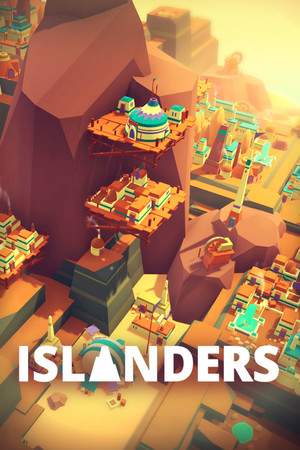
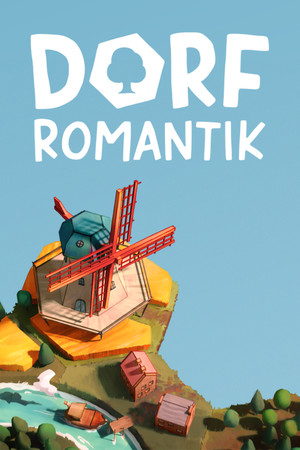
Recommended for Dorfromantik fans: Many reviewers specifically recommend the game to players who enjoyed Dorfromantik or similar games like Islanders and Terra Nil. Comparisons to these titles are frequent and positive.
Not a classic city-builder: Several negative reviews caution that the game does not follow traditional city-building or strategy mechanics. Players expecting a classic city-builder are often disappointed.
Buying context
Community fair range: $10.00 - $18.00.
Game completion: 20.0h.
Story completion: 7.0h.
Session length: 2.0h.
Endgame: 40.0h.
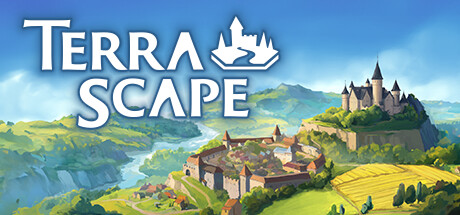
TerraScape often starts with a weak or confusing tutorial and limited early options, but many players report it becomes clear and alive after pushing on, unlocking cards, and becoming familiar with merged building schematics. Some players bounce off or never click, while others find it addicting immediately.
Friction: Weak, confusing, or hidden tutorial that leaves players guessing; First scenario or tutorial restricts mechanics and lacks clarity; Early deck limitations and early-game repetition; Vague mechanics with missing tooltips or explanations; Puzzle scenarios with one correct solution and RNG reliance; Multiplayer co-op turn-taking leaves one player idle.
Player profiles
Relaxed Tile-Placement Puzzle Fan: Short, low-pressure sessions in puzzle or free-play modes, focusing on pleasant placement and structure combinations rather than competition. Motivation: Unwinding with a cozy, satisfying tile-placement puzzle loop. Stance: buy.
Score-Chasing Scenario Strategist: Scenario-driven play with heavy planning, adjacency and merge optimization, and min-maxing; may replay maps for better results. Motivation: Mastering scenarios and optimizing placements to chase high scores and meta depth. Stance: buy.
Multiplayer Co-op Challenger: Joins multiplayer lobbies, plays co-op or free-for-all, and engages with weekly challenge rankings; values smooth turn flow and matchmaking. Motivation: Playing with friends or other players in co-op, versus, and weekly ranked challenges. Stance: sale.
Platform notes
Steam Deck: The audit of TerraScape on Steam Deck shows a mixed but functional experience. Several reviewers praise smooth performance, intuitive controls, and a cosy, enjoyable city-builder that they play primarily on the handheld. However, clear friction points emerged: multiple users report small, tiring to read text requiring extra effort, isolated but real stability failures including a freeze that forced a Steam Deck reboot and crashes on Linux, and explicit complaints that the store-page Steam Deck compatibility claim is misleading since Linux is not officially supported. No launcher or Proton-toggling requirements were observed, but the combination of readability strain and stability incidents places the game in the Tinkering Required range.
Linux and Proton: User reviews indicate the game is generally playable on Linux and Steam Deck, with positive reports of no issues. However, some users report crashes on Linux laptops and note that Linux is not officially supported, and there are concerns that the Steam Deck playable claim is misleading. No evidence of required Proton tweaks or launch options. Overall, the game runs for many Linux users but lacks official support and has minor stability and verification issues.
Other review notes
Comparison to Dorfromantik: Many reviewers compare this game to Dorfromantik, noting similarities but also differences, and some describe it as an improved or leveled-up version. A few find it lacking compared to Dorfromantik.
Egypt DLC adds content: An Egypt-themed DLC is available or announced, adding new mechanics and upgrading-focused content with a different feel from the base game.
Comparisons to Islanders and Catan: Reviewers compare the game to Islanders and Catan, noting similarities in gameplay and strategic depth, sometimes describing it as Islanders on steroids.
Multiplayer support and rankings: Multiplayer is supported, and weekly challenges include online rankings, though some players have not tested multiplayer due to a lack of players.
Active development and early access: The game is still in active development and early access, though some note it doesn't feel like an early access title.