- Calming and relaxing experience
- Cute and charming visuals
- High replayability and addictive
- Limited content and replayability
- Randomness hinders infrastructure placement
- Unresponsive and awkward controls
Emotions
Archetypes
What players like:
Common complaints:
Gameplay feedback:
Performance notes:
- -
No data available
Recommendations:
Other player notes:
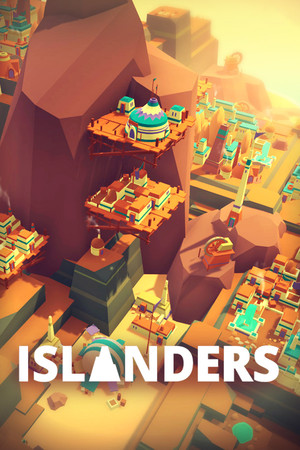
Similar games
Blend with other games





Review evidence
Why players say this
Review evidence
Why players say this
Steam review verdict
Calming, cute, and addictive with high replay value, though limited content, random infrastructure placement, and awkward, unresponsive controls hold it back.
What players like
Calming and relaxing experience: Many players find the game very calming and use it for relaxation or mood regulation. It is perfect for unwinding after work or study.
Cute and charming visuals: The graphics and voxel art are frequently described as cute, beautiful, and aesthetically pleasing. The overall charming and cozy feel contributes to the appeal.
High replayability and addictive: Players report a lot of replayability because every town is a new creation, and the game is quite addictive. They keep returning to beat their high scores and try new build themes.
Chill city-builder with puzzle elements: The game is described as a charming city-builder puzzle game with a chill vibe. It combines city building with puzzle mechanics like placement synergies.
Strategic depth and planning required: Despite its apparent simplicity, the game can be difficult to master and requires strategic planning. Players need to think ahead about road placement, tile orientation, and building synergies.
Common complaints
Limited content and replayability: Many reviewers note the game lacks content, with only one level and limited variety, making it unengaging after a short time. This results in poor replay value compared to similar games.
Randomness hinders infrastructure placement: The random generation often does not provide enough streets for buildings that require them, and the re-roll option does not guarantee a street. This leads to frustrating gameplay where strategy is hampered by randomness.
Unresponsive and awkward controls: Reviewers complain about the inability to remap controls, the brutal screen rotation via mouse-wheel and mouse movement, and poor controls on Steam Deck. This makes the game uncomfortable to play.
Strategy feels limited and unsatisfying: The need to build next to streets, the 1-tile radius of effect, and the inability to see upcoming tiles constantly hinder strategic planning. Placing tiles well does not provide a sense of satisfaction, and strategy often feels inconsequential.
No mid-run save option: Players are frustrated by the lack of both automatic and manual saving during a run, which is unexpected in a puzzle game. This forces players to complete runs in one sitting.
Gameplay and performance
Strategic placement and planning: The game requires smart placement of roads and buildings, planning ahead, and thinking on your feet. It is a light thinking puzzle style that demands strategic placement.
City-building puzzle game: The game is described as a city-building puzzle where players construct a city by placing tiles. It combines city-building and puzzle elements.
Fixed grid and turn-based: The game is played on a fixed-size grid, such as 12x12 or around 10x10, and is turn-based. Players receive a tile each turn to place on the grid.
Random tile placement core: Players receive random city tiles and must place them on the board as they come. This randomness is a central mechanic.
Buildings require adjacent streets: Most buildings must be placed next to a street to be built. This constraint influences layout planning.
Recommendations
Positive value recommendations: Many reviewers consider the game well worth its price, calling it a bargain even at full price and highly recommending purchase. The feedback is consistently positive about the overall value.
Recommended with reservations: Some reviewers recommend the game but describe it as non-essential, saying it is not indispensable in a library. They suggest it is fine at a low price or only during a sale.
Appeal for score chasers: The game is strongly recommended for players who enjoy replaying to achieve higher scores. Some mention they would play it occasionally to beat their own score.
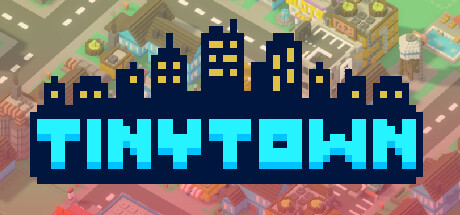
Specific game recommendation: A reviewer highly recommends Tinytown, indicating a positive experience with that particular title. This is a direct endorsement of the game.
Consistent positive review: A reviewer stands by their original positive review, reaffirming their satisfaction with the game. This adds to the overall positive sentiment.
Buying context
Community fair range: $2.99 - $4.99.
Game completion: 0.7h.
Session length: 0.6h.
Player profiles
Chill Unwind Builder: Short, low-stress town-building sessions, often with background music or video, focused on calm and light puzzle activity. Motivation: Relaxation and unwinding after daily stress. Stance: buy.
Score-Chasing Replay Planner: Plans building placement for synergy and points, replays short runs to improve score. Motivation: Optimize town layouts and achieve higher scores across repeated runs. Stance: buy.
Between-Games Casual Gap-Filler: Brief half-hour sessions with low commitment and casual play. Motivation: Cheap, short casual entertainment between bigger games. Stance: sale.
Other review notes
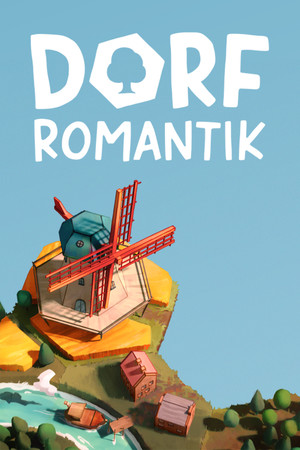
Dorfromantik comparison: The game is frequently compared to Dorfromantik, with players noting similar vibes and influences. Some comparisons are unfavorable, while others combine it with Sim City.
Short completion time: Players report finishing the game quickly, with 100% achievements obtainable in about 40 minutes and full runs lasting 30-40 minutes. Some even complete it in less than an hour.
Limited game modes: The game offers only one map size and no other game modes, which players find lacking. Extra modes like a bigger city board or infinite mode would be appreciated.
Low price point: The game is reasonably priced at $3, making it an affordable option. This low cost aligns with its bite-sized nature.
Basic settings and small scope: The game's settings are fairly basic and the overall scope is small. This contributes to a simple, casual experience.