- Exceptional value for money
- Great art and atmosphere
- Diverse classes and factions
- Severe balance issues
- Excessive randomness and luck
- Unoriginal clone of better games
Archetypes
What players like:
Common complaints:
Gameplay feedback:
Performance notes:
Recommendations:
Other player notes:
- -
No data available
Similar games
Blend with other games




Review evidence
Why players say this
Review evidence
Why players say this
Steam review verdict
While offering exceptional value with great art and diverse classes, severe balance issues and excessive randomness make it feel like an unoriginal clone of better games.
What players like
Exceptional value for money: Many reviews highlight the game's low price point and the immense amount of content received for the cost, often calling it a steal or great deal.
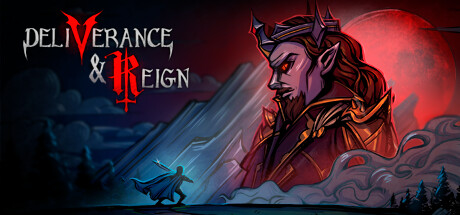
Great art and atmosphere: The game's art style, graphics, music, and sound effects are frequently praised for creating an immersive and atmospheric experience.
Diverse classes and factions: Players appreciate the variety of classes and factions, each with unique mechanics and playstyles, which adds depth and replayability.
Large amount of content: Players note the large amount of content including many cards, heroes, classes, enemies, maps, and artifacts, contributing to high replayability.
Strategic tower defense mode: The tower defense or autobattler mode (Reign) is specifically highlighted as strategic, interesting, and fun, even for players who usually dislike the genre.
Common complaints
Severe balance issues: Multiple reviews highlight severe balance problems: some characters or factions are overpowered (e.g., Druid with infinite combos, Veto making the final boss trivial), while others are too weak (e.g., Evil side, Beasts faction). Difficulty spikes and unfair boss mechanics are also mentioned.
Excessive randomness and luck: The game is heavily criticized for excessive randomness and luck dependency. Players report bad draws leading to one-round elimination, inability to get needed cards, and a bloated card pool that reduces strategic control. Lack of card removal and synergy further compounds the issue.
Unoriginal clone of better games: Many players consider the game a blatant copy of Fate Hunter and Monster Train, lacking originality and offering inferior visuals, animations, and interface. It is described as a pale imitation that downgrades the original games.
Rough and unpolished: The game feels rough, unpolished, and amateurish, with bugs, softlocks, and poor programming (e.g., boss retreats unexpectedly). It appears half-finished and not thoroughly tested.
Limited card pool and upgrades: The card pool is small with few decent cards, limited upgrades, and no artifact system. Players want more characters and card variety to increase strategic depth.
Gameplay and performance
Two distinct game modes: The game features two distinct modes: Deliverance, a deckbuilding roguelike similar to Slay the Spire and Fate Hunters, and Reign, a tower defense/autobattler mode reminiscent of Monster Train. This dual-mode structure is frequently highlighted as a key selling point.
Card-based roguelike deckbuilder: The core gameplay is a card-based roguelike deckbuilder with elements like randomness, class-based decks, and card upgrades. Players build and upgrade their decks over multiple runs.
Heavily inspired by other games: Players frequently compare the game to established titles: Deliverance mode is seen as a clone of Fate Hunters or Slay the Spire, while Reign mode is considered a clone of Monster Train. This suggests the game heavily borrows mechanics from these popular games.
Multiple classes with unique mechanics: The game includes multiple classes such as Druid, Fanatic, Spellsword, Nightshade, Death Knight, and Monk, each with unique mechanics like class-specific resources, state slots, and special abilities (e.g., Druid's eagle form and infinite bloom card draw).
Hero vs villain perspective: Deliverance mode is a first-person dungeon crawler where the player invades a castle as a hero, while Reign mode is a tower defense where the player defends as a villain. This contrast is a unique feature.
Slow state transitions frustrate high APM players: Players with high actions per minute (APM) are frustrated by slow transitions between game states, which disrupts the flow of gameplay and reduces responsiveness.
Excellent Steam Deck performance: The game runs extremely well on Steam Deck, providing a smooth and optimized experience for portable play.
Recommendations
Highly recommended for genre fans: The majority of feedback strongly recommends the game, especially for fans of roguelike deckbuilders like Slay the Spire and Monster Train. It is praised for its low price, high playtime value, and being a good casual experience.
Great value for the price: Many reviews highlight the game's low price and excellent value, often recommending it on discount. It is considered a steal or well worth the cost.
Buying context
Community fair range: $5.00 - $10.00.
Session length: 2.0h.
The game starts with a steep learning curve and grind, but becomes addictive and satisfying once players unlock progression and master the deck-building mechanics.
Friction: initial learning curve for deck-building newcomers; high early difficulty requiring grinding for gold; RNG frustration leading to boring runs; slow game state transitions causing accidents for high APM players.
Unlock drivers: unlocking new classes and cards through repeated runs; meta progression that upgrades champions; overcoming increasingly formidable adversaries.
Player profiles
Roguelike Deckbuilder Fan: Methodical deck-building, experimenting with different strategies and champions across both modes. Motivation: Mastering deck synergies and progressing through runs with meta progression. Stance: buy.
Budget-Conscious Casual: Casual solo play, enjoys the atmosphere and value, forgiving of rough edges. Motivation: Getting good value for money and casual fun without high commitment. Stance: sale.
Balance-Focused Veteran: Analyzes class balance, seeks optimal strategies, may get frustrated by imbalance but acknowledges potential. Motivation: Seeking balanced, deep strategic gameplay with meaningful choices. Stance: deep sale.
Platform notes
Linux and Proton: The limited user feedback indicates the game runs well on Steam Deck, with no reported Linux/Proton friction. The score reflects a 'Works Well' rating with no notable issues.