- Stunning visuals and unique art direction
- Satisfying yet challenging combat mechanics
- Engaging storytelling with emotional depth
- Rewarding exploration and puzzle design
- Adorable Rot companions enhance gameplay
- Repetitive gameplay with unfair difficulty
Emotions
What players like:
Common complaints:
Gameplay feedback:
Performance notes:
Recommendations:
Other player notes:
Similar games
Blend with other games






Review evidence
Why players say this
Review evidence
Why players say this
What players like
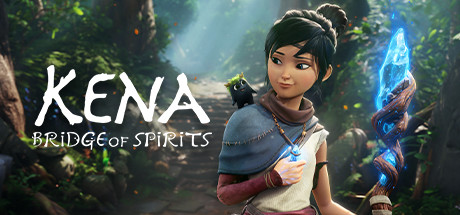
Stunning visuals and art direction: The game is widely praised for its Pixar-like graphics, beautiful environments, and high-quality animations. Players frequently highlight the visual appeal, comparing it to animated films and noting the attention to detail in character designs and world-building.
Satisfying and challenging combat: The combat system is frequently praised for its depth, balance, and Souls-like elements. Players enjoy the variety of mechanics, the challenge of boss fights, and the scalability of difficulty levels, making it accessible to both casual and experienced players.
Engaging and emotionally resonant storytelling: The game's narrative is consistently described as touching, heartfelt, and emotionally impactful. Players appreciate the themes of loss, healing, and redemption, as well as the well-developed characters and their arcs.
Rewarding exploration and puzzles: The game encourages exploration with well-designed puzzles, collectibles, and hidden areas. Players find the world rich in detail and enjoy the sense of discovery and accomplishment from solving puzzles and uncovering secrets.
Adorable and functional Rot companions: The Rot creatures are a standout feature, adding charm and gameplay depth. Players love their cuteness, customization options, and their role in combat and puzzles, which enhances the overall experience.
Common complaints
Repetitive and uninspired gameplay: The game suffers from repetitive gameplay loops, particularly in combat and puzzle design. Boss fights often rely on summoning endless waves of minions, and puzzles are criticized for being too simple or uninspired. The lack of variety in enemy types and combat mechanics makes the experience feel monotonous, especially in the later stages of the game.
Poor combat and control mechanics: Combat is described as clunky, unresponsive, and poorly designed, with issues like awkward button sequences, unreliable parry/dodge mechanics, and inconsistent hitboxes. Players highlight the lack of precision in combat, which is exacerbated in boss fights where timing and execution are critical. The controls feel unintuitive, particularly for keyboard/mouse users, and contribute to a frustrating experience.
Excessive and unfair difficulty: The game is widely criticized for its punishing difficulty, even on easier settings. Players report unfair mechanics such as bosses teleporting, infinite enemy spawns, and unclear attack patterns, which disrupt the flow of combat and make progression frustrating. The difficulty spikes are particularly jarring given the game's casual aesthetic, leading to a disconnect between player expectations and reality.
Unpolished and buggy experience: Numerous technical and design issues plague the game, including poor optimization (frame drops, stuttering), bugs in combat (e.g., enemies sinking into the floor), and unskippable cutscenes. Performance issues are particularly noticeable during boss fights, where lag and unresponsive controls can make the game unplayable. These problems detract from the overall experience and suggest a lack of polish.
Weak story and character development: The narrative is criticized for being generic, shallow, and unengaging. Characters lack depth and emotional impact, and the story fails to explore key elements (e.g., Kena's backstory or the significance of the glowing blue light). The pacing is uneven, with abrupt starts and endings, and the overall experience feels underdeveloped, leaving players wanting more substance.
Gameplay and performance
Puzzles and platforming mechanics: The game integrates puzzles and platforming into its core gameplay, requiring players to use Kena's abilities, Rot companions, and environmental interactions to solve challenges. While some puzzles can feel repetitive, they periodically introduce new tasks to maintain engagement.
Souls-like combat with accessibility: The game features a combat system heavily inspired by Souls-like games, requiring precise timing, dodging, and strategic use of attacks. However, it is designed to be more accessible to beginners through adjustable difficulty settings, including 'story mode' and 'easy mode,' and a gradual introduction of mechanics like parrying, combos, and ranged attacks (e.g., bows, bombs).
Progression through skills and abilities: Progression in the game focuses on unlocking skills that enhance convenience and versatility rather than raw power. Players use in-game resources to unlock abilities like bomb-throwing, double-jumping, and bullet-time arrows, which are introduced gradually to keep combat and exploration engaging.
Kid-friendly design with broad appeal: While the game is designed with a younger audience in mind, its challenging combat, engaging puzzles, and charming aesthetics make it suitable for players of all ages. The difficulty is adjustable, ensuring accessibility without sacrificing depth for more experienced players.
Rot companions enhance gameplay: The Rot creatures serve multiple roles, including assisting in combat (e.g., staggering enemies, distracting foes), solving puzzles (e.g., moving objects, clearing obstacles), and adding charm to the game. Their abilities grow as the player progresses, and they can even be customized with hats, making them a central mechanic for both exploration and combat.
Performance issues on specific hardware: Despite overall good optimization, some players experience frame drops, lag, and input latency, particularly on non-high-end hardware. These issues are more pronounced during demanding sequences, such as boss fights, and can disrupt gameplay fluidity. The feedback highlights a need for further optimization in certain scenarios.
Excellent optimization and performance: Players consistently report smooth performance across a variety of hardware configurations, including mid-range and older systems. The game runs well on both Windows and Linux (via Proton), with minimal need for upscaling or frame generation tools. This suggests strong optimization efforts by the developers.
Combat bugs in higher difficulties: Players note that bugs in combat mechanics become more apparent and disruptive when playing on harder difficulty settings. This suggests that certain gameplay systems may not scale well with increased challenge, potentially impacting the overall experience for advanced players.
Rendering issues on high settings: Some players report visible rendering issues when the game is set to high or ultra graphics settings. These issues may include visual glitches or inconsistencies that detract from the overall presentation, particularly on systems pushing the limits of the game's graphical demands.
Poor Steam Deck performance: Despite being Steam Deck verified, the game performs poorly on the device, indicating that optimization for handheld or lower-power hardware may be lacking. This could limit accessibility for players using portable gaming systems.
Recommendations
Highly recommended game overall: The majority of reviews strongly recommend the game for its beautiful visuals, engaging gameplay, emotional storytelling, and unique charm. Many players highlight it as a must-play, especially for fans of Pixar-like animations, immersive worlds, and heartfelt adventures. The feedback is overwhelmingly positive, with specific praise for its combat, difficulty scaling, and overall experience.
Best enjoyed on lower difficulties: Several players advise against playing on the highest difficulty for the first playthrough, as it can diminish enjoyment or lead to frustration, particularly with boss fights. Many recommend 'Story Mode' or 'Easy' for a more relaxed experience, especially for casual players, children, or those focused on the narrative rather than challenge.
Short but fulfilling experience: The game is frequently described as short but elegant, lasting, and fulfilling. Many players suggest purchasing it on sale due to its length, though they still consider it worth the time and money for its quality. The brevity is seen as a strength for those seeking a concise, impactful adventure.
Ideal for story and exploration fans: Players who enjoy emotional storytelling, immersive worlds, and exploration over combat highly recommend the game. It is praised for its heartfelt narrative, beautiful artistry, and relaxing vibe, making it ideal for those seeking a cozy or casual experience.
Mixed reception on combat system: While some players praise the combat for its challenge and depth, others find it lackluster or frustrating, particularly on higher difficulties. A few reviewers suggest the game would be better without combat, focusing solely on puzzles and exploration. This feedback is split but notable for its specificity.
Other review notes
Game length and pacing issues: Many players noted that the game feels short (10-20 hours) and suffers from slow pacing or dragging sections. Some suggested reducing fast travel to improve immersion, while others felt the game was underdeveloped for its length.
Fair price but best on sale: While players acknowledged the game’s quality, many felt its length justified a discounted price. Some recommended waiting for a sale due to the shorter playtime.
High difficulty and replayability: Master difficulty was noted as significantly challenging, requiring strategic play and patience. Some players enjoyed replaying the game for achievements or to experience the story again, with one playthrough taking 28 hours for 100% completion.
Accessibility and audience appeal: The game was praised for being suitable for all audiences, with a simple but functional story and gameplay. However, some players felt it lacked depth to appeal to everyone, particularly fans of more complex narratives.
Misleading genre expectations: Players frequently mentioned that the game was incorrectly labeled as a Souls-like or Metroidvania, leading to disappointment. Many compared it to *Breath of the Wild*, *Pikmin*, or *Tomb Raider* instead, highlighting its unique but distinct identity.