- Custom moveset creation drives gameplay
- Addictive fast-paced roguelite combat
- High replayability with permanent progression
- Stylized pixel art and animations
- Skill and loadout resets frequently
- Control rebinding is broken
Emotions
Archetypes
What players like:
Common complaints:
Gameplay feedback:
Performance notes:
Recommendations:
Other player notes:
Similar games
Blend with other games






Review evidence
Why players say this
Review evidence
Why players say this
Steam review verdict
Custom movesets, addictive fast-paced roguelite combat, pixel art, and permanent progression make it highly replayable, but frequent resets and broken control rebinding frustrate.
What players like
Highly Positive Overall Reception: Players consistently praise the game as excellent, great, and worth its price. It is described as deep, fun, and highly recommendable.
Custom Moveset and Combo System: Players can create their own movesets and combos, with a flexible and unique custom moveset builder that adds depth and creativity.
High Replayability and Content: Massive replayability with a high completion level and rich content for the price. Over 100 generals and variety of skills add to the experience.
Addictive and Fun Gameplay: The game is silly, addictive, and provides pure joy. The gameplay is fun and creative.
Stylized Pixel Art and Animations: The bright, stylized pixel art with expressive sprites and fluid animations is widely praised. The art style is attractive and nostalgic.
Common complaints
Skill and action loadout resets: Death resets equipped armor, combat skills, and action loadouts, forcing players to rebuild everything from scratch each run. The Secret Book cannot be edited at the base and consumes in-game time, making setup a tedious chore.
Control rebinding is broken: The control system is severely flawed: button mappings reset on defeat, switching armor, or restarting, and rebinding keys often breaks menu navigation or interact functions. Players cannot save custom layouts, and the default layouts on controllers and keyboard are described as clunky.
Repetitive and short content: Stages have little variation, the landscape is often the same, and after 30 minutes all combat, levels, and music have been seen. Post-game content is minimal after beating the final boss, with little incentive to replay.
Progression and balance issues: Meta-progression growth is too large, making the game a cakewalk after about 10 hours as stats increase. Enemy scaling based on time is ineffective, and there is no high-difficulty mode to make enemies threatening.
Bosses are unfair and unbalanced: Bosses and mini-bosses are either health sponges or one-shot machines, with many able to stunlock or kill the player instantly. The final boss Orochi has knockback that can cause infinite falling loops and requires overdamage rather than skill.
Gameplay and performance
Custom Moveset Creation System: Players can create their own movesets by combining, mixing, and customizing combat techniques and skills. This system allows for near-infinite combinations and personalized playstyles.
Action Roguelite Combat Loop: The game is a fast-paced action roguelite with high replayability and frequent combat encounters. It emphasizes quick runs, enemy waves, and permanent progression.
Character Unlock Progression: Players can unlock a large roster of characters by defeating them on the battlefield and meeting specific conditions. There are 142 unlockable characters, each offering different playstyles.
Scroll-Based Skill Acquisition: Combat skills are obtained from scrolls dropped by defeated enemies, which can then be equipped and combined. This system ties skill progression to active combat.
Deep Build Customization: Players have extensive customization options for builds, including controls, armor, weapons, skills, and abilities. This allows for tailored gameplay experiences.
Runs great on Steam Deck: The game plays well on Steam Deck with smooth performance. It also consumes minimal PC resources, making it accessible on lower-end hardware.
Poor performance in large fights: Optimization is poor, with large mob fights causing FPS to drop to 20 or lower and long stutters. This severely impacts combat smoothness.
Auto-save fails after soft lock: After a soft lock, using alt+F4 and restarting places the player back on the same level without progress. The auto-save system fails to create a recovery point.
Freeze during attack animation: The game freezes when attacking after killing an enemy, requiring a restart to continue. This persistent bug interrupts gameplay flow.
Recommendations
Strong value and price praise: Many reviewers highlight the low price as a major factor, describing the game as a steal or worth the money. The affordable cost makes it easy to recommend even with some flaws.
Positive overall despite flaws: Several reviewers would still recommend the game despite its flaws, indicating that the overall experience is enjoyable. They acknowledge issues but find it worth playing.
Recommended for roguelite fans: The game appeals to players who enjoy roguelites, especially those with repetitive or grindy elements and incremental mastery. Fans of the genre find it satisfying despite some limitations.
Specific audience recommendations: The game is recommended for very specific groups, such as fans of old school action games, Borderlands weapon hunting, or those who enjoy simple time-wasting games. It caters to niche tastes.
Appeals to Sengoku and samurai fans: Reviewers specifically recommend the game to fans of Sengoku warlords, Japanese history, and samurai-themed action. The setting and atmosphere are a major draw for this audience.
Buying context
Community fair range: $6.00 - $10.00.
Game completion: 20.0h.
Story completion: 10.0h.
Session length: 2.0h.
Players often find the game addictive from the opening runs, but the strongest reports say enjoyment fades after a few hours or the first playthrough as repetition and stat scaling set in.
Friction: First run feels clumsy and slightly overwhelming; Tedious and clunky menus require getting used to; Controls cannot be changed during any tutorial; Meta-progression dependence and clunky systems; Stunlock is not a fun mechanic; Controller icons can be replaced by keyboard icons mid-game.
Unlock drivers: Retaining upgrades and equipment makes subsequent attempts more manageable; Growing stronger over time until the player becomes overpowered; Collecting technique scrolls and defeating bosses for permanent progression; Experimenting and discovering moves is rewarding; Endless customization and build variety; Unlocking more scrolls may provide ways out of stunlock.
Player profiles
Skill Combo Tinkerer: Experiments with different weapon types, skill orders, and control layouts to discover powerful combos. Motivation: To create and optimize custom skill combinations and loadouts. Stance: buy.
Retro Roguelite Fan: Plays with a controller, embraces retro difficulty and roguelite progression. Motivation: Nostalgia for classic action games and the roguelite loop. Stance: buy.
Warriors & Sengoku Warlord Fan: Casually slashes through hordes of enemies, enjoys playing as or against historical figures. Motivation: To experience the power fantasy of cutting down famous Sengoku warlords in a Warriors-style setting. Stance: buy.
Platform notes
Steam Deck: The audit finds that Steam Deck compatibility is generally positive. Users report the game feels at home and is enjoyable on Deck, with no evidence of Proton Experimental toggles, external launchers, anti-cheat errors, crashes, unreadable text, or battery drain. The only minor friction is a controller button-mapping mismatch, which may affect play but does not require a workaround. Other feedback focuses on gameplay balance and short replay value rather than Steam Deck technical issues.
Other review notes
Low price point: Many reviewers highlight the game's low price, noting it is sold inexpensively and offers good value for the content. The price is considered reasonable and a key strength.
Compared to Dynasty Warriors: Reviewers frequently compare the game to Dynasty Warriors and Samurai Warriors, noting similarities in action gameplay and character design. Some also mention it has more substance and less repetition.
Retro pixel art style: The game features a retro pixel art style reminiscent of PS1, Gameboy Advance, or Nintendo DS games. While nostalgic, some find it dated or not to everyone's taste.
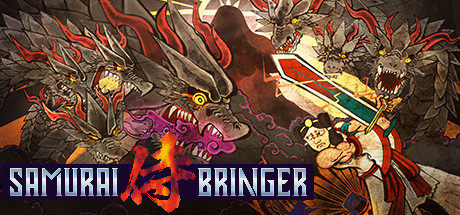
Draws from Japanese mythology: The story is heavily inspired by Japanese mythology, particularly the legend of Susanoo slaying Yamata no Orochi, and incorporates Sengoku history and yokai. This blend provides a unique narrative framework.
Comparisons to other games: Reviewers compare the game to various other titles such as Hades, Risk of Rain, Monster Hunter, and Souls series, noting similarities in mechanics or overall feel. These comparisons highlight the game's inspirations and how it stands relative to others.