- Exceptional player freedom
- Huge and complex dungeons
- Immersive and deep RPG
- Clunky and outdated controls
- Buggy and unstable versions
- Frustrating dungeon design
Emotions
Archetypes
Hardware
What players like:
Common complaints:
Gameplay feedback:
Performance notes:
Recommendations:
Other player notes:
Similar games
Blend with other games 88%The Elder Scrolls: Arena
 85%Devil Spire Falls
 85%The Elder Scrolls III: Morrowind® Game of the Year Edition
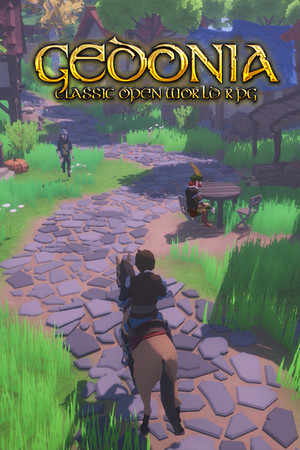 83%Gedonia
 82%The Elder Scrolls IV: Oblivion® Game of the Year Edition (2009)
 81%Gothic 1
 81%The Elder Scrolls V: Skyrim
 81%An Elder Scrolls Legend: Battlespire
 81%Arcanum: Of Steamworks and Magick Obscura
 80%Sacred Gold
 80%Risen
 80%Grimoire : Heralds of the Winged Exemplar (V2)
Review evidence
Why players say this
Review evidence
Why players say this
Steam review verdict
A deep immersive RPG with exceptional freedom and huge complex dungeons, but clunky outdated controls, buggy unstable versions, and frustrating design test your patience.
What players like
Exceptional player freedom: Players enjoy immense freedom in gameplay, allowing them to do whatever they want and approach the game in their own way. This freedom extends to quests, character development, and exploration.
Huge and complex dungeons: Dungeons are massive, sprawling, and randomly generated, often described as easy to get lost in. They are fun and challenging, adding to the game's depth.
Immersive and deep RPG: The game is highly immersive with incredible depth in its role-playing system. Players often lose themselves in the world and its mechanics.
Custom spellcrafting system: The game features a deep magic system where players can create their own spells with various combinations. This system offers significant freedom and is a highlight for many reviewers.
Authentic old-school RPG experience: The game provides a hardcore, old-school fantasy RPG experience reminiscent of the 90s. It is uncompromising and appeals to fans of classic roleplaying.
Common complaints
Clunky and outdated controls: Many players report that the controls are terrible, janky, and non-intuitive, requiring significant adaptation. This makes the game difficult to play by modern standards, with some calling it unplayable.
Buggy and unstable versions: The Steam DOSBox version and GOG Cut are plagued with bugs, instability, and outdated content, making them nearly unplayable. The original DOS version also suffers from significant issues.
Frustrating dungeon design: Dungeons are frequently described as vast, maze-like, and confusing, leading to extreme frustration and making navigation a chore. Their complexity often detracts from the overall experience.
Dated graphics and visuals: Graphics are undeniably dated and look terrible by modern standards, with many noting they were outdated even for their time. This contributes to an archaic feel.
Confusing procedural dungeons: Procedurally generated dungeons are easy to get lost in and are often miserable to navigate, with repetitive layouts that become monotonous over time. This randomness exacerbates the frustration.
Gameplay and performance
Procedurally Generated World and Cities: The game world, including cities, dungeons, and landscapes, is largely procedurally generated. This creates a massive, varied map spanning tens of thousands of square kilometers.
Vast Open World Exploration: The game features an enormous open world that players can freely explore, filled with dungeons, towns, and side quests. The scale is immense, often compared to the size of Great Britain.
Massive Maze-Like Dungeons: Dungeons are huge, labyrinthine, and procedurally generated, offering extensive exploration and crawling. They are a core part of the quest structure and gameplay.
Deep Character Creation System: Players can extensively customize their characters with stats, skills, races, classes, advantages, and disadvantages. The system allows both custom builds and pre-built class options, offering significant freedom and depth.
Fast Travel System: Fast travel is available to quickly move between towns and locations, which is often essential given the massive map size. Players can also choose to walk manually, but that takes a very long time.
Daggerfall Unity Boosts Performance: Daggerfall Unity significantly improves FPS and stability over the original DOS release, running smoothly on modern systems even with many mods and at 4K. It eliminates the lag, crashes, and emulation issues present in the original version.
Modern Resolutions and Widescreen Support: Daggerfall Unity supports modern resolutions, widescreen, and 4K, which looks awesome especially with modern lighting effects. Native widescreen and high resolution support are key improvements.
General Performance Issues: The game is often described as notoriously unoptimized, with performance issues so severe that it is compared unfavorably to PowerPoint. FPS drops can occur even on powerful PCs.
Runs Well on Low-End Hardware: The game has low PC requirements and puts almost no strain on a modern PC, running smoothly on very basic hardware. It also has a small game size, making it accessible to a wide range of systems.
Fullscreen and Windowed Mode Issues: Fullscreen mode does not work properly, alt-tabbing causes problems, and windowed mode has display issues where the screen cannot be scaled larger. These display problems hinder the overall experience.
Recommendations
Recommended for retro RPG fans: The game is highly recommended for fans of retro games, old-school RPGs, and classic CRPGs. Players who enjoy traditional RPG mechanics and can tolerate dated visuals will find a rewarding experience.
Recommended for Elder Scrolls fans: Reviewers consistently recommend the game to fans of The Elder Scrolls series, including those who have only played modern entries like Skyrim, Oblivion, and Morrowind. It is seen as a must-play for series enthusiasts.
Avoid original DOS version: Many reviewers explicitly warn against playing the original DOS or DOSBox version due to jank, low draw distance, and poor modern compatibility. The Steam version is often called unplayable without Daggerfall Unity.
Installation and modding guide: Reviewers provide detailed instructions for installing Daggerfall Unity, often recommending manual installation with custom mods. Following setup guides is emphasized for the best experience.
Mixed ratings and general recommendation: Reviewers give varied numerical ratings, but the overall sentiment remains positive. Most still recommend the game, especially when played with Daggerfall Unity.
Buying context
Community fair range: $5.00 - $15.00.
Game completion: 500.0h.
Story completion: 18.0h.
Session length: 3.0h.
For many players, Daggerfall becomes fun after surviving the brutal tutorial dungeon and steep learning curve; once past that opening, the sandbox opens up and becomes addictive, though repetition can set in later.
Reported time to anchor: 3h.
Friction: Tutorial dungeon is brutally difficult and can kill new players; Steep learning curve for tabletop/computer RPG systems; Dated 90s controls and interface require fighting the UI; Waiting/resting and map navigation feel tedious; Procedurally generated quests and dungeons become repetitive; Bugs and quirks can ruin progress.
Player profiles
Old-School Hardcore CRPG Veteran: Grinds skills and gear, learns obscure mechanics, explores lethal dungeons, and treats difficulty and lack of hand-holding as part of the appeal. Motivation: To master a demanding, systems-heavy classic RPG that rewards patience, preparation, and tolerance for jank rather than modern conveniences. Stance: buy.
Daggerfall Unity Modder/Modernizer: Installs Daggerfall Unity, patches, Reshade or DREAM, and curated mod collections; tweaks graphics, controls, stability, and quality of life before playing. Motivation: To get the best playable version of Daggerfall through community patches, mods, and visual or interface overhauls. Stance: buy.
Sandbox Roleplayer/Explorer: Builds custom classes, joins guilds and factions, explores the huge world, and pursues side quests, loot, and personal narratives over the main story. Motivation: To create and inhabit their own character through open-ended roleplay, faction choices, exploration, and self-directed goals. Stance: buy.
Platform notes
The available hardware-tagged reports are sparse: lower-VRAM Windows systems describe optimization issues, while mid/high-VRAM Windows systems report stable play with rare crashes.
Windows <8GB VRAM: negative. The reported 4GB VRAM Windows 11 system struggled with long loading times and frame rate drops, making the port feel poorly optimized.
Windows 12-15GB VRAM: positive. The reported Windows 11 system in this range ran extremely stable with only occasional rare crashes.
Steam Deck: Feedback for Daggerfall Unity on Steam Deck is mixed-to-positive: the Unity port delivers stable framerates, quest stability, mod support, native Linux compatibility, and controller support, which removes most of the classic compatibility hazards. The main friction points are procedural (editing Steam launch options so the Unity build starts instead of the original game) and ergonomic (a clunky, unfamiliar control scheme that users must reconfigure). No crashes, anti-cheat failures, or launcher-navigation-with-touchscreen scenarios appear in the evidence, so the strict 40+ override is not triggered, but the required launch-option tweak keeps the experience out of the seamless band.
Extra review signals
Mod reliance: The feedback centers on recommending Daggerfall Unity and various mods for modernization, graphics, combat, and quality-of-life. No user reports a crash on startup, broken quest, or a widespread requirement for a patch to make the game playable. The strongest mandatory-sounding claims are aesthetic or preference-driven, so the mod tax is low.
External guides: The reviews show a clear Wiki Tax centered on instructional dependence: players need the UESP wiki or manuals for character creation, leveling, complex mechanics, quests, maps, and full-game completion. Bug and setup issues also require external patch downloads, but no farming/drop-rate or inventory/crafting evidence is present. Under the strict priority scan, the Tier 3 instructional dependency triggers before the default Tier 4 bug and setup issue, producing a score of 50.
Other review notes
Daggerfall Unity is essential: The vast majority of reviews recommend playing Daggerfall Unity over the original DOS or Steam release. It modernizes the engine, fixes bugs, and provides a stable, user-friendly experience.
Unity version enables modding: Daggerfall Unity has extensive mod support, including graphical mods, quality-of-life improvements, and total conversions. Mods are seen as essential for fully enjoying the game.
Daggerfall Unity is highly recommended: Many reviewers explicitly recommend playing Daggerfall Unity over the original, citing improved graphics, interface, and overall experience. It is considered the best way to play the game.
Mods enhance experience significantly: Mods are seen as essential to fully enjoy the game, improving graphics, fixing bugs, and adding new content. The active modding community keeps the game current.
Game is completely free: Both the original DOS version and the Daggerfall Unity port are distributed for free. Reviewers frequently highlight that the game can be played without any cost.