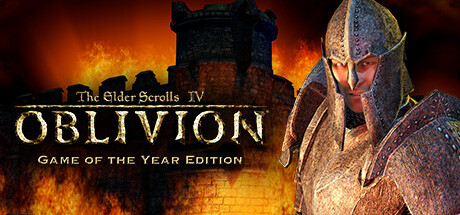
The Elder Scrolls IV: Oblivion® Game of the Year Edition (2009) Review Summary
- Overwhelmingly positive reviews
- Excellent quests and side quests
- Immersive open world exploration
- Broken leveling system
- Dated graphics and bugs
- Frequent crashes and instability
Emotions
Archetypes
Hardware
What players like:
Common complaints:
Gameplay feedback:
Performance notes:
Recommendations:
Other player notes:
Similar games
Blend with other games 89%The Elder Scrolls III: Morrowind® Game of the Year Edition
 87%The Elder Scrolls V: Skyrim
 87%The Elder Scrolls IV: Oblivion Remastered
 84%The Elder Scrolls II: Daggerfall
 83%The Elder Scrolls V: Skyrim Special Edition
 83%Gothic II: Gold Edition
 82%Gothic® 3
 82%Gothic 1
 81%The Elder Scrolls: Arena
 81%Kingdoms of Amalur: Re-Reckoning
 80%Gedonia
 80%The Witcher 3: Wild Hunt
Review evidence
Why players say this
Review evidence
Why players say this
Steam review verdict
Despite broken leveling, dated graphics, bugs, and frequent crashes, its excellent quests and immersive open world still earn overwhelmingly positive reviews.
What players like
Overwhelmingly Positive Reviews: Players consistently describe the game as fantastic, great, fun, and legendary, with many calling it one of the best games of all time. The sentiment is strongly positive across a large number of reviews.
Excellent Quests and Side Quests: Quests are frequently praised as excellent, addictive, and among the most interesting in the series. Side quests are also highlighted as detailed and engaging.
Timeless Enjoyment Despite Age: Many reviewers note that the game remains enjoyable and holds up well despite its age and flaws. It is still considered better than some modern games and is fun to revisit.
Best Elder Scrolls Game: Many consider it the best or one of the best games in The Elder Scrolls series, often citing it as a must-play and praising its DLC.
Engaging and Amazing Story: The story is repeatedly described as engaging, amazing, and enthralling, with the main narrative drawing players in effectively.
Common complaints
Broken Leveling System: Players frequently criticize the leveling system as broken, odd, or terrible, with auto-leveling and level scaling exacerbating the issue. This can ruin hours of gameplay if not understood.
Dated Graphics: Graphics are widely considered old, outdated, and weak, even in the remaster. They do not meet modern standards and feel visually unimpressive.
Bugs and Instability: The game is plagued by numerous bugs, some game-breaking, that remain unfixed after years. These issues can make the experience distressing and require mods to mitigate.
Goofy NPC Appearance: NPC faces are famously comical, potato-like, and ugly, often breaking immersion. This dated character design is a common complaint.
Dated Combat Mechanics: Combat is described as simple, janky, and dated, having aged poorly compared to modern standards. It lacks depth and feels unsatisfying.
Gameplay and performance
Open world exploration: Players value the vast open world of Cyrodiil, with countless quests and unique locations. The freedom to explore freely and postpone the main storyline is a key strength.
Modding support: The game is highly moddable, with support for various mod managers and INI tweaks. Mods can significantly improve and extend the experience.
Open-world fantasy RPG experience: The game is consistently described as an open-world fantasy RPG set in Cyrodiil, offering a sandbox medieval fantasy setting. This genre definition is central to its identity.
Guild questlines: Guilds and factions offer complete questlines, including the Mages Guild, Fighters Guild, Thieves Guild, and Dark Brotherhood. These provide diverse storylines and objectives.
Main story and side content: The game features an overarching main storyline along with numerous side quests. The balance between main quest and optional content is well-received.
Frequent crashes reported: A large number of reviews mention frequent crashes, ranging from every 30 minutes to every few hours, often disrupting gameplay and progress. Some players experience crashes at launch or while loading saves.
Remaster performance criticized: Many players report that the remastered version suffers from severe optimization issues, including lag, screen tearing, and poor performance even on capable hardware. The original version often runs better and is more stable.
Mods improve stability: Using community mods and patches can significantly stabilize the game and fix many issues, making it playable. Without mods, the game may be unstable or unplayable for some.
Poor optimization noted: Multiple reviews mention that the game is poorly optimized, leading to performance issues even on high-end systems. This is a common complaint across different versions.
Runs well on low-end PCs: Several players note that the game runs smoothly on low-end or older hardware, often better than expected. This contrasts with the remaster's high requirements.
Recommendations
Original preferred over remaster: Many reviewers strongly recommend playing this original version instead of the remastered version, citing a more streamlined and authentic experience. They consider the remaster not worth buying when this version is available.
High recommendation across board: Many reviewers simply state 'recommended' or 'highly recommend' without detailed reasons. This indicates broad satisfaction with the game.
Great for Skyrim fans: Fans of Skyrim are encouraged to play this game to experience the roots of the Elder Scrolls series. If you loved Skyrim, you will likely enjoy Oblivion as well.
Worth it on sale: Several reviewers suggest waiting for a discount or buying only when on sale. They find it worth the purchase at a reduced price.
Recommended for RPG fans: Reviewers highly recommend this game to RPG enthusiasts, especially those who enjoy dark fantasy RPGs. Even those slightly interested in RPGs should give it a try.
Buying context
Community fair range: $5.00 - $20.00.
Game completion: 115.0h.
Session length: 24.0h.
Endgame: 20.0h.
Oblivion most often clicks after the tutorial and slow opening, once quest progression and the open-world loop take over; some players fall in love within the first hour, while others report early friction and later repetition.
Friction: tutorial buyer's remorse; slow beginning; first few hours feel meh; outdated mechanics and clunky UI; pacing issues for new players; tedious dungeons and Oblivion gates.
Unlock drivers: progression and interesting quests as you progress; learning to use the TES opens up the game; addictive loot and exploration loop; random crazy side quests; one-handed sword combat; satisfying progression based on what you use.
Player profiles
Nostalgic Veteran Returner: Long-term repeat playthroughs, completionist exploration, and revisiting familiar quests. Motivation: Revisiting a beloved childhood or favorite RPG for comfort, memories, and long-term familiarity. Stance: buy.
Mod-Centric PC Tinkerer: Mod-heavy PC setup with visual overhauls, gameplay fixes, and load-order troubleshooting. Motivation: Customizing and modernizing the game through mods while managing old-game instability. Stance: sale.
Elder Scrolls Newcomer and Immersion Explorer: Self-paced questing, exploration, character building, and roleplay in an open world. Motivation: Discovering the Elder Scrolls series and accessible RPG immersion through Oblivion. Stance: buy.
Platform notes
Across the provided cohorts, Windows performance is inconsistent below 16GB VRAM: the 8-11GB tier is mostly negative, while the <8GB and 12-15GB tiers show mixed reports of smooth play and crashes. The 16GB+ Windows tier is positive, and the Linux/Proton <8GB snippet contains only negative performance commentary.
Windows <8GB VRAM: mixed. Some low-VRAM and integrated setups report smooth performance, but crashes, save/load failures, and frame issues are also common.
Windows 8-11GB VRAM: negative. Most included reports describe severe stuttering, crashes, and display or settings problems, with only one positive or caveated mention.
Windows 12-15GB VRAM: mixed. Some users report stable performance and prefer this version over the remaster, while others cite boot crashes and random crashes, especially with localization.
Steam Deck: The Steam Deck experience for this game is functional but consistently requires tinkering. The most frequent and impactful barrier is the total lack of native controller support, forcing users onto community layouts or Steam Input, which several describe as clunky or unplayable. A meaningful subset of users also reports hard crashes and black-screen launch failures. On the positive side, many reviewers confirm smooth performance and multi-year Deck play once mods or community bindings are set up. Because the game is playable only after manual configuration and input workarounds, it falls squarely in the Tinkering Required band rather than Seamless.
Linux and Proton: Linux users generally report that the game works and remains stable, with one user noting easy modding and another reporting no crashes over 16 hours on Linux. The main Linux-specific issue is audio or sound problems reported by two users, including one on Linux Mint. No launch, Proton, anti-cheat, or DRM blockers appear in the evidence, so Linux compatibility is mostly functional with minor audio quirks.
Extra review signals
Monetization: The reviews discuss Oblivion's paid DLC, especially the Horse Armor Pack and the GOTY Deluxe edition. Complaints center on DLC edition confusion, missing DLC, and pressure to buy a Deluxe version for all add-ons. There is no evidence of real-money gacha, loot boxes, pay-to-win purchases, an ongoing cash shop, or currency obfuscation. The monetization is therefore best classified as traditional paid DLC and edition bundling, which the scoring rules cap at 20.
Mod reliance: The reviews show a consistent reliance on community fixes for Oblivion: unofficial patches, community patches, the 4GB patch, and script extenders are repeatedly presented as standard setup to address bugs, modern-hardware compatibility, and performance. Some users call the vanilla game unplayable without mods, but these are broad claims and no consensus of startup crashes or universal launch failure appears. The evidence therefore fits a buggy-but-playable game with a meaningful mod tax, not a broken executable.
External guides: The feedback primarily concerns external wiki or guide reliance for location tracking, bug warnings, error checking, and mod search. There is no explicit mention of farming, drop rates, loot tables, inventory management, crafting requirements, quest outcomes, builds, secrets, or complex mechanics. Under the strict priority algorithm, no Tier 1, Tier 2, or Tier 3 trigger is present, so the audit defaults to Tier 4: The Tourist.
Other review notes
Favorable comparisons to Skyrim: Reviewers frequently compare this game to Skyrim, often praising its main quest, RPG mechanics, and writing as superior. However, opinions differ on side content and graphics.
Extensive DLC and expansions: The game offers multiple DLCs and expansion packs, including Shivering Isles, with all available in the Game of the Year edition. Some reviewers note that accessing all content may require additional payment beyond the base game.
Strong modding support and community: The game is highly moddable, with a large number of high-quality mods created by a dedicated community. Many players consider mods essential to enhance or even ensure playability.
Remaster existence and requirements: A remastered version exists, built in Unreal Engine 5 with modern graphics. It requires a more powerful PC and has a larger file size compared to the original.
Compared favorably to Morrowind: Reviewers compare the game to Morrowind, noting it is less tedious, more user-friendly, and more modernized. Some consider it a step up with broader appeal while maintaining great storytelling.