- Improved UI and controls enhance gameplay.
- Compelling narrative and immersive atmosphere.
- Combines apartment management and ministry work.
- Game riddled with persistent bugs.
- Lacks innovation; inferior to predecessors.
- Limited player agency; choices predetermined.
What players like:
Common complaints:
Gameplay feedback:
Performance notes:
Recommendations:
Other player notes:
Similar games
Blend with other games






Review evidence
Why players say this
Review evidence
Why players say this
What players like
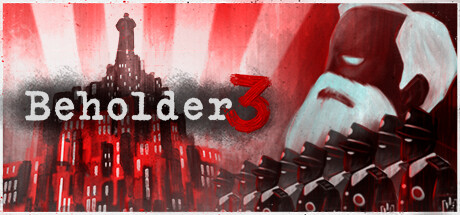
Combines best elements from predecessors: Many reviewers appreciate that the third game successfully blends elements from previous installments, particularly the first, creating a familiar yet updated experience. It retains core mechanics and improves upon them with enhanced graphics and new features. This return to roots is a significant positive for long-time fans.
Improved UI and controls: Reviewers noted improvements to the user interface and controls, making the game more accessible and user-friendly. Streamlined processes, such as the reporting system with auto-filled entries, enhance the overall gameplay experience. The game also offers customizable keybindings.
Convenient save system: The game features a save system that allows players to load previous saves and replay missions. This feature, along with frequent autosaves, helps mitigate the impact of bugs and allows players to experiment with different choices. The ability to save at will is a welcome addition.
Compelling narrative and atmosphere: The game features a compelling and branching narrative with multiple endings, creating a sense of paranoia and pressure. Players face moral dilemmas and experience consequences for their choices, leading to high replayability. The atmosphere, music, and sound design enhance the tension and immersion.
Appealing graphics and style: Some reviewers found the game visually appealing, praising the graphics, art style, and character design. The game's overall aesthetic is considered stylish and cute. However, these points lack specific details.
Common complaints
Game riddled with persistent bugs: The game is plagued with numerous bugs, including game-breaking issues like crashes, freezes, corrupted saves, and quest progression blockers. Many of these bugs have persisted for years without fixes, leading to frustration and unplayability. Some reviewers specifically mention visual glitches, UI problems, and control issues.
Lacks innovation; inferior to predecessors: The game fails to live up to the standards set by its predecessors, lacking innovation and depth. Reviewers feel that the story, characters, and choices are less impactful, and the atmosphere is not as immersive. The game often rehashes elements from previous installments without adding anything new or interesting.
Limited player agency; choices predetermined: The game's choices often feel predetermined, limiting player agency and making decisions less impactful. Many quests lack meaningful consequences, with outcomes being the same regardless of player actions. This diminishes the sense of control and investment in the game's world and story.
Weak narrative, uninspired characters: The game suffers from a weak and unengaging narrative, with a linear plot, uninteresting characters, and a lack of meaningful choices. Reviewers find the story predictable and the characters shallow, leading to a monotonous and unfulfilling experience. The game's plot development and character building are not as good as the previous two games.
Clunky controls and navigation issues: The game suffers from clunky controls and navigation issues, particularly with staircases and object interaction. Reviewers report getting stuck in the environment and experiencing imprecise controls, making apartment searches and general movement frustrating. The game's support for controller movement and elevator feel is notably poor.
Gameplay and performance
Combines apartment management and ministry work: The core gameplay loop combines elements from previous Beholder games, tasking players with managing an apartment building while simultaneously working within the Ministry. This involves surveillance, reporting, resource management, and making impactful choices, creating a dual-life dynamic.
Ministry work lacks depth: The game features a dual setting of home and ministry. However, some players find the ministry aspect lacking depth and the constant commuting between locations tedious. The apartment management is also not as comprehensive as in the first game.
Blackmail and reporting mechanics: The game features systems for gathering evidence, writing reports, and blackmailing characters. Players must strategically use surveillance, infiltration, and manipulation to gather compromising information and influence events, deciding whether to conform or rebel.
Story involves ministry power struggles: The game's story revolves around reforms and power struggles within the Ministry, with the player navigating conflicting interests of reformists, conservatives, and rebels. Players must make choices that align them with different factions, influencing the story's outcome.
Tedious back-and-forth travel: Players find the constant back-and-forth travel between locations tedious and inconvenient. This repetitive movement detracts from the overall gameplay experience.
Quest and interaction bugs: Several quests and interactions are bugged, causing issues such as incorrect objectives, glitched character appearances, and missing item information. These bugs can disrupt gameplay and immersion.
Polarizing control scheme: Some players find the game controls difficult to get used to, while others find them convenient. This suggests a potential lack of intuitiveness or customization options.
Driver-specific audio bug: Specific graphics driver versions cause a continuous 'ding-dong' sound upon startup, requiring a graphics driver restart to resolve. This is a niche issue, but can be very annoying.
No official Japanese localization: The game is not officially localized to Japanese, but can be unofficially translated by the user. This may limit the game's accessibility to Japanese-speaking players.
High-quality soundtrack: The soundtrack continues to be high-quality and fitting for the franchise.
Recommendations
Meaningful moral dilemmas presented: The game presents players with difficult moral choices and impactful decisions, often forcing them to balance personal survival with ethical considerations. Players must navigate surveillance, document work, and tenant interactions while facing psychological stress and worrying about the consequences of their actions.
Mixed, potentially review bombing: Some reviews contain sarcastic remarks or hyperbolic praise without specific details, which reduces their overall constructiveness. One reviewer sarcastically describes their in-game life as a success, implying a negative experience, while another gives a perfect score with limited justification.
Not for new players: The game is not recommended for newcomers to the series, and some reviewers feel it has become a cash grab, losing the impact of earlier titles. This suggests a decline in quality or a shift in focus that alienates long-time fans.
Watch Let's Play first: One review suggests watching a Let's Play before purchasing to avoid spoilers. This is not a critique of the game itself, but rather a suggestion for managing the player's experience.
Other review notes
Lacks immersion, confusing choices: Some reviewers found the game confusing, with unclear objectives and difficulty remembering character names. Choices lack significance, and the player feels like an observer due to a lack of immersion.
Updated art style and graphics: The game features a 2.5D art style with brighter colors, a departure from previous installments. The art style incorporates red into the black and white character designs and the architecture and furniture are more modern.
Less content, larger file size: Despite a larger file size, the game offers less content than its predecessors. There are 37 achievements and 25 items available in the points shop.
Setting inspired by Soviet Union: The game is set in the "Great Alliance", inspired by the Soviet Union and "Eurasia" from "1984", but the starting date of June 3, 1989, suggests something else.
Missing Portuguese-Brazilian translation: The game lacks an official or fan-made Portuguese-Brazilian translation, potentially limiting accessibility for some players.