- Gameplay evolves and refines over trilogy
- Trilogy praised as a masterpiece
- Memorable characters; player choices impact narrative
- Legendary Edition improves overall experience
- Mass Effect 3's controversial ending
- Persistent bugs and technical flaws remain
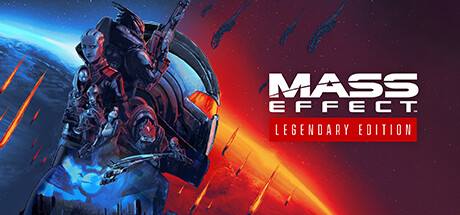
Emotions
What players like:
Common complaints:
Gameplay feedback:
Performance notes:
Recommendations:
Other player notes:
Similar games
Blend with other games 88%Mass Effect 2 (2010) Edition
 87%Mass Effect™ 3 N7 Digital Deluxe Edition (2012)
 84%Mass Effect (2007)
 81%Mass Effect™: Andromeda Deluxe Edition
 69%Dragon Age™ Inquisition
 66%The Technomancer
 66%STAR WARS™ Knights of the Old Republic™ II - The Sith Lords™
 66%The Legend of Heroes: Trails beyond the Horizon
 65%Dungeons & Dragons Neverwinter Nights 2: Enhanced Edition
 65%The Outer Worlds 2
 65%The Outer Worlds: Spacer's Choice Edition
 64%Trails in the Sky 1st Chapter
Review evidence
Why players say this
Review evidence
Why players say this
What players like
Gameplay evolves and refines: While Mass Effect 1's original combat was often criticized, the Legendary Edition and subsequent games significantly improve gunplay, movement, and RPG mechanics. Mass Effect 2 is noted for its action-focused refinement and Mass Effect 3 for its fluid, dynamic combat and balanced progression.
Trilogy praised as a masterpiece: Many players laud the Mass Effect trilogy as one of the greatest game series, a masterpiece in storytelling and character development, and a benchmark for sci-fi RPGs. Its enduring quality is frequently highlighted, with some considering it the best gaming experience ever.
Legendary Edition improves experience: The Legendary Edition is widely acclaimed as the definitive way to play the trilogy, offering significant graphical overhauls (especially for Mass Effect 1), quality-of-life improvements, and the inclusion of almost all single-player DLCs. This consolidation provides a seamless and enhanced experience for both veterans and newcomers.
Memorable and well-developed characters: The characters are consistently cited as a major highlight, with players forming deep emotional bonds. Companions are described as charismatic, relatable, and well-written, with distinct personalities and compelling individual stories, making their interactions and fates impactful.
Choices profoundly impact narrative: A core strength of the trilogy is the significance of player choices, with decisions in one game having far-reaching consequences in subsequent installments. This robust system influences character fates, major plot points, and the overall galactic conflict, enhancing replayability and emotional investment.
Common complaints
Mass Effect 3's Controversial Ending: The ending of Mass Effect 3 remains a major point of contention, with many players finding it unsatisfying, illogical, and inconsistent with choices made throughout the trilogy. It is widely considered a weak conclusion that detracts from the overall series.
ME2/ME3 RPG & Story Changes: Mass Effect 2 and 3 are frequently criticized for reducing RPG elements, streamlining inventory/skill systems, and shifting towards a more action-shooter focus. The story in ME2 is often seen as a 'filler' side quest, and ME3's narrative and character interactions are perceived as less developed and impactful.
Persistent Bugs & Technical Flaws: Despite being a remaster, the Legendary Edition still contains numerous bugs and glitches carried over from the original games, and some new ones. These technical issues, ranging from visual anomalies to game-breaking problems, detract from the overall experience across all three titles.
Dated Gameplay & Exploration (ME1): Mass Effect 1's gameplay, combat, and Mako vehicle exploration are widely criticized for being clunky, repetitive, and monotonous. Players found side quests generic and planet traversal tedious due to empty, recycled environments and poor controls. Many feel it has aged poorly, even with remaster improvements.
Remaster Limitations: Many players expressed disappointment that the Legendary Edition is primarily a graphical update and not a full remake. They desired more substantial changes, such as reworked quests, improved mechanics, or alternative endings, feeling the remaster was a missed opportunity and somewhat superficial.
Gameplay and performance
Story Structure and Core Missions: Each game in the trilogy has a distinct story arc. Mass Effect 1 focuses on uncovering the Reaper threat and assembling an initial team. Mass Effect 2 centers on Commander Shepard's revival and building a loyal squad for a perilous 'suicide mission'. Mass Effect 3 culminates in an all-out galactic war against the Reapers, requiring Shepard to unite diverse races, leading to a controversial but impactful ending.
Evolving Gameplay and RPG Mechanics: The Mass Effect trilogy features a significant evolution in gameplay across its three titles. Mass Effect 1 emphasizes traditional RPG elements with slower-paced combat and extensive inventory management, while Mass Effect 2 shifts towards a more action-oriented cover-shooter style with simplified RPG mechanics and a new ammunition system. Mass Effect 3 refines the combat and reintroduces some deeper RPG elements, creating a dynamic progression throughout the series.
Exploration and Resource Gathering Changes: Exploration mechanics vary significantly between games. Mass Effect 1 features open-world planetary exploration using the Mako vehicle for resource gathering and mission discovery. Mass Effect 2 replaces this with a planet-scanning mini-game for resources, while focusing more on character-driven missions. Mass Effect 3 streamlines resource gathering to support the 'war assets' system, with less emphasis on direct planetary exploration.
Commander Shepard as Protagonist: Players embody Commander Shepard, an elite human soldier tasked with saving the galaxy from the Reaper threat. Shepard's appearance, class, and moral alignment are customizable, and their relationships with crew members evolve throughout the series. The narrative heavily revolves around Shepard's journey and choices, which shape their character and the fate of the universe.
Companion System Evolution: Companions are integral to the Mass Effect experience, offering unique abilities, backstories, and loyalty missions. Mass Effect 1 allows for automatic companion actions, while Mass Effect 2 greatly expands the squad size and emphasizes building loyalty through dedicated missions, with the potential for permanent consequences. Companion interactions are key to unlocking dialogue and side quests.
Improved Visuals & Performance: The Legendary Edition significantly upgrades graphics for Mass Effect 1, 2, and 3, featuring 4K visuals, higher resolution textures, and unlocked frame rates. Players report smooth performance on modern PCs, including the Steam Deck, with drastically reduced loading times.
Occasional Graphical & Performance Issues: Despite overall improvements, some players still encounter graphical glitches, blurriness, occasional lag, freezes, and crashes. Specific issues include disappearing textures, sound drops, and FPS drops in certain areas, particularly in Mass Effect 1.
Variable PC System Requirements: While Mass Effect 1 is considered to have very low 'potato-level' PC requirements, the overall trilogy's requirements are described as decent to average, with inconsistent performance on less powerful systems.
EA App Integration Issues: The game's reliance on the EA App for launching, even via Steam, is a significant point of frustration for players. Issues with the EA App itself, or conflicts with its overlay, can prevent the game from launching or cause crashes.
Large Installation Size: The combined size of all three games and their content in the Legendary Edition is substantial, consuming a considerable amount of hard drive space (around 10% of a 1TB drive).
Recommendations
Highly Recommended Trilogy: The Mass Effect Legendary Edition is overwhelmingly recommended as a must-play experience for both newcomers and veterans. Players laud its engaging story, memorable characters, and the overall epic space adventure it offers, often calling it one of the best game trilogies ever.
Ideal for Sci-Fi & RPG Fans: The game is particularly recommended for those who enjoy science fiction, RPGs, story-driven games, and titles with impactful choices. It's often compared favorably to franchises like Star Wars and Star Trek, appealing to players seeking deep narratives and immersive worlds.
Purchase During Sales: Many reviewers emphasize that the Legendary Edition offers exceptional value, especially when purchased at a discounted price. It's frequently cited as a 'no-brainer' buy when on sale, offering hundreds of hours of content for a low cost.
Modding Enhances Experience: For subsequent playthroughs or veterans, many players recommend dabbling with mods, particularly those that address visual improvements, community patches, or specific game aspects. Some even suggest modding for a first playthrough to smooth out imperfections.
Mass Effect 1's Role: Player opinions on Mass Effect 1 are divided; some strongly recommend playing it for world-building and story continuity, while others suggest it can be skipped due to perceived dullness or dated mechanics. Many advise patience for those new to the game.
Other review notes
Desire for a full remake: Despite the Legendary Edition being a remaster, some players express a desire for a full remake that would unify the trilogy into a single, cohesive game with a consistent, more RPG-focused gameplay style.
Anticipation for future Mass Effect games: Players are eagerly awaiting future Mass Effect installments, hoping they live up to the legacy of the original trilogy. There's a strong desire for a direct sequel to the original story, despite caution after Andromeda.
Tali and Garrus are fan-favorite companions: Tali and Garrus are consistently highlighted as beloved characters, with players often romancing Tali and frequently selecting both as squadmates.
Andromeda had mixed reception but new players found it passable: Mass Effect Andromeda is acknowledged as a stumble for BioWare, with many understanding the negative reception. However, some players who started with Andromeda found it enjoyable enough to explore the original trilogy.
Initial hesitation with sci-fi setting: Some players, initially unfamiliar or uninterested in the sci-fi genre, found themselves captivated by Mass Effect's story and world, despite their initial reservations about space, lasers, and aliens.