- Fun and engaging gameplay
- Natural and intuitive controls
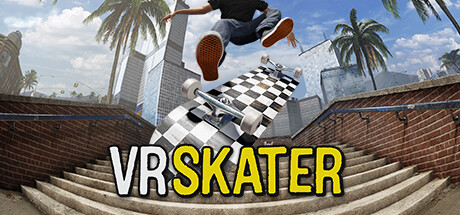
- Immersive VR skateboarding experience
- Limited turning and movement
- Poor value for price
- Physically tiring gameplay
Emotions
Archetypes
What players like:
Common complaints:
Gameplay feedback:
Performance notes:
Recommendations:
Other player notes:
Similar games
Blend with other games



Review evidence
Why players say this
Review evidence
Why players say this
Steam review verdict
Fun, engaging VR skateboarding with natural, intuitive controls and immersion, but limited turning, physical fatigue, and poor value hold it back.
What players like
Fun and engaging gameplay: Players find the game very fun, addictive, and engaging. Many describe it as a great and immersive experience overall.
Natural and intuitive controls: Controls are widely praised as feeling natural and carefully designed. Many find them intuitive and easy to master after a short learning period.
Immersive VR skateboarding experience: Skating in VR feels realistic and immersive to many players. The game successfully captures the feeling of real skateboarding in a virtual environment.
Satisfying trick execution: Performing and landing tricks is highly rewarding, especially after effort. The satisfaction of nailing a trick is often highlighted.
Good graphics and performance: Graphics are generally considered good, with some calling them beautiful and smooth. Performance is also noted as solid.
Common complaints
Limited turning and movement: The game restricts turning to about 60 degrees and lacks free-roam skating, forcing forward-only movement. This limited mobility is frustrating for players expecting open traversal.
Poor value for price: Reviewers feel the game is overpriced given the amount of gameplay and content it offers. The high cost is not justified by what is currently available.
Physically tiring gameplay: Players find the game physically exhausting, with some feeling tired after only half an hour. The physically demanding nature is a downside for many.
Crashes and technical issues: Some players experience crashes when starting the game or after restarting, which prevents them from playing. These issues are severe for those affected.
Visual glitches in levels: Visual glitches affect several main and DLC levels, detracting from the experience. Players report these bugs ruining specific levels.
Gameplay and performance
VR skateboarding simulation: The game is fundamentally a skateboarding simulator built for VR, with players using motion controls to perform tricks. It blends arcade-style runs with simulation physics.
Motion-based trick controls: Tricks are performed through hand and arm gestures that mimic real skateboarding movements, often combined with button presses. The control scheme uses hand tracking and controller motions to execute flips, grabs, and grinds.
Steep learning curve: The game requires significant practice to master tricks and controls, with muscle memory being essential. Players report that the controls take time to get used to but become easier once understood.
Extensive trick system: The trick system includes flips, grabs, grinds, manuals, and transition tricks that can be chained together. Specific tricks include kickflips, ollies, nose slides, boardslides, and manuals.
Core gameplay loop: The game involves learning controls and performing tricks across stages and training areas. Runs are session-based, with players building flow and chaining tricks.
Severe performance issues: The game runs poorly, with constant freezing, low framerate, and delayed actions making it unplayable after short sessions. Graphics settings do not improve performance.
Frequent crashes reported: Players experience repeated crashes, including after restarts, during the intro tutorial, and when entering the game. Some crashes occur when launching with DirectX11 without a specific launch option.
Stuttering during map loading: Heavy stuttering occurs at the start of each map, though some players report alleviation. Infrequent crashes and screen freezes are also noted.
Improved performance in full release: The full version runs better than earlier versions, and stuttering has been alleviated for some players.
Arm swing recognition issues: On Valve Index, pushing arm swings are only recognized 75% of the time, affecting gameplay responsiveness.
Recommendations
Target audience: VR skaters: Many reviewers recommend the game specifically for VR owners who love skateboarding or skill-based sports simulations. It is often described as the best or only reasonable VR skateboarding option.
Strong general recommendation: A large number of reviewers highly recommend the game without specific caveats, often urging others to buy it and expressing strong satisfaction.
Wait for a sale: Several reviewers advise waiting for a discount rather than paying full price, citing the current price as too high for the amount of content.
Worth the price: Some reviewers feel the game is worth full price and support the developers, saying it is a worthwhile investment even in early access.
Some negative recommendations: A few reviewers strongly advise against buying the game, citing poor controls and better alternatives.
Buying context
Community fair range: $8.00 - $20.00.
Session length: 1.0h.
Endgame: 28.0h.
VR Skater is reported as fun once its demanding controls click, with a steep learning curve preceding satisfying trick execution and addictive repeat attempts. Sparse content and linear levels are common caveats, and some players click much faster than others.
Reported time to anchor: 5m.
Friction: Steep learning curve and demanding trick controls; Tutorial bails and retry prompts slow practice; Sparse content with short, linear levels; Advanced tricks require extra experimentation and patience; Repetitive one-directional level design; High price relative to current content.
Unlock drivers: Mechanics clicking after practice; Progressive tutorial and per-section challenges; Practice mode for repeating tricks; Persistence and precision rewarded with satisfying progression; Skipping tutorial to experiment independently.
Player profiles
VR Skate Simulation Purist: Practices specific lines, grinds, manuals, and leaderboard-style runs while chasing clean landings. Motivation: Mastering precise tricks and landing satisfying, technically demanding combos. Stance: buy.
Social VR Skater Hopeful: Would play co-op races, competitive sessions, and casual multiplayer skate hangouts. Motivation: Skating and competing or hanging out with other players in shared VR spaces. Stance: buy.
Casual Motion-Sensitive Newcomer: Short chill sessions, needing easier push mechanics and clearer beginner onboarding. Motivation: Enjoying skateboarding in VR with accessible controls and low physical demand. Stance: no buy.
Platform notes
Steam Deck: The feedback contains no explicit Steam Deck battery, stability, small-text, or launcher reports. The main technical barrier is missing Windows Mixed Reality controller support, which requires an emulation workaround such as Driver4VR. Controls are otherwise described as intuitive and satisfying, with only minor maneuver inconsistencies and requests for more content.
Other review notes
Frequent comparisons to Skate and Tony Hawk: Many reviewers compare the game to classic skateboarding series like Tony Hawk's Pro Skater and Skate, discussing similarities in controls, structure, and overall feel.
Early access with limited content: The game is frequently described as an early access title with only one map or limited content, and some reviewers note it is a pre-full-release state.
Unique VR skateboarding experience: Reviewers highlight that this is the first real VR skateboarding game, built specifically for VR, offering an immersive experience not possible in flat-screen skate games.
Works on various VR headsets: The game supports Quest 2 via Link/AirLink, runs on HP Reverb G2, and is played on Meta Quest 3, though Windows Mixed Reality controllers lack native support.
DLC and additional content available: A paid DLC with five levels is available, and early access buyers received it for free; new maps were added in updates.