- Enjoyable and addictive gameplay
- Deep settlement management system
- Terraria and RimWorld mashup
- Fun with friends in co-op
- Boss fights poorly balanced
- Lack of story and progression
Emotions
Archetypes
Hardware
What players like:
Common complaints:
Gameplay feedback:
Performance notes:
Recommendations:
Other player notes:
Similar games
Blend with other games






Review evidence
Why players say this
Review evidence
Why players say this
Steam review verdict
An addictive Terraria-meets-RimWorld co-op with deep settlement management, though boss fights are poorly balanced and story progression feels lacking.
What players like
Enjoyable and addictive gameplay: Many players describe the game as fun, engaging, and addictive, with a cozy and chill experience that makes time fly. The core loop is rewarding and well-stitched, appealing to a broad audience.
Deep settlement management system: Settlement building and management is a standout feature, allowing players to construct towns, assign jobs to settlers, and manage resources. It adds significant depth and enjoyment beyond typical survival crafting.
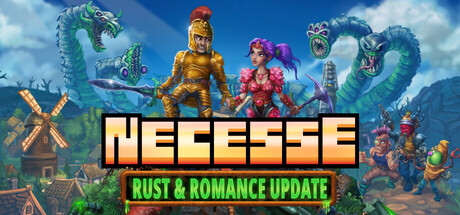
Terraria and RimWorld mashup: The game is frequently described as a blend of Terraria and RimWorld, combining side-scrolling exploration with colony management. This unique mix of mechanics is a major draw for players.
Great value for money: Players widely agree that the game is worth its price, offering many hours of entertainment and substantial content. The general sentiment is that it provides excellent value even at full price.
Varied weapons and classes: The game offers a wide variety of weapons, tools, and armor, supporting multiple playstyles such as melee, ranged, magic, and summoner. This variety keeps combat and progression exciting.
Common complaints
Boss fights poorly balanced: Bosses are often too easy, with many dying on the first try, but there are also extreme difficulty spikes and unbalanced encounters. Some bosses feel annoying or torturous due to long dungeon processes before facing them.
Lack of story and progression: The game has no story and a shallow sense of progression, with repetitive main story advancement. Exploration offers little excitement or uniqueness, leading to boredom.
Melee combat is underpowered: Melee is consistently criticized as weak, outdated, and useless, especially compared to summoner, mage, and ranged builds. In endgame survival, melee classes are washed out and ineffective.
Settlement and settler content underdeveloped: Settler content and settlement gameplay need more development and are hard to get into at first. The settler AI is poor, and the systems require significant work.
Controller support and UI issues: Controller support needs improvement, and the UI is not friendly for controller use, making navigation tedious. There are also minor bugs and UI issues.
Gameplay and performance
Settler recruitment and management: Players can recruit settlers, assign them jobs such as farming, mining, and crafting, and manage their needs. Settlers contribute to base operations and can be equipped for combat.
Automation of NPC tasks: Villager NPCs can be assigned to automate tasks like cooking, chopping, farming, and storage. This automation reduces repetitive chores and improves base efficiency.
Settlement Management and Building: Players can build, upgrade, and manage settlements, including assigning jobs to settlers and recruiting them for combat. Settlement management is a core aspect, similar to games like RimWorld.
Boss battles in game: Players engage in boss fights that are interactive, challenging, and require strategy. Bosses have unique designs and complex mechanics, often involving summoning and dodging attacks.
Multiplayer support and hosting: The game supports multiplayer, allowing up to 250 players, with options to host games or run servers. Cross-platform play between PC and Mac is available, enhancing cooperative experiences.
Multiplayer desync and lag issues: Desync in multiplayer causes loading delays and prevents quest completion, and can make the game unplayable for non-hosts. Network lag, rubber banding, and poor server ping are also reported, though some connections with distant friends handle delays well.
Frequent crashes reported: Multiple players report frequent crashes, including one every few minutes, system lock-ups within 30 minutes, and crashes on Windows and specific Intel OpenGL configurations. This severely impacts stability and playtime.
Poor optimization and performance drops: Players report poor performance, stutter and freezes with large settlements, choppy inventory sorting, and stability degradation over time. The game also fails to utilize CPU cores efficiently, often using only 30-35% load.
Linux compatibility issues: Linux users face resolution issues requiring a compatibility layer, failures to launch on Ubuntu, and multi-monitor problems where the game only displays on secondary monitors in fullscreen. Windowed mode can mitigate the multi-monitor issue.
Display and graphical glitches: Screen tearing and black screens occur with V-Sync enabled, borderless window mode is buggy, aspect ratio is too large, and HDR monitors may lower brightness to zero. Some issues are resolved by adjusting V-Sync or NVIDIA settings.
Recommendations
Strong Terraria and survival comparisons: Many reviewers recommend the game to fans of Terraria, RimWorld, Core Keeper, Minecraft, and Stardew Valley. It is often described as a familiar and enjoyable experience for players who like those titles.
General recommendations to buy: Numerous reviews give a straightforward recommendation to purchase the game, often with strong encouragement such as 'do not hesitate' or 'you will not regret it.'
Positive value and pricing feedback: A recurring theme is that the game is worth its price, with several reviewers saying it offers good value for money. Some specifically mention waiting for a discount or sale before buying.
Enhanced experience with friends: Multiple reviewers highlight that the game is especially fun when played with friends or in co-op. It is frequently recommended for multiplayer sessions and grinding together.
Some negative or reluctant recommendations: A few reviewers do not recommend the game, suggesting players try Terraria, Core Keeper, or RimWorld instead. Others recommend it only reluctantly or with caveats about repetitiveness.
Buying context
Community fair range: $10.00 - $15.00.
Game completion: 100.0h.
Story completion: 40.0h.
Session length: 1.5h.
Endgame: 15.0h.
Necesse is widely reported as highly fun and addictive in its early and mid game, especially once settlement automation and boss progression get rolling, but many players report that enjoyment collapses in the endgame and incursion phase due to repetitive grinding and slow progression.
Friction: Weak or unclear tutorial requiring NPC dialogue reading; Early hours can feel slow; Confusing NPC management systems; Chaotic and unintuitive beginning; Early game lacks more weapon options; Solo combat balance can feel overly punishing early.
Player profiles
Terraria-Style Progression Veteran: Grinds ores, upgrades armor and weapons, explores biomes, and fights bosses on hard difficulties. Motivation: To chase boss-gated gear progression and master a Terraria-like sandbox. Stance: buy.
Colony Automation Manager: Assigns settler jobs, designs production and storage chains, manages farms and logistics, often as a co-op support role. Motivation: To build an efficient, self-sufficient settlement and automate tedious resource work. Stance: buy.
Co-op Social Adventurer: Plays in shared worlds, divides roles, group-bosses, and builds or explores together. Motivation: To share adventures and quality time with friends, partner, or family. Stance: buy.
Platform notes
Across the reported hardware cohorts, performance is mixed to negative on higher-VRAM and very low-VRAM Windows systems, with crashes and memory leaks dominating, while the lowest-VRAM, lower-RAM cohort is mostly positive with isolated encounter-specific stutters.
Windows <8GB VRAM / <16GB RAM: positive. Generally recommended on this hardware, though some users report lag, frame drops, and occasional freezes during the Moon Boss encounter.
Windows 12-15GB VRAM: negative. Reports a severe memory leak that causes memory usage to hit 100%, freezing and crashing, especially during the final boss fight.
Windows 8-11GB VRAM: mixed. Some users stop crashes or VRAM spikes by disabling HDR or tweaking settings, but others report constant VRAM leaks, frequent crashes, and save or state corruption after updates.
Steam Deck: Audit of Steam Deck feedback reveals a split experience. The port itself is technically solid: many users report a native Linux client, steady 60 FPS, and excellent Default-profile performance on OLED decks. However, the dominant friction is input and readability rather than raw performance: reviewers repeatedly call the controller support unintuitive and unfinished, report tiny or truncated UI that makes text and icons unreadable on the handheld screen, and occasionally cite world/save corruption, frequent crashes, and persistent audio loss on Steam Deck. A minority also had to manually force a Proton build, which alone mandates at least a 40 under the scoring rules. The result is a playable-but-frustrating title that requires tinkering (controller workarounds, squinting at small text, occasional compatibility adjustments), landing in the mid-to-upper tinkering band with some broken-tier defects present.
Linux and Proton: Linux and Proton feedback is mostly positive: users report a well-functioning native Linux client, steady performance, and good Steam Deck runability. The main negatives are minor display quirks, occasional need to manually select Proton or use the compatibility layer, and a few isolated reports of launch failure or crashes on Ubuntu and Debian. There is no evidence of anti-cheat or DRM blocking Linux, and no consensus that heavy Proton Experimental/GE workarounds are required.
Extra review signals
External guides: The dominant wiki-tax complaint is instructional: players cannot reliably learn progression, builds, mechanics, and stat details from the game itself, so they depend on the wiki, Reddit, or guides. Some also report the wiki is outdated or incomplete, and a smaller subset cites crashes and bugs. No explicit farming, drop-rate, loot-table, inventory-management, or crafting-recipe dependency is present as the primary complaint.
Other review notes
Frequent Terraria and Core Keeper comparisons: Many reviewers compare the game to Terraria and Core Keeper, often noting similarities in surface biomes, progression, and overall mechanics. These two titles are the most common reference points, indicating that the game strongly evokes the Terraria-like sandbox survival genre.
Frequent Terraria and RimWorld comparisons: A large number of reviewers describe the game as a blend of Terraria and RimWorld, highlighting inspirations from both games. They often mention that the settlement management feels RimWorld-like while the exploration and combat feel Terraria-like.
Terraria and Stardew Valley mix: Reviewers frequently compare the game to a blend of Terraria and Stardew Valley, noting top-down perspective, farming elements, and boss fights. The combination of exploration, farming, and combat is a common theme.
Described as Terraria-RimWorld hybrid: Multiple reviews explicitly characterize the game as a mix or fusion of Terraria and RimWorld, sometimes calling it 'Terraria meets RimWorld' or a simplified combination. This reinforces the game's identity as a hybrid of action-adventure and colony simulation.
Unique identity despite comparisons: Even when compared to Terraria, RimWorld, and Stardew Valley, many reviewers emphasize that the game stands on its own with unique features. They note it avoids tedious aspects of those games and offers its own style.