- Massive variety of content
- Epic and memorable boss fights
- High replayability and procedural worlds
- Steep learning curve for new players
- Confusing early game start
- Excessive grinding and low drop rates
Emotions
Archetypes
Hardware
What players like:
Common complaints:
Gameplay feedback:
Performance notes:
Recommendations:
Other player notes:
Similar games
Blend with other games





Review evidence
Why players say this
Review evidence
Why players say this
Steam review verdict
Boasting massive variety, epic bosses, and replayable procedural worlds, this game is held back by a steep learning curve, a confusing start, and excessive grinding with low drop rates.
What players like
Massive Variety of Content: The game offers an enormous amount of content, including hundreds of weapons, items, and enemies. This variety keeps the experience fresh and engaging.
Epic and Memorable Boss Fights: Bosses are a standout feature, with players calling them awesome, engaging, and grand spectacles. The fights are intense, unique, and satisfying.
High Replayability and Procedural Worlds: Randomly generated worlds and multiple playstyles make each playthrough unique. The game offers immense replay value, with many players completing dozens of runs.
Overwhelmingly Positive Reception: Players consistently describe the game as excellent, amazing, and one of the best ever. It is praised as a must-try with great replayability.
Diverse Classes and Playstyles: The four classes (Melee, Ranged, Mage, Summoner) each offer distinct playstyles and significantly change the gameplay experience. This diversity adds depth and replayability.
Common complaints
Steep learning curve for new players: The game is not friendly to newcomers, featuring a rough early game and an oppressive learning curve. Players often struggle to push past the slow start without guidance.
Confusing early game start: New players frequently find the beginning extremely confusing, with little to no tutorial and unclear goals. Many get lost or discouraged before understanding the basics.
Progression difficult without external help: Many players feel lost regarding how to progress, often needing external guides or the wiki for nearly every step. Without friends or tutorials, the 'what do I do now?' feeling is constant.
Excessive grinding and low drop rates: The game involves tons of grinding, especially for rare items with low drop rates. This makes progression feel tedious and time-consuming.
Wiki reliance for guidance: Many players report that the game provides almost no in-game explanations, forcing them to keep a wiki open to understand crafting, progression, and basic mechanics. Without external guides or an experienced friend, it is nearly impossible to figure out what to do.
Gameplay and performance
2D sandbox with mining and building: The game is a 2D sandbox focused on mining, building, crafting, and combat. It combines survival elements with exploration and equipment progression.
Co-op and solo play: The game supports both cooperative multiplayer with friends and single-player experiences. Players can join a friend's server or explore alone.
Modding via tModLoader: Mod support is provided through tModLoader, a free companion app that allows easy installation of community mods. It disables achievements but greatly expands content.
Four distinct classes: The game features four main classes: melee, ranged, mage, and summoner, each with unique playstyles and subclasses. Players can also mix classes for hybrid builds.
Multiple difficulty modes: Players can choose from Classic, Expert, Master, Journey, and other difficulty settings. Each mode alters enemy stats, boss attacks, and available items.
Very Low System Requirements: Many users report that the game runs well on very low-end hardware, including potato-level PCs and low-end laptops. It requires minimal RAM and VRAM, making it accessible to a wide range of devices.
Well Optimized Game: Players praise the game's optimization, noting it runs well on various hardware. This is supported by reports of smooth performance on low-end systems.
Multiplayer Performance Problems: Multiplayer runs at under 15 FPS even on super computers, with severe lag described as slideshow-like. This affects online play significantly.
Crashes and Stability Issues: Users reported random crashes on old iPads, lost progress, and crashes at startup or in the main menu. These issues significantly impact playability.
Lag and Stuttering Issues: Players experienced lag or stuttering at both 60 and 240 FPS, indicating framerate inconsistencies. This can disrupt gameplay experience.
Recommendations
Strongly Recommended Game: A large number of reviewers express strong recommendations, often using emphatic language. This indicates widespread satisfaction and high praise.
Great Value for Money: Reviewers frequently mention that the game is worth its price, often noting it is cheap and offers excellent value. Many recommend buying it even at full price.
Better With Friends: Many reviewers highlight that the game is enjoyable both solo and in co-op, but playing with friends significantly enhances the experience. Solo play is still viable, though some note it can be challenging.
Must-Play for Newcomers: Several reviewers recommend the game specifically for players who have never played it before, calling it a must-play. It is also suggested for anyone who loves games.
Appeals to Exploration and Building Fans: The game is highly recommended for players who enjoy exploration, building, RPG elements, survival, and adventure. It caters well to those who love creation and discovery.
Buying context
Community fair range: $10.00 - $20.00.
Game completion: 80.0h.
Session length: 5.5h.
Endgame: 100.0h.
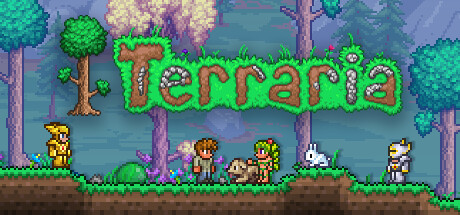
Terraria often begins slowly and confusingly, but many players report that it clicks after the first boss or another early progression milestone. Co-op, wiki guidance, and understanding the progression system are common accelerators.
Friction: Weak or absent tutorial; Slow and confusing opening; Early game can feel boring; Heavy reliance on the wiki or external guides; Grinding for resources and gear; Solo play can feel less engaging.
Unlock drivers: Defeating the first boss; Killing Eater of Worlds or Brain of Cthulhu; Entering Hardmode; Understanding progression and crafting; Playing co-op with friends; Using wiki, guides, or tutorials.
Player profiles
Chill Sandbox Architect: Slow, self-directed sandbox play focused on mining, decorating, building bases, and wandering biomes without pressure to rush bosses or optimize. Motivation: Creative freedom and relaxation—shaping a personal world through mining, building, and exploring at their own pace. Stance: buy.
Co-op Adventurer: Multiplayer-focused: dividing roles, building bases together, conquering caves, and coordinating during boss fights with friends. Motivation: Shared fun and social bonding—experiencing the game as a chaotic, laughter-filled group adventure. Stance: buy.
Hardcore Completionist Veteran: Grinds rare drops, optimizes class builds, replays on Master/Hardcore difficulties, hunts 100% completion, and installs large mods like Calamity and Infernum for fresh challenges. Motivation: Mastery and total conquest—beating every class, difficulty, achievement, and overhaul mod the game offers. Stance: buy.
Platform notes
Most included lower-VRAM Windows cohorts report playable to smooth performance, with only isolated stutter or crash reports. The mixed cohorts involve 8-11GB VRAM with 16-31GB RAM and 16GB+ VRAM systems, where crash, optimization, and 4K display/UI issues are balanced against positive reports.
Windows <8GB VRAM / <16GB RAM: positive. Most reports say the game runs smoothly or at playable frame rates on low-spec systems, though some users report stuttering or crashes.
Windows <8GB VRAM / 16-31GB RAM: positive. Users report strong, smooth performance and high frame rates; one review mentions mild stuttering after an update.
Windows 12-15GB VRAM: positive. The game is widely described as well optimized and smooth, with a few isolated reports of lag or mod-related crashes.
Steam Deck: Steam Deck feedback is mixed but shows substantial friction rather than a seamless Verified experience. The main barriers are awkward or broken controls, controller support issues, poor UI scaling and small text on handheld, and a mismatch between the Verified badge and out-of-box usability. Linux-specific reports add stability and online inconsistencies. No external launcher, anti-cheat, or battery-drain issues are prominent in the evidence. Some users still play hundreds of hours happily on Deck, so the game is not fully broken, but it requires tinkering and adjustment.
Linux and Proton: The audit finds a strong positive Linux signal: users report a native Linux build, smooth performance, and issue-free operation on multiple systems. The main Linux-specific caveats are an isolated report that online multiplayer does not work on Linux, plus environment-specific problems on Bazzite, a Fedora performance comparison, and Wayland/tiling behavior. Overall, the game is largely compatible on Linux, with low-to-moderate friction rather than systemic breakage.
Extra review signals
Monetization: The overwhelming majority of reviews describe Terraria as a one-time purchase with no microtransactions, no paid DLC, no cash shop, and over a decade of free updates. A few sarcastic or insult-based comments mention lootboxes or pay-to-win, but they do not provide real evidence. One isolated mention of in-app purchases in the Leyou regional version is outweighed by numerous confirmations that the main game has no MTX. The monetization model is fair and non-predatory.
Mod reliance: The filtered feedback does not show a consensus that the game requires community fixes. Mods are repeatedly described as optional content expansion, replayability, and an officially supported convenience. One review uses hyperbolic unplayability language without citing any specific bug, so it is treated as an outlier preference rather than a mod tax.
External guides: The review set shows a heavy wiki tax: players repeatedly describe needing the Terraria Wiki open for progression, boss summons, crafting, class builds, and basic mechanics. The most frequent barrier is instructional and system-learning dependency, but the strict scoring hierarchy also finds explicit references to farming item drops and drop rates. That Tier 1 evidence forces the highest score despite the broader dominance of Tier 2 and Tier 3 complaints.
Other review notes
Compared to Minecraft: The game is often described as '2D Minecraft' but reviewers note it plays very differently. Comparisons range from superficial similarities to claims that it is better and deeper than Minecraft.
Frequent Developer Updates: Re-Logic regularly releases updates that add new content, fix bugs, and improve balance, keeping the game alive for nearly a decade. This ongoing support is highly valued by players.
Calamity Mod Expansion: The Calamity mod is frequently mentioned as a major content addition, rivaling a full sequel and adding 300+ hours. It is considered a must-play expansion by many reviewers.
Extensive Modding Community: A large, active modding community creates countless mods that greatly extend content. Quality-of-life mods and story-changing mods are widely available, adding hundreds of hours of new gameplay.
Multiplayer and Cross-Platform: The game supports multiplayer, allowing friends to play together and creating funny situations. Cross-platform support enables playing on phone or PC with friends.