- Charming old-school RPG experience with depth
- Rewarding crafting and exploration systems
- Visually stunning and immersive world
- Clunky and unsatisfying combat mechanics
- Short gameplay with repetitive elements
- Poorly written story and dialogue
Emotions
What players like:
Common complaints:
Gameplay feedback:
Performance notes:
Recommendations:
Other player notes:
Similar games
Blend with other games







Review evidence
Why players say this
Review evidence
Why players say this
What players like
Charming old-school RPG experience: Players consistently highlight the game's nostalgic appeal, evoking memories of classic RPGs like Tibia, Baldur's Gate, and Sacred 2. The game balances simplicity with modern mechanics, offering a wholesome, lighthearted adventure that is both visually appealing and enjoyable for fans of the genre. Its short, satisfying playtime makes it ideal for casual or weekend gaming.
Rewarding crafting and exploration systems: The crafting and exploration mechanics are frequently praised for their depth and accessibility. Players appreciate the well-balanced leveling system, varied loot, and the integration of survival elements like hunting and fishing. These systems add meaningful progression and replayability, making exploration and crafting satisfying and engaging.
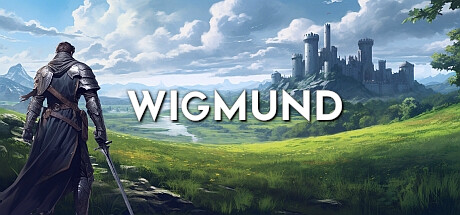
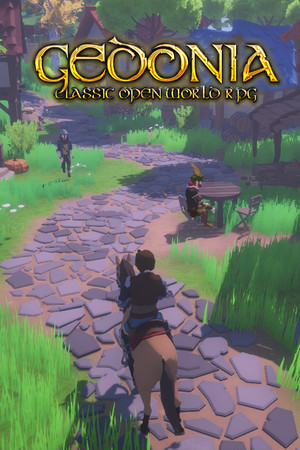
Visually stunning and immersive world: The game's graphics, lighting, and art style are widely celebrated for their beauty and attention to detail. Players highlight the dynamic day-night cycle, vibrant environments, and immersive effects like weather and sun glare. The visuals enhance the fantasy atmosphere and contribute significantly to the game's charm and appeal.
Strong indie game with developer passion: Players consistently commend the game as a well-crafted indie title made with love and effort. The small development team's dedication is evident in the game's polish, creativity, and attention to detail. Many players express admiration for the developers and recommend supporting the game, especially given its affordability.
Immersive and atmospheric soundtrack: The game's music and audio design are praised for enhancing immersion and setting the tone. Players highlight the relaxing Celtic-inspired soundtrack, dynamic battle music, and ambient sounds like unique bird calls. The audio effectively complements the fantasy atmosphere and gameplay experience.
Common complaints
Clunky and unsatisfying combat: Players consistently describe the combat system as clunky, repetitive, and lacking depth. Issues include unresponsive mechanics, poorly telegraphed enemy attacks, excessive enemy health, and unnatural enemy behavior (e.g., health regeneration, fleeing). The combat often devolves into spam-dodging or kiting, with limited build variety and long cooldowns on abilities. Melee and ranged combat are particularly criticized for feeling unpolished and frustrating.
Short and unengaging gameplay: The game is frequently described as too short, with a lack of content, linear storytelling, and abrupt endings. Players report feeling unengaged due to slow pacing, repetitive tasks, and limited side quests. The game also lacks quality-of-life features, such as fast travel, which exacerbates the tedium of backtracking and grinding. Replay value is low due to limited build variety and linear progression.
Poorly written story and dialogue: The story is criticized for being simplistic, generic, and poorly executed. Dialogue is described as stiff, uninspired, and repetitive, with characters lacking depth and personality. The writing is often confusing or cringe-worthy, and the plot developments feel disconnected or nonsensical. The storytelling fails to engage players, even for those tolerant of non-native language quirks.
Boring and empty exploration: Exploration is hampered by tedious travel mechanics, lack of fast-travel options, and an open world that feels vast but empty. Navigation issues, such as unclear quest markers and excessive running, make exploration frustrating. Quests are generic and unengaging, with some providing exact directions that reduce the sense of discovery. The open world lacks meaningful content, and areas like mountains are particularly frustrating due to difficult enemies and poor navigation.
Underwhelming skills and abilities: Skills and abilities are described as weak, slow, and ineffective, with long cooldowns that discourage their use. Players report relying on basic attacks due to the lack of depth and impact in active skills. Mage playstyles are particularly criticized for being unviable due to cooldowns. The life skill system is also poorly designed, requiring high levels to unlock basic functions and feeling unrewarding.
Gameplay and performance
Core gameplay loop: crafting and survival: The game heavily emphasizes crafting, resource gathering, and survival mechanics, including professions like fishing, cooking, and smithing. These systems are central to progression, with level caps (e.g., 30) and finite resources adding depth. The design resembles games like Valheim and Classic WoW but with a stronger focus on structured progression.
Tactical, stamina-based combat system: Combat revolves around dodging, parrying, and managing stamina, with a gesture-based mouse system for attacks (e.g., slashes, thrusts). Players must analyze enemy patterns and time their actions, though some describe it as repetitive (e.g., spamming left-click and rolling). The system is simple but requires strategic positioning and resource management.
Quest-driven progression with minimal hand-holding: Quests (main and side) are the primary source of XP and involve objectives like killing enemies or finding items. The game avoids hand-holding (e.g., no quest markers, dialog cannot be skipped), requiring players to pay attention to details. Fast travel is unlocked later, but early gameplay involves significant walking.
Classless character customization: Players allocate talent and attribute points (e.g., strength, stamina) to customize their character without predefined classes. Skills are learned via scrolls or passively, and a respec system allows for experimentation. Builds are weapon-focused (e.g., 1H melee, 2H melee, bow), with limited but meaningful choices.
Story and companions as secondary focus: The main story (e.g., templar protagonist, evil antagonist) is straightforward and not the primary early-game focus. Companions are introduced early but do not significantly alter gameplay (e.g., mobs target the player). The narrative is functional but not a standout feature.
Strong performance across devices: Players report smooth performance with no major technical issues, even on mid-range hardware like the Steam Deck (with adjusted settings) and high-end PCs. This suggests optimization is a strength of the game.
Needs better lighting tools: A specific suggestion for improving visibility in dark areas, such as adding a belt lantern or similar light source. This feedback is constructive and addresses a potential gameplay enhancement.
Recommendations
Highly recommended with enthusiasm: A significant portion of players strongly recommend the game, praising its value, enjoyment, and replayability. Many suggest purchasing it, especially on sale, and highlight its appeal to classic RPG fans. The feedback is constructive and frequently mentions specific reasons for the recommendation, such as nostalgia, relaxation, or content depth.
Conditional suitability: Some players suggest the game is only suitable under specific conditions, such as during a transitional period, if found on sale, or if certain mechanics (e.g., camera perspective, ability queue) are improved. This feedback is limited in scope but provides actionable insights for targeted audiences.
Lack of replay value: A subset of players finished the game out of commitment rather than enjoyment and expressed no intention to replay it. This feedback is sparse but highlights a potential weakness in long-term engagement or content depth.
Mixed feelings on value: Some players express mixed feelings about the game's value, acknowledging its flaws but still considering it worth the full price or future optimizations. This feedback is based on limited input and reflects subjective opinions rather than concrete critiques.
Optimized for gamepad play: A minor but specific point mentions that the game plays better with a gamepad than a mouse. This feedback is niche and based on limited input but could be relevant for players deciding on their preferred control scheme.
Other review notes
Moderate playtime with exploration focus: Players report a playtime of 8-20 hours depending on exploration and side quests. The game is praised for rewarding exploration but criticized for lacking depth in combat mechanics.
Low entry barrier and value: The game is praised for offering significant value, with players noting that it provides hours of gameplay for a low price. It is suitable for casual play and exploration-focused players.
Indie-developed by small team: The game was developed by a very small team (2-3 people), which may explain its scope, polish, and design choices. Players acknowledge the effort but note limitations in production quality.
Niche appeal and unconventional suggestions: Some players suggest unconventional ways to enjoy the game, such as playing under the influence of substances or tolerating jank for a unique experience. This reflects the game’s niche appeal.
Retro-inspired gameplay with modern touches: The game is compared to retro titles like Ultima and Dink Smallwood, offering a nostalgic experience with modern improvements. Players appreciate its unique style but note clichéd storytelling.