- No time limit praised
- Alchemy system well-received
- Music is excellent
- Boss game overs lose progress
- Ending is abrupt and unsatisfying
- No autosave risks progress
Emotions
Archetypes
What players like:
Common complaints:
Gameplay feedback:
Performance notes:
Recommendations:
Other player notes:
Similar games
Blend with other games 84%Atelier Escha & Logy: Alchemists of the Dusk Sky DX
 83%Atelier Ayesha: The Alchemist of Dusk DX
 81%Atelier Sophie: The Alchemist of the Mysterious Book DX
 78%The Legend of Heroes: Trails to Azure
 78%Atelier Ryza 3: Alchemist of the End & the Secret Key
 77%The Legend of Heroes: Kuro no Kiseki Ⅱ -CRIMSON SiN-
 77%Atelier Marie Remake: The Alchemist of Salburg
 76%Atelier Sophie 2: The Alchemist of the Mysterious Dream
 76%OCTOPATH TRAVELER™
 76%OCTOPATH TRAVELER II
 76%The Legend of Heroes: Trails in the Sky the 3rd
 74%The Legend of Heroes: Trails in the Sky
Review evidence
Why players say this
Review evidence
Why players say this
Steam review verdict
A relaxing alchemy game with excellent music and no time limit, but boss deaths erase progress, the ending feels abrupt, and lack of autosave risks your work.
What players like
No time limit praised: Many players appreciate the removal of the time limit, which allows for relaxed exploration, experimentation, and leisurely gameplay without pressure.
Alchemy system well-received: The alchemy system is consistently praised as interesting, well-made, and fun, with some noting it is simple to learn but offers depth.
Music is excellent: The soundtrack is highly praised, with some calling it the best in the series and highlighting the quality of BGM and battle music.
Returning characters bring nostalgia: Many characters from previous Dusk games return, creating a sense of nostalgia and rewarding long-time fans with reunions and familiar faces.
Dusk trilogy conclusion satisfying: The game provides a great conclusion to the Dusk trilogy, tying up storylines and offering a proper ending that fans find enjoyable and meaningful.
Common complaints
Boss game overs lose progress: Boss fights can trigger sudden game overs with no auto-save, causing players to lose up to half an hour of progress, which is extremely frustrating.
Ending is abrupt and unsatisfying: The ending is described as abrupt and unsatisfying, failing to provide a fulfilling closure to the story as a final installment.
Trails require boss farming: High-level traits are locked behind farming bosses, requiring repetitive gameplay to access key character upgrades, which many find tedious.
Game too easy on hard: Even on the highest difficulty, the game is considered too easy, contrasting sharply with the challenging nature of earlier Dusk titles.
Alchemy 99 grind tedious: Reaching alchemy level 99 for the associated achievement requires excessive grinding, making it an extremely tedious task.
Gameplay and performance
Skill card alchemy system: The alchemy system uses skill cards placed in material slots, with a focus on chain effects, PP, and efficiency. It becomes simpler once learned, scaling with alchemy level up to 99, and involves gathering and puzzle-like synthesis.
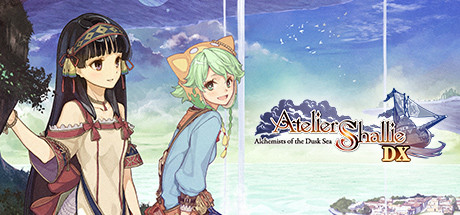
Dual protagonists with distinct stories: The game features two protagonists, Shallistera and Shallotte, with separate storylines and perspectives early on, though they eventually converge. This dual structure adds replay value and narrative depth.
Turn-based combat with burst mode: Turn-based combat is central, with a Burst Mode mechanic that significantly boosts damage and enables linked attacks. The battle system is designed around managing the burst gauge for optimal performance.
No time limit with life tasks: The DX version removes the time limit, replacing it with a Life Task system that scores progress through tasks. Players must pass certain thresholds to advance the story, offering a more relaxed experience.
True ending requires New Game+: The true ending requires a New Game+ playthrough, where players must achieve a motivation gauge of 70 or higher. New Game+ carries over equipment and progress, encouraging multiple runs.
Mixed stability feedback: Some players report stable performance, while others experience crashes. One crash fix from the PS3 version is noted, and one reviewer had no issues across all three games.
Occasional framerate drops: Frequent framerate drops and occasional drops to 55 FPS are reported, indicating inconsistent performance for some players.
Full screen crash on Windows 10: Full screen mode crashes every 30 minutes on Windows 10, a specific and reproducible bug affecting stability.
Window mode stable with stutter: Window mode runs without crashes for up to 2 hours but has occasional stuttering, suggesting a workaround for crash issues.
Regression bug from Plus version: A bug from the Plus version involving Escha's field skill has reappeared, indicating regression issues.
Recommendations
Must play previous Dusk games: Multiple reviews strongly advise that this game is best played only after completing Atelier Ayesha and Atelier Escha & Logy to fully appreciate the story and character development. Newcomers or those who skipped the earlier titles are often told to play those first or consider them instead.
Recommended for Dusk fans: Several reviews recommend the game specifically to fans of the Dusk series or those who enjoyed Atelier Ayesha and Escha & Logy. The game is seen as a continuation that appeals to established series enthusiasts.
Broad audience recommendations: A diverse group of positive reviews recommend the game for various audiences: JRPG and alchemy fans, slice-of-life anime lovers, theorycrafters, and those seeking a casual experience. Some also suggest the trilogy is worth exploring, especially for Ryza-era players.
Start with other Atelier games: Several reviews explicitly recommend starting the Atelier series with other subseries or games like Sophie, Ayesha, or the Arland or Mysterious series. This game is seen as a poor entry point compared to those alternatives.
Not for newcomers: Multiple reviews state that this game is not suitable as a first entry into the series or as a standalone title. Newcomers are advised to start elsewhere, as the game is heavily dependent on prior knowledge and context.
Buying context
Game completion: 200.0h.
Story completion: 50.0h.
The game has a slow start and is boring during the first half, but becomes enjoyable later as the story and gameplay open up.
Friction: Slow start; Boring first half; Tedious alchemy system with restrictions; Minimal experience from mobs; Pointless progression without time limit.
Player profiles
Dusk Trilogy Veterans: Engages deeply with the story, seeks out returning character interactions, and likely plays both protagonist routes. Motivation: Completing the Dusk trilogy story arc and witnessing character development. Stance: sale.
Casual Relaxed Players: Plays on low difficulty, uses story mode, explores freely, and avoids unnecessary grinding. Motivation: To enjoy a relaxing, low-stress gameplay experience without strict time management. Stance: buy.
Mechanics Enthusiasts: Focuses on crafting optimization, plays on higher difficulties, experiments with alchemy skills, and analyzes combat efficiency. Motivation: To master the alchemy system and experience refined combat mechanics. Stance: sale.
Extra review signals
External guides: The primary Wiki Tax issue is the necessity of external references for material drops and traits (Tier 1), with additional dependencies on guides for crafting complex items and understanding intricate alchemy mechanics.
Other review notes
Final Dusk trilogy entry: This game is the final chapter of the Dusk trilogy, marking the end of the sub-series. Players strongly recommend experiencing the first two titles (Ayesha, Escha & Logy) first for full context and enjoyment, as the story concludes the overarching narrative. The Dusk series has a lower sales record compared to others like Arland, and unlike those series, no direct sequel has been made, leaving fans hoping for a continuation.
Multiple endings require replay: The game features multiple endings (five total), one per protagonist with slight variations, and a true ending requiring a second playthrough with both Shallies and specific quest completions, such as the sweet contest and Esca's seed dialogue. Compared to earlier Dusk games, the number of endings is reduced but still satisfying.
Enhanced DX version update: Originally released in 2014 on the PS3, this DX version includes numerous improvements and fixes from the Plus version, such as bug fixes (including a PS3 final boss crash), additional DLC characters, costumes, music, and enhanced endings. The original had several problems that were addressed, although the game was released just two months after the previous title, leading to some cut features.
Removed time limit mechanic: The DX version removes the time limit mechanic that was present in previous Atelier games and the original 2014 release. This makes it the first game in the series on Steam without a time mechanic, allowing players unlimited time to explore, synthesize, and complete objectives without pressure.
DLC integration issues: DLC characters (now integrated in the DX version) can cause narrative inconsistencies. Many costumes and events are DLC, and English dubbing is partial while Japanese is complete. The DX version includes these additions, but fanservice elements like swimsuit scenes are included.