- Alchemy system is highly enjoyable
- Gameplay loop is addictive and fun
- Story and characters are charming
- No upgrade path for original
- Original delisted for DX version
- DX version seen as money grab

Emotions
Archetypes
What players like:
Common complaints:
Gameplay feedback:
Performance notes:
Recommendations:
Other player notes:
Similar games
Blend with other games 88%Atelier Sophie: The Alchemist of the Mysterious Book DX
 86%Atelier Lulua ~The Scion of Arland~
 85%Atelier Ayesha: The Alchemist of Dusk DX
 85%Atelier Ryza 3: Alchemist of the End & the Secret Key DX
 84%Atelier Sophie 2: The Alchemist of the Mysterious Dream
 84%Atelier Ryza: Ever Darkness & the Secret Hideout DX
 83%Atelier Marie Remake: The Alchemist of Salburg
 83%Atelier Escha & Logy: Alchemists of the Dusk Sky DX
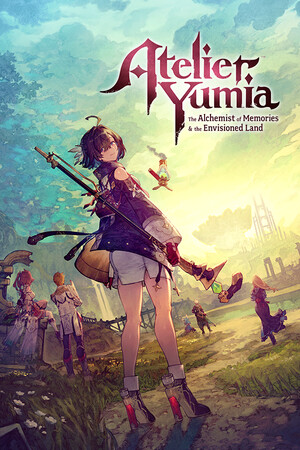 82%Atelier Yumia: The Alchemist of Memories & the Envisioned Land
 81%Atelier Resleriana: The Red Alchemist & the White Guardian
 81%Atelier Ryza 3: Alchemist of the End & the Secret Key
 79%STAR OCEAN THE DIVINE FORCE
Review evidence
Why players say this
Review evidence
Why players say this
Steam review verdict
Its addictive alchemy loop and charming story shine, but the original's delisting with no upgrade and a cash-grab DX version sour the experience.
What players like
Alchemy system is highly enjoyable: Players consistently praise the alchemy system as fun, deep, and addictive, often calling it the best in the series. It is described as a core, immersive mechanic that can absorb hours of play.
Gameplay loop is addictive and fun: The core gameplay of gathering, crafting, and exploring is highly enjoyable and addictive, keeping players engaged for long sessions. It is described as a warm and fun JRPG experience.
Story and characters are charming: The story and characters are frequently described as charming, likable, and heartwarming. The narrative is simple but relaxing, with well-developed and expressive characters.
Combat is innovative and dynamic: The semi-real-time combat system is praised for being creative, fast-paced, and engaging once mastered. It blends real-time action with strategic elements effectively.
Graphics and visuals are appealing: Reviewers note significant improvements in graphics, with appealing character models and a pleasant art style. The PC version is also commended for smooth performance and comfortable visuals.
Common complaints
No upgrade path for original: Existing owners get no upgrade option whatsoever, with delisting forcing repurchase of the DX version. Even a paid upgrade is unavailable, which many reviewers find unfair.
Original delisted for DX version: The original game was removed from sale specifically to push the DX version. This business practice is widely criticized as anti-consumer.
DX version seen as money grab: Reviewers perceive the DX version as a degraded, cheaper re-release that makes the original pointless. It is significantly cheaper and includes DLC, leaving early buyers feeling cheated.
Story is short and boring: The main story is very short, the shortest in the series, and lacks depth. Reviewers find it thin and comparable to a light novel.
Stiff character animations: Character animations are stiff and exaggerated. Many players find them unnatural and distracting.
Gameplay and performance
Core Alchemy Crafting System: A deep alchemy system forms the center of the game, covering material gathering, recipe discovery, item synthesis, and equipment upgrading. It offers high freedom in combining materials and customizing traits, effects, and quality.
Hybrid Turn-Based Real-Time Combat: Combat blends turn-based command selection with real-time elements such as ATB gauges and enemies acting while the player decides. Different clusters describe it as semi-real-time, ATB, or real-time turn-based.
Alchemy Menu And Flowchart Crafting: The alchemy menu allows crafting from materials like copper ore, using flowcharts or a circular grid. Placing materials with matching attributes unlocks surrounding nodes and affects results.
Simplified Alchemy Onboarding: The alchemy system is simplified for easier onboarding but remains a core system. It can feel cumbersome initially, though simplification is noted by some players.
Equipment And Item Crafting Variety: Crafting covers a wide range of items including weapons, armor, bombs, healing items, tools, and quest items. Materials are synthesized into stronger gear with better effects, traits, and quality.
Runs well on Steam Deck: The game works perfectly on Steam Deck OLED and some users report smooth performance on various hardware configurations without issues.
Controller needed for stable performance: Playing with mouse and keyboard causes constant freezes and stuttering due to the game continuously checking for gamepads. Using a controller or having one plugged in resolves these issues.
Poor PC optimization and stuttering: Many users report poor optimization, stuttering, and frame drops even on high-end hardware. The DX version performs worse and requires tweaking to run smoothly.
Game defaults to integrated GPU: The game often defaults to the integrated GPU, causing performance issues. Manually selecting the high-performance NVIDIA GPU via the Control Panel or Windows settings improves performance.
Crashes cause lost progress: Frequent crashes, including during audio output changes, can lead to loss of unsaved progress. Some players experienced crashes even after long play sessions.
Recommendations
Newcomer-friendly entry point: Many reviewers highlight this game as an excellent starting point for players new to the Atelier series, with a low barrier to entry. It is frequently recommended for those looking to get into the franchise or the JRPG genre.
Positive overall recommendation: The majority of reviewers give a positive recommendation, often describing it as a solid or even favorite JRPG. Many would recommend it to friends and are interested in future titles.
Avoid original, wait for DX: A strong consensus advises against buying the original version because a DX version exists or is expected. Reviewers recommend waiting for the DX release to get the complete experience at a better value.
Buy on sale or discount: Many reviewers suggest waiting for a sale, with discounts of 50% or more making the game worth it. At full price, some feel it is not entirely justified.
Avoid Koei re-release practices: Several reviewers express frustration with Koei's re-release strategy, advising against buying their games until a complete DX version is released and discounted. Some suggest avoiding the publisher entirely.
Buying context
Community fair range: $20.00 - $30.00.
Game completion: 50.0h.
Story completion: 35.0h.
This is a crafting-driven JRPG that many players find slow and tutorial-heavy at the outset, but which becomes strongly addictive once the early chapters and alchemy loop open up.
Reported time to anchor: 3h.
Friction: Overwhelming opening with many systems introduced at once; Slow, tutorial-heavy first couple of chapters; Clunky interface and confusing journal/tutorial; Few travelling options in the early hours; Combat feels simple at the start; Item and quality shortfalls gate progress, including difficulty spikes.
Unlock drivers: Getting past the long tutorial opening, after which the story picks up; Engaging deeply with the addictive alchemy/crafting system; Combat opening up and expanding later; Synthesis feeling rewarding as a process of discovery and progression.
Player profiles
Cute Casual JRPG Newcomer: Casual, low-pressure exploration and crafting with little focus on story depth or difficulty. Motivation: To enjoy an accessible, cute, and relaxing JRPG with crafting and exploration. Stance: buy.
Atelier Series Veteran Systems Critic: Compares alchemy, combat, and trait systems with earlier games while often completing or platinuming the title. Motivation: To follow and evaluate the Atelier series' evolution and changes. Stance: buy.
Alchemy Optimization Power Fantasy: Gathers and synthesizes extensively, stacks traits and effects, and builds overpowered equipment to defeat bosses with little grinding. Motivation: To master the alchemy system, optimize gear, and break combat difficulty through crafted items. Stance: buy.
Platform notes
Steam Deck: The audit finds mixed Steam Deck feedback: some users report the game runs well or perfectly on Steam Deck and OLED. However, the most impactful reports concern severe stability failures, including a crash that erased six hours of progress, a black screen when returning from DLC to the main menu, and a freeze state described as completely unplayable. Controller input also appears confusing enough that one user thought the controller was broken, though enabling PlayStation controller support in Steam is a reported workaround. No evidence here requires Proton Experimental or a touchscreen launcher, but the crash, freeze, and black-screen evidence places the experience in the Broken tier.
Extra review signals
Monetization: The reviewed feedback centers on base-price complaints, season pass and DLC bundling, trilogy pricing, and the publisher's rerelease practices. No review provides direct evidence that this game sells in-game purchases, real-money gacha, loot boxes, paid power, paid convenience, battle passes, or a post-purchase cash shop. The delisting comment simply notes continued DLC availability. All observed concerns fall under excluded categories (base price, traditional DLC, publisher reputation), so the monetization audit finds no predatory real-money mechanics.
External guides: The audit finds a clear Tier 1 external-data dependency: users rely on wikis, veteran-made tables, and walkthroughs for material drops, traits, gathering locations, and endgame grind avoidance. In-game codex and guidance are sometimes praised for common gathering, but they are also described as incomplete or inconvenient, especially for late-game materials. Because the strict priority rule triggers on explicit drop/grind and farming-location evidence, the final score is 100 despite other secondary themes.
Other review notes
First Atelier game for many: Many reviewers are playing an Atelier game for the first time. This is their first experience with the Atelier franchise, and for some, it is their first completed Atelier game.
Game priced on higher side: The game is considered expensive, even at a 40% discount. Some players may be deterred by the high price.
Part of Atelier series: The game is part of the Atelier series, specifically the first entry in the Atelier Ryza summer trilogy. Ryza is the most well-known entry in the niche but popular Atelier series.
DX re-release sold as complete: The game received a DX re-release and is sold as a complete edition while the original version is discontinued. This includes all DLCs.
DLC adds challenges and stories: The DLC adds additional challenges and includes episodes for various characters. The DLC story is available and enriches the game.