- Engaging card and RPG blend
- Excellent story and narrative
- Well-designed puzzles and challenges
- High-quality voice acting and art
- Card combat worse than Gwent
- Puzzles are hellishly hard
Emotions
Archetypes
What players like:
Common complaints:
Gameplay feedback:
Performance notes:
Recommendations:
Other player notes:
Similar games
Blend with other games



Review evidence
Why players say this
Review evidence
Why players say this
Steam review verdict
An engaging card-RPG with a great story, puzzles, art, and voice acting, though its card combat falls short of Gwent and some puzzles are hellishly hard.
What players like
Engaging gameplay blend of card and RPG: The fusion of card battles with RPG exploration and decision-making is widely applauded as seamless and addictive. Gameplay is described as fun, strategic, and refreshing, even for those new to card games.
Excellent story and narrative: The story is frequently described as excellent, well-written, and engaging, with players noting it fits seamlessly into the Witcher saga. The narrative quality is a major draw for many reviewers.
Well-designed puzzles and challenges: Many reviewers highlight the puzzles as clever, varied, and enjoyable, adding a unique layer to the gameplay. The puzzle battles are often noted for requiring strategic thinking.
High-quality voice acting and art: Voice acting and visual presentation are consistently praised, with specific mentions of excellent Chinese voice acting and a beautiful handcrafted art style. These elements enhance immersion and overall polish.
Positive overall reception: The game receives overwhelmingly positive feedback, described as great, fantastic, addictive, and a masterpiece. Many reviewers consider it one of the best games they have played.
Common complaints
Card combat worse than Gwent: Players widely feel the card combat design is a step backward compared to Gwent in The Witcher 3, lacking free-flowing battles and clever plays. The mechanics are seen as different and less satisfying, with far less content than the original card game.
Puzzles are hellishly hard: Many players describe the puzzles as extremely difficult, frustrating, and too numerous. Some puzzle matches are poorly explained, making them hard to figure out.
No manual save option: The game lacks manual saving, offering only auto-save, which players find frustrating. This limitation is criticized as an awful save system.
Slow story pacing: The narrative is perceived as slow and lacking a grand, compelling story. Players feel the plot is nothing special.
Late game becomes repetitive: Gameplay turns monotonous and boring in the late game, with standard battles feeling repetitive. A lack of freshness makes the experience stale towards the end.
Gameplay and performance
Gwent-Based Card Combat: The core gameplay is a single-player card battler derived from the Gwent minigame in The Witcher 3, with its own rules and mechanics. Many battles follow the Gwent format, with faction decks and card-based combat.
Story-Driven Choices and Consequences: The game features a narrative with branching choices that have immediate and delayed consequences, affecting the story, characters, and gameplay. Decisions often determine whether the player fights or takes another path.
Card Game with RPG Narrative: It blends card battles with a story-driven RPG experience, including exploration, dialogue, and visual novel elements. The cards are a means to tell a story rather than just a standalone card game.
Battles and Puzzle Encounters: The game includes standard battles, story battles, and puzzle battles with unique rules and solutions. Puzzles often require tailored decks and unconventional tactics.
Puzzle Minigames: Puzzles are a significant part of the game, with varying difficulty and themes. They often involve card-based challenges and specific solutions.
Crashes and startup failures: Players experience runtime errors that prevent the game from running, and the game sometimes fails to start properly, requiring 2-3 restarts. On PS5, a crash issue caused one reviewer to abandon the game at Lyria.
Loss of game audio: Players report a complete loss of game audio starting from chapter two. The issue persists even after reinstalling the game and changing settings, and switching audio output devices does not help.
Performance drops during opponent's turn: During the opponent's turn, the game consumes more resources and FPS drops to around 40, slowing the opponent's turn and stretching out battles. This is compounded by an AI that already takes a long time to play its cards.
Game runs well overall: Despite the reported issues, some players find that the game runs well and has only a few known bugs that do not significantly deviate from the experience.
Major memory leak issue: The game suffers from a huge memory leak, with RAM usage rising from 700-1200MB to 6500-7500MB within a couple of hours, requiring frequent restarts.
Recommendations
Ideal for Gwent fans: The overwhelming majority of reviewers recommend the game specifically to players who enjoyed the Gwent card game, whether from The Witcher 3 or the standalone version. Many note it is a must-play for anyone who loved Gwent and wanted more of it in a single-player format.
Essential for Witcher universe fans: A large number of reviews strongly recommend the game to fans of The Witcher franchise, including the books, games, and overall lore. It is frequently described as a mandatory experience for anyone invested in Sapkowski's world.
Great for card game enthusiasts: Reviewers highlight the game as an excellent choice for fans of collectible card games, deckbuilders, and strategic card combat. Many describe it as a mandatory pick for anyone who enjoys card-based gameplay.
Bonebreaker difficulty opinions mixed: Feedback on the Bonebreaker difficulty is split, with some advising against it and others recommending it for a real challenge. This suggests it may depend on player preference and skill level.
Worth buying on sale: Several reviewers suggest waiting for a discount before purchasing, noting the game is very worth it at a reduced price. This appears as a recurring practical recommendation.
Buying context
Community fair range: $15.00 - $20.00.
Game completion: 50.0h.
Story completion: 30.0h.
Session length: 1.5h.
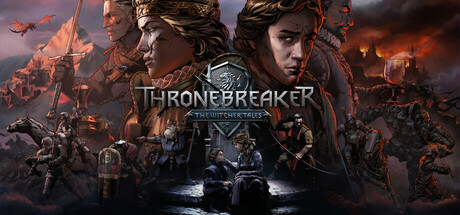
For many players, Thronebreaker is initially slow and bogged down by tutorial hand-holding and simple-feeling mechanics, but it becomes fun after the tutorial and once its puzzle and card systems click. Late-game repetition is a common caveat, and some players never warm to the card battle loop.
Reported time to anchor: 6h.
Friction: Tutorial hand-holding and slow opening; Early gameplay feels boring or standard; Puzzles are hard or confusing at first; Limited deck options and linear progression; Repetitive resource collection and map exploration; PC performance stutters.
Player profiles
Witcher Lore Devotee: Story-first and choice-focused, frequently lowering difficulty or skipping card battles to advance the plot. Motivation: To experience the Witcher world and a well-written branching narrative featuring Queen Meve. Stance: buy.
Gwent Card Enthusiast: Deck-optimizing and battle-focused, seeking synergy strategies, PvE encounters, and puzzle battles. Motivation: To master and enjoy the standalone, PvE-adapted Gwent card mechanics and deck-building. Stance: buy.
Completionist Strategist: Exhaustive exploration of every node and chest, careful resource budgeting, and min-maxing army upgrades and deck builds. Motivation: To fully complete the game, unlock all achievements, and optimize resources, choices, and deck performance. Stance: sale.
Platform notes
Steam Deck: The Steam Deck feedback is mixed. Several users report excellent performance, but there are repeated reports of black-screen launch failures that require switching to Proton 7.0-6, one of which led to a refund, plus controller and D-pad input problems. Under the scoring rules, the need for a Proton workaround places the experience in the Tinkering Required range rather than Seamless.
Linux and Proton: The available feedback shows the game running well on Steam Deck, with one user reporting a black screen issue fixed by switching to Proton 7.0-6. The Linux/Proton experience is mostly positive, requiring only a minor Proton version workaround.
Extra review signals
External guides: User feedback consistently reveals a strong dependency on external guides and walkthroughs to navigate complex choices, battles, and puzzles. This matches Tier 3 (Instructional Data), where the primary need is to learn systems and avoid missable outcomes. No evidence supports Tier 1 (farming) or Tier 2 (inventory/crafting) complaints.
Other review notes
Full localization options: The game offers high-quality voice acting and localization in multiple languages, including Chinese, Polish, German, Spanish, Portuguese, and Korean. These are frequently praised for their quality and smooth translation.
Long campaign duration: The campaign takes roughly 30-55 hours to complete, with most reporting around 40 hours for the main story. Completionist playthroughs can exceed 50 hours.
Online Gwent integration: Progress and achievements in Thronebreaker unlock rewards for the online Gwent game, such as card resources, avatars, borders, and animated cards. This provides additional incentive for Gwent players.
Compared unfavorably to Witcher 3 Gwent: Some reviewers found Thronebreaker's card game less enjoyable and less deep than the Gwent minigame in The Witcher 3. They note significant differences in mechanics and content volume.
Positive comparisons to other games: Some compare it favorably to Heroes of Might and Magic and Hearthstone's adventure mode, noting similar feels. Others mention Telltale Games but with more meaningful consequences.