- Enjoyable and fun gameplay
- Charming and cute visuals
- Excellent management simulation
- Repetitive and boring gameplay
- Frequent bugs and crashes
- Cluttered and flawed UI
Emotions
Archetypes
What players like:
Common complaints:
Gameplay feedback:
Performance notes:
Recommendations:
Other player notes:
- -
No data available
Similar games
Blend with other games









Review evidence
Why players say this
Review evidence
Why players say this
What players like
Enjoyable and fun gameplay: The game is widely regarded as fun and enjoyable, with many players appreciating its relaxing and addictive gameplay mechanics.
Charming and cute visuals: Players love the art style and graphics, describing them as cute, charming, and appealing.
Excellent management simulation: The game is praised for its deep and complete management simulation aspects, making it a favorite among management game enthusiasts.
Intriguing and promising concept: The game's concept is widely appreciated, with many players finding it intriguing and promising.
Whimsical and humorous writing: The game's writing is praised for being whimsical, funny, and light-hearted, adding to its charm.
Common complaints
Repetitive and boring gameplay: Many players find the gameplay mechanics overly repetitive and tedious, leading to a lack of replayability and quick loss of interest.
Frequent bugs and crashes: The game suffers from numerous bugs and frequent crashes, which significantly impact the player experience and game stability.
Cluttered and flawed UI: The user interface is often described as cluttered, overwhelming, and flawed, with issues such as small UI elements and lack of scaling options.
Over-reliance on RNG: Players feel that the game relies too heavily on randomness, which can interfere with decision-making and overall enjoyment.
Inability to remove buildings: Players are frustrated by the inability to demolish or remove misplaced rooms and buildings, limiting their control over the game environment.
Gameplay and performance
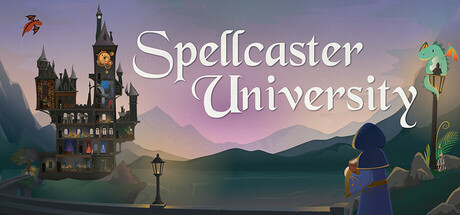
Magic academy management sim: The game is a management simulation where players act as the principal of a magical academy, managing various aspects such as discipline, student happiness, finances, and political relationships. The game involves constructing and managing the academy room by room using a card-based system.
Card-based building mechanics: The game features a card-based system for construction and upgrades. Players use cards to build and develop their academy, with deck-builder elements and construction card game mechanics.
Student and building management: Players manage both students and buildings, including dormitories, private chambers, refectories, and student halls. The game involves student evolution, training, and managing their study behavior.
Multiple magical disciplines: The game offers various magical disciplines to specialize in, with six resources including money and five types of magic. Players need corresponding students to learn magic in specific classrooms to obtain these resources.
Roguelite elements: The game incorporates roguelite elements, including permanent bonuses, progression upgrades, and high randomness in room construction and placement.
Frequent game crashes: The game experiences frequent crashes, particularly during saves and with larger schools or more students. This issue significantly impacts gameplay stability.
Poor optimization: The game suffers from poor optimization, leading to performance issues even on strong systems. This includes high CPU usage and FPS drops.
Pathing issues for NPCs: There are pathing issues for NPCs, including teachers getting stuck, which can disrupt gameplay and immersion.
Screen size issue on Steam Deck: Players using the Steam Deck have reported issues with screen size, impacting the game's playability on this device.
Recommendations
Recommendations for purchase: Many players recommend the game, especially when it is on sale. Some suggest waiting for significant discounts before buying.
Building mechanics improvements: Players suggest various improvements to building mechanics, such as replacing building blocks, breaking down buildings, and moving rooms.
More control and options: Players desire more control over various aspects of the game, such as student futures, the impact of RNG, and starting new campaigns with achieved benefits.
Future updates and improvements: Players express hope for future updates, including a workshop for additional content, improvements in student impact, and more gameplay methods.
Game mechanics and controls: Suggestions for better game mechanics include highlighting artifacts, showing completion conditions, and adding faster speed options for battles.
Buying context
Community fair range: $9.00 - $15.00.
Game completion: 30.0h.
Story completion: 15.0h.
Session length: 0.5h.
Spellcaster University has a steep learning curve and initial tedium, but it becomes enjoyable after players overcome these early challenges and get into the addictive loop of the game.
Reported time to anchor: 1h.
Friction: Steep learning curve; Tedious gameplay; Repetitive nature; RNG impact; Info dump tutorial.
Player profiles
Strategic Deck-Builder: Plays methodically, focusing on optimizing resources and strategies. Motivation: Enjoys the challenge and depth of strategic planning and resource management. Stance: buy.
Cautious Bargain Hunter: Prefers to wait and observe before committing to a purchase. Motivation: Wants to ensure they get value for money and prefer stable, polished games. Stance: sale.
Casual Relaxation Seeker: Plays casually, often while multitasking. Motivation: Seeks a relaxing and enjoyable gaming experience. Stance: sale.
Platform notes
Steam Deck: The game suffers from significant UI scaling issues and performance problems. The lack of UI scaling options makes it difficult to play on certain screens, particularly on the Steam Deck and ultrawide monitors. Additionally, the game is reported to be poorly optimized, limited to 30fps, and prone to crashes, which severely impacts the user experience.