- Fun magic school building and management.
- Engaging, highly addictive gameplay experience.
- Appealing and charming visual style.
- Highly customizable difficulty settings.
- Lacks tutorial and clear guidance.
- Repetitive and grindy gameplay.

What players like:
Common complaints:
Gameplay feedback:
Performance notes:
Recommendations:
Other player notes:
Similar games
Blend with other games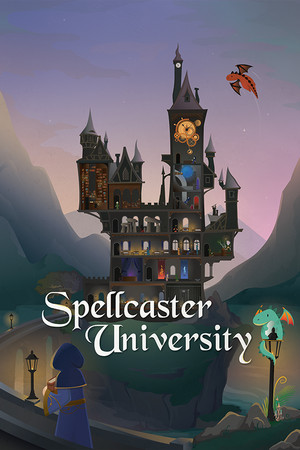







Review evidence
Why players say this
Review evidence
Why players say this
What players like
Fun magic school building/management: A core element of the game is building and managing a magic school, which many reviewers find enjoyable and rewarding. This involves strategically designing rooms, managing resources, training students, and customizing the school's layout. The building aspect is often cited as a primary source of fun and a key driver of the game's engaging gameplay loop.
Engaging and highly addictive gameplay: The game is highly engaging and addictive, often leading to extended play sessions. Players find themselves easily losing track of time due to the compelling gameplay loop and the desire to complete "just one more thing." This contributes significantly to the game's replayability and overall enjoyment.
Appealing and charming visual style: The game features a visually appealing art style, often described as charming, cute, or beautiful. The graphics and animations contribute significantly to the game's atmosphere and overall positive experience. The aesthetic design is consistently praised for its quality and thematic appropriateness.
Highly customizable difficulty settings: The game offers a high degree of customization, allowing players to tailor the difficulty and gameplay experience to their preferences. Adjustable settings include difficulty levels, event frequency, and even specific game mechanics. This flexibility makes the game accessible to both casual and hardcore players.
Active development and frequent updates: The developers are actively updating the game with new content, features, and improvements. This constant support and evolution of the game is viewed positively, indicating a commitment to the game's long-term development and player satisfaction. The updates often address feedback and add significant depth to the gameplay experience.
Common complaints
Lacks tutorial and clear guidance: The game suffers from a lack of a proper tutorial and clear guidance, leaving players confused about basic mechanics and objectives. This issue is consistently mentioned across reviews, with players often needing to rely on external resources or extensive trial and error to understand the game.
Repetitive and grindy gameplay: The core gameplay loop is often described as repetitive, grindy, and lacking in engaging activities, leading to boredom and a sense of tedium. Reviewers note that the game quickly devolves into repeating basic tasks and waiting for resources, without offering meaningful progression or new challenges.
Lacks content and depth: Many reviewers feel the game lacks sufficient content, depth, and replayability, especially in the mid-to-late game. This is reflected in comments about repetitive gameplay loops, a lack of meaningful progression, and a feeling of being 'done' after a relatively short amount of playtime.
Cumbersome building mechanics: The building mechanics are frequently criticized for being clunky, cumbersome, and restrictive, making it difficult to create aesthetically pleasing and functional designs. Players express frustration with unintuitive room requirements, limited customization options, and the need for constant demolition and rebuilding.
Shallow and uninteresting combat: The combat system is frequently described as shallow, uninteresting, and lacking in depth, with limited strategic options and repetitive encounters. Reviewers also point out balance issues between different classes and abilities, making some options feel useless while others are overpowered.
Gameplay and performance
Inspired by colony sim classics: The game shares similarities with colony simulators like Oxygen Not Included and RimWorld, particularly in its UI, priority systems, and resource management. However, it introduces its own unique mechanics and a magic school theme.
Turn-based combat in dungeons: Players explore dungeons beneath the school, engaging in turn-based combat to gather resources, unlock new areas, and progress the story. While a core element, some reviewers find the combat system itself to be relatively simple or unremarkable.
Defending against encroaching fog: A recurring fog mechanic threatens the school, requiring players to perform rituals and expend resources to push it back. This mechanic drives the core gameplay loop and adds a sense of urgency, though some find it tedious.
Training and developing mages: Players train students and staff, developing their skills and managing their progression. This involves graduating students, promoting them to teachers, and upgrading their wands to improve their abilities.
Complex, requires experimentation: The game has a steep learning curve, with complex mechanics that are not immediately obvious. Players may need to experiment and restart to fully understand the game's systems.
Generally stable, well-optimized performance: Many players report stable performance, even on older hardware or Linux. Some reviewers specifically noted the absence of bugs and crashes, while others found the game to be well-optimized. This suggests a generally positive experience regarding the game's technical stability.
Performance degrades in later stages: Some players experience performance issues like lag, crashes, and high CPU/memory usage, especially in later stages or with larger maps/houses. One reviewer mentioned save file size as a potential cause of crashes, while another contrasted the game's performance unfavorably with Oxygen Not Included. This suggests optimization issues need addressing.
Appealing 3D models/animations: The game uses 3D models and transitions room layouts from 2D to 3D as furniture is placed. Additionally, players find the animations, such as the transformation of initiates into adults, visually appealing and fun to watch.
Recommendations
Anticipating future content/updates: Many reviewers express excitement for the game's future, anticipating updates, new content, and the full release. They see great potential in the game and are eager to see how it develops. This suggests a strong foundation and promising roadmap.
Not recommended in current state: Several reviewers do not recommend the game in its current state, citing issues such as balance problems, grind, lack of content, and user experience issues. Some reviewers have refunded the game or suggest waiting for further development and improvements. These negative sentiments indicate significant areas needing attention.
Recommended for specific audiences: Reviewers recommend the game for players who enjoy specific genres like management sims, colony builders, and games with magic themes. Some suggest it's suitable for those seeking a more relaxed or meditative experience. This highlights the game's appeal to a particular audience.
Needs further optimization/development: Some reviewers mention the game's Early Access status, noting that it needs further optimization and development time. They suggest that the game's value depends on future updates and improvements. This acknowledges the game's unfinished state and the importance of continued development.
Management sim with potential: Some reviewers describe the game as a management sim, with a solid framework and great potential. Others note that it's an exercise in micromanagement. This focuses on the game's core mechanics and target audience.
Other review notes
Early Access, frequent updates: The game is in Early Access, with frequent updates and a roadmap in place. Players should expect changes, additions, and potentially incomplete content as the developers continue to build the game towards its full release, expected in mid-2025.
Community translations via Workshop: The game supports community-created translations via the Steam Workshop, with several languages already available. This allows players to contribute to localization efforts and access the game in their preferred language.
Confusing priority system: The priority tool can be confusing, potentially leading to characters getting stuck on tasks. Reviewers suggest creating custom schedules based on specific conditions to optimize efficiency.
Pets refine materials: Pets are needed to refine materials, which are essential for progression. Students must feed these pets.
Stitched helpers are essential: Stitched helpers are essential to prevent students from becoming overworked. These helpers automate tasks and improve overall efficiency.