- Strong modding community enhances replayability significantly
- High replayability with addictive and deep strategy
- Accessible yet deep gameplay for all skill levels
- Poor AI design disrupts balanced difficulty levels
- Unbalanced civilizations and mechanics frustrate players
- Game-breaking technical issues persist post-launch updates
Emotions
What players like:
Common complaints:
Gameplay feedback:
Performance notes:
Recommendations:
Other player notes:
Similar games
Blend with other games 93%Sid Meier’s Civilization® VI
 90%Sid Meier's Civilization® IV
 89%Sid Meier's Civilization VII
 87%Sid Meier's Civilization® III Complete
 87%HUMANKIND™
 86%Millennia
 85%Age of Empires III: Definitive Edition
 84%Supreme Ruler 2020 Gold
 84%Ara History Untold: Anniversary Edition
 84%Age of Empires IV: Anniversary Edition
 83%Age of Empires II: Definitive Edition
 82%Old World
Review evidence
Why players say this
Review evidence
Why players say this
What players like
Strong modding community and support: The game's longevity is attributed to its active modding community, with mods like Vox Populi significantly enhancing gameplay, AI, and replayability. Mods are frequently recommended for extended fun.
High replayability and addictive gameplay: Players consistently highlight the game's replayability due to random maps, varied civilizations, mods, and multiple victory paths. The 'one more turn' loop is frequently mentioned as a key factor in its addictive nature.
Accessible yet deep strategy gameplay: The game is praised for its balance between accessibility for newcomers and depth for veterans. Its turn-based mechanics, hexagonal grid, and one-unit-per-tile rule add tactical depth without overwhelming players.
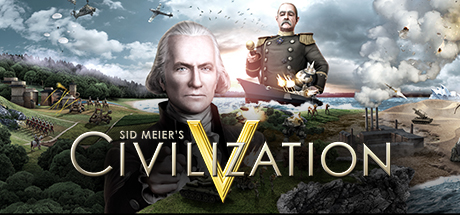
Superior to later Civilization entries: Many reviewers prefer *Civilization V* over *Civ VI* and *Civ VII*, citing better mechanics, UI, art style, and balance. It is often considered the best or most refined installment in the series.
Timeless graphics and art style: Despite its age, the game's graphics, art style, and leader animations are praised for their realism, immersion, and timeless appeal, often outperforming later entries.
Common complaints
Poor AI Design and Difficulty: AI is criticized for being illogical, overly aggressive, or reliant on cheating (e.g., resource bonuses) rather than strategic depth. Higher difficulties feel unfair and unsatisfying due to static, exploitative mechanics.
Criticism of Later Civ Versions: Players strongly dislike the mechanical and stylistic changes in *Civilization VI* and *VII*, citing deviations from core gameplay, cartoonish art styles, and poorly received systems like 'Ages'. Many prefer *Civilization V* for its balance and depth.
Unbalanced Civilizations and Mechanics: Certain civilizations (e.g., Babylon) are overpowered, while others feel generic. Mechanics like happiness and religion are poorly implemented, punishing expansion or lacking depth.
Game-Breaking Technical Issues: Frequent crashes, launch failures, and unplayable states post-update dominate feedback. Issues persist despite troubleshooting, rendering the game inaccessible for many players.
Multiplayer Dysfunction: Multiplayer is plagued by crashes, desynchronization, and a lack of active players. Features like mods and scenarios are underdeveloped, and cheating further degrades the experience.
Gameplay and performance
Deep diplomacy mechanics: Diplomacy is a core feature, with interactions like alliances, betrayals, and city-state negotiations. Players highlight its depth and integration with victory conditions.
Unique civilizations and replayability: Each civilization offers distinct abilities, units, and themes, while expansions and mods add historical periods and customization options for replayability.
Turn-based 4X strategy: The game’s turn-based mechanics and 4X (explore, expand, exploit, exterminate) framework are praised for strategic depth, though turn duration can be a concern.
City development mechanics: City-building and expansion are central to gameplay, with players managing infrastructure, wonders, and growth from antiquity to modern eras.
AI behavior challenges: AI decision-making (e.g., war declarations, diplomacy) affects gameplay balance, with players noting inconsistencies and difficulty scaling issues.
Game launch failures post-update: Multiple users report the game failing to launch or hanging after updates, often requiring reinstallation or troubleshooting. Launcher issues are a recurring theme in these reports.
Frequent crashes during gameplay: Crashes occur during gameplay, particularly after patches or during specific in-game events (e.g., France's turn). Some crashes are linked to actions like moving or skipping combat.
Graphical settings and resolution issues: Users report graphical settings reverting to minimum, DirectX 11 launch problems, and resolution-related issues like black borders at 1440p or 4K. Full-screen functionality is also problematic.
Multiplayer lag and desync issues: Players experience lag and desynchronization in online multiplayer, especially on large maps or during long sessions. This affects the overall multiplayer experience.
Performance optimization for modern hardware: The game runs smoothly on modern hardware (e.g., 4K 60fps) and supports features like AMD FSR and Nvidia DLSS for enhanced performance. It is also optimized for laptops due to low-poly rendering.
Recommendations
Best for strategy enthusiasts: The game is highly recommended for players who enjoy deep strategy, long-term planning, and immersive gameplay, particularly fans of 4X and turn-based strategy games. Its replayability and emotional investment are frequently highlighted.
DLCs and mods essential: Expansions like *Brave New World* and mods like Vox Populi are widely recommended to enhance the experience. Players advise buying DLCs in bundles during sales for the best value.
Avoid Civ 7 at launch: Some players express reluctance to buy *Civilization 7* at full price, preferring to wait for a sale or stick with *Civ 5*.
Newcomer-friendly with caveats: While some recommend it as a great introduction to the series, others suggest it may not be the best starting point in 2025 due to its age. The gradual learning curve makes it accessible for casual or semi-serious players.
Timeless classic with flaws: Despite its age and occasional crashes, the game is praised as a timeless masterpiece and a must-play for strategy fans, even a decade after release.
Other review notes
Industry monetization frustrations: Players express discontent with perceived industry trends, such as aggressive DLC monetization and prioritizing profit over game quality. This reflects broader concerns about the franchise's direction.
Localization problems reported: Multiple reviews mention issues with game localization, suggesting translation errors or inconsistencies that affect gameplay or immersion. This is a functional concern impacting accessibility.
Alternatives to Civ 7 suggested: Reviews occasionally mention other 4X games as preferable alternatives to Civilization 7, signaling competition and potential dissatisfaction with the latest release.
Emotional attachment noted: Some reviews include personal anecdotes and emotional connections to the Civilization series, indicating strong fan loyalty despite criticisms. This feedback is subjective but highlights player investment.