- Unique and diverse civilizations
- Good overall fun gameplay
- Broken matchmaking disrupts online play
- Frequent game crashes and instability
- Beautiful and polished graphics
- Deep strategic variety and replayability

Emotions
Archetypes
Hardware
What players like:
Common complaints:
Gameplay feedback:
Performance notes:
Recommendations:
Other player notes:
Similar games
Blend with other games 93%Age of Empires III: Definitive Edition
 90%Empires Apart
 89%Age of Empires II: Definitive Edition
 86%Age of Empires II (Retired)
 85%Age of Mythology: Retold
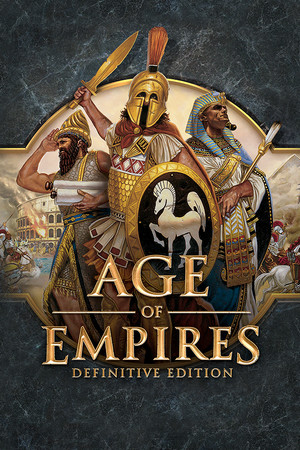 85%Age of Empires: Definitive Edition
 85%Circle Empires Rivals
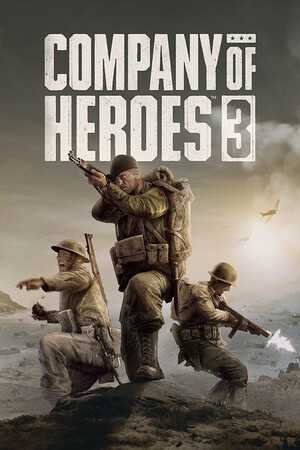 84%Company of Heroes 3
 84%The Scouring
 83%Zero-K
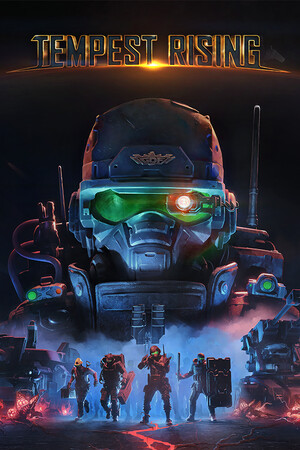 83%Tempest Rising
 82%Age of History 2: Definitive Edition
Review evidence
Why players say this
Review evidence
Why players say this
Steam review verdict
Unique, diverse civilizations, deep strategy, and polished graphics make for fun, replayable matches, but broken matchmaking and frequent crashes ruin online stability.
What players like
Unique and diverse civilizations: Each civilization feels completely different, with unique units, mechanics, and playstyles that encourage varied strategies. This diversity is frequently highlighted as a major strength of the game.
Good overall fun gameplay: Many players find the game fun, solid, and well-made, with core gameplay that is enjoyable and engaging. It is generally considered a good game that is easy to recommend.
Beautiful and polished graphics: The visuals are frequently described as beautiful, clean, and well-crafted, with notable improvements over previous titles. Some minor comments mention a preference for less brightness, but overall the graphics are highly praised.
Deep strategic variety and replayability: The game offers a great balance between accessibility and depth, with diverse strategies and endless replayability. Players find it addictive once they learn the different civilizations and strategies.
Great campaign experiences: The single-player campaigns are well-made, fun, and plentiful, adding significant value to the game. Players appreciate the quality and quantity of campaign content.
Common complaints
Broken Matchmaking: Matchmaking frequently creates unbalanced games with players of vastly different skill levels, from Bronze to Conqueror. This leads to unfair and frustrating matches.
Frequent Game Crashes: Crashes occur regularly during matches, in various game modes, and often result in lost progress and rank. The game is unstable and unplayable for many.
No Reconnect Feature: The game lacks a functional reconnect option, so if a player disconnects they cannot rejoin and are penalized with a loss. This is a major source of frustration.
Expensive DLC: The pricing of DLC is considered too high for the amount of content provided, such as a few maps or civilizations. Players feel the base game plus DLC offers poor value.
Pay-to-Win DLC Civilizations: DLC civilizations are perceived as pay-to-win before being nerfed, giving paying players a significant advantage. This creates an uneven playing field.
Gameplay and performance
Unique Civilization Designs: Each civilization has distinct mechanics, units, and playstyles, offering true identity and specialization. This variety encourages diverse strategies and replayability.
Campaign and Story Missions: The game features a campaign mode with story-driven missions, challenges, and progression tracking. Historical documentary-style content and cutscenes enhance the narrative experience.
Multiplayer and Co-op Support: The game supports multiplayer and co-op modes for up to 4 to 8 players, including online play with friends, family, or AI. Co-op against AI is also available.
Ranked Matchmaking System Present: The game includes a ranked multiplayer mode with MMR-based matchmaking and tiers such as Bronze, Diamond, Gold, Platinum, and Conqueror. This provides a competitive ladder for players seeking skill-based matches.
Core RTS Gameplay: The game is a real-time strategy title with PvP and competitive focus, featuring classic RTS elements such as base building, resource management, and tactical combat. It offers both casual and competitive play.
Frequent crashes and instability: Players experience constant crashes, freezes, and stutters across various game modes and hardware configurations. This issue is widespread and severely impacts playability.
Performance problems and low FPS: The game suffers from poor optimization, leading to low frame rates, stuttering, and high resource usage even on capable hardware. Performance deteriorates with large unit counts or intense battles.
Server and connection issues: Unstable servers, frequent disconnections, and lack of a reconnect feature disrupt multiplayer matches. Many players report being unable to complete games due to connection loss.
Good optimization and smooth performance: Some players report that the game runs well on their systems, with good optimization and stable frame rates. This indicates that performance can be satisfactory on certain configurations.
Freezes and unresponsiveness: The game frequently freezes, sometimes with 'not responding' errors, requiring forced closure. These freezes can happen randomly or during specific actions.
Recommendations
Strong recommendation for RTS fans: Numerous reviewers recommend this game for fans of real-time strategy and the Age of Empires series. It is praised as a premier and worthwhile RTS title.
Not recommended, avoid purchase: Reviewers explicitly advise against buying the game, calling it a waste of money and time. They suggest saving money and avoiding DLCs as well.
Highly recommended, must-play: Many simply highly recommend the game, giving it perfect scores. It is described as worth playing and a great game overall.
Buy only on sale: Many recommend waiting for a discount, stating the game is worth it only when on sale. Some even say to buy it blindly during a sale.
Good for strategy and history fans: Players who enjoy strategy, management, historical battles, and thinking games highly recommend it. Fans of history and old Age of Empires will appreciate it.
Buying context
Community fair range: $20.00 - $30.00.
Game completion: 100.0h.
Session length: 1.0h.
Endgame: 1000.0h.
AoE4 often starts with friction—tutorials, unfamiliarity, and a steep competitive learning curve—before becoming addictive once players get started or play more. Some players love it immediately or never click, so the profile is mixed.
Friction: Steep learning curve for competitive multiplayer; Tutorials can loop or feel like extended tutorials; Initial unfamiliarity with new mechanics; Need to practice and understand each civilization before competing; Performance issues, crashes, and multiplayer disconnects; Limited base-game content without DLC.
Unlock drivers: Completing the tutorial and getting started; Playing more and building familiarity; Playing with friends or co-op vs AI; Learning hotkeys and unit counters; Practicing and understanding civilization benefits; Campaign progression and mission completion.
Player profiles
Competitive Ranked Ladder Player: Plays 1v1 and team ranked, studies matchups and meta civilizations, uses build orders, map control, and high-APM micro. Motivation: Climbing the ranked ladder and proving skill in fair, high-level competitive matches. Stance: buy.
Historical Campaigner and Casual PvE Builder: Plays campaigns, skirmish, and co-op versus AI, builds up economies and cities patiently, and avoids competitive ladder pressure. Motivation: Experiencing history and building a thriving civilization in a low-pressure single-player or co-op environment. Stance: sale.
RTS Newcomer Seeking Accessible Entry: Starts with tutorials, campaigns, skirmish, and casual multiplayer, then gradually learns civilizations, counters, and build orders. Motivation: Learning real-time strategy in an accessible medieval setting without being overwhelmed by complexity. Stance: buy.
Platform notes
Across these Windows cohorts, performance is strongest on 16GB+ VRAM systems, while 8-15GB VRAM users frequently report crashes and instability. The <8GB VRAM cohorts are split, with the 16-31GB RAM group leaning negative and the <16GB RAM group mixed.
Windows 12-15GB VRAM: negative. This cohort reports frequent crashes, desyncs, and severe stuttering or low FPS, even on high-end hardware, though some users see smooth 4K/120 FPS performance.
Windows <8GB VRAM / <16GB RAM: mixed. Reports are split: several users say the game runs smoothly with no lag, while others report crashes, memory-leak slowdowns, and very low FPS on 4GB VRAM.
Windows 8-11GB VRAM: negative. Constant crashes, disconnects, and hard freezes dominate, with only a few users reporting smooth or well-optimized performance.
Steam Deck: The Steam Deck audit finds a Broken experience. The dominant issues are frequent crashes across single-player and multiplayer, anti-cheat false positives that block controllers and crash the game, Linux and Steam Deck disconnects, a forced handheld mode that caps matches at four players, and missing or poor controller and UI support. Although a minority report acceptable Proton and Linux performance, the evidence meets the criteria for high friction and stability failure.
Linux and Proton: Linux/Proton feedback is mixed but not broken. Several users report that the game runs well or pretty well on Linux through Steam Proton, and one says it works better and crashes less than on Windows. At the same time, some Linux users report crashes, multiplayer disconnects, bad graphics, and one says it does not work well regardless of Proton. There is no clear evidence of required Proton Experimental/GE tweaks, launch-option workarounds, or anti-cheat/DRM blockers, so the friction is best classified as minor-to-moderate rather than workaround-heavy or non-functional.
Extra review signals
Monetization: The audit finds strong, repeated evidence that Age of Empires IV monetizes gameplay through paid DLC civilizations that are stronger than base civilizations and are described by players as pay-to-win, especially in ranked multiplayer. Reviews also report rotating overpowered DLC, core content locked behind paywalls, and overpriced endless DLC. Technical bugs, balance complaints, and base-price complaints are not treated as monetization evidence. The score is 85 because real-money DLC provides competitive advantage and creates pay-to-win pressure.
External guides: The reviews contain no Tier 1 farming/drop-rate or Tier 2 inventory/crafting complaints. The scoring-relevant evidence for external-data dependency is Tier 3: players mention unhelpful initial explanations, hidden mechanics, and switching screens to study the game. Alt-tab crashes and narrative Wikipedia comparisons are present, but they fall into lower-priority or non-matching categories. Under the strict priority algorithm, the Tier 3 instructional-data signal sets the score.
Other review notes
DLC adds new civilizations and maps: Clusters describe that the game offers multiple downloadable content packs which regularly introduce new civilizations, maps, and occasionally new campaigns. Some DLCs also include civilization variants and specific factions like the Golden Horde or Chinese variants.
Frequent comparisons to Age of Empires II: Most reviewers compare the game to Age of Empires II, often noting it feels like a modern version with nicer graphics and more strategic depth. Some consider it on par with or superior to the classic, while others see it as a solid modernization.
Greater civilization asymmetry than AoE2: Many reviewers highlight that civilizations in this game are more distinct and asymmetric compared to Age of Empires II, with unique buildings, units, and strategies. This increased differentiation is often praised as a key improvement.
Regular updates and ongoing support: The game receives frequent post-launch updates and new content, keeping it balanced and up-to-date. A thriving community and continued developer support are commonly mentioned positives.
DLC pricing and value concerns: Some reviewers feel DLCs are overpriced relative to the content they offer, with cumulative DLC costs exceeding the base game. Others consider the DLCs a good value, but the high cost is a notable complaint.