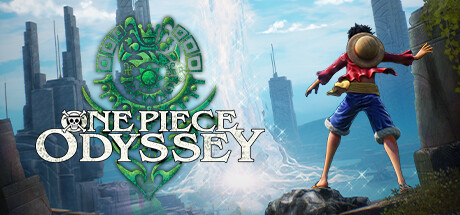
- Authentic One Piece experience with high-quality visuals
- Limited, restrictive exploration and excessive backtracking
- Repetitive, easy turn-based JRPG combat system
- Unengaging, repetitive story, primarily for One Piece fans
- Strong original characters and excellent voice acting
- Purchase on sale recommended due to mixed reception
Emotions
What players like:
Common complaints:
Gameplay feedback:
Performance notes:
Recommendations:
Other player notes:
Similar games
Blend with other games 85%ONE PIECE: PIRATE WARRIORS 4
 79%One Piece Pirate Warriors 3
 79%The Legend of Heroes: Sen no Kiseki II KAI -The Erebonian Civil War-
 79%Infinity Strash: DRAGON QUEST The Adventure of Dai
 78%OCTOPATH TRAVELER II
 78%Demons Roots
 78%Tales of Berseria™
 78%FAIRY TAIL 2
 78%Tales of Vesperia: Definitive Edition
 77%Bug Fables: The Everlasting Sapling
 77%Monochrome Mobius: Rights and Wrongs Forgotten
 77%STAR OCEAN THE SECOND STORY R
Review evidence
Why players say this
Review evidence
Why players say this
What players like
Authentic One Piece Experience: Players highly praise the game's faithful adaptation of the One Piece universe, including its characters, story, and overall adventurous spirit. The game successfully captures the essence of the anime and manga, making it a delightful experience for fans.
High-Quality Visuals & Art Style: The game receives consistent praise for its stunning graphics, beautiful environments, and faithful character models. The art style effectively translates the 2D anime into a vibrant 3D world, enhancing immersion and visual appeal.
Excellent Voice Acting & Sound: The game's audio, particularly the voice acting by the original cast, is highly commended for bringing authenticity and life to the characters. The soundtrack and sound design also contribute significantly to the immersive One Piece atmosphere.
Strong Original Characters: The new original characters, Adio and Lim, are well-designed and integrate seamlessly into the One Piece universe. Players appreciate their personalities, interactions, and how they contribute to the story.
Common complaints
Limited & Restrictive Exploration: The 'open world' was criticized for being misleading, with players feeling constantly funneled through linear paths and restricted from true exploration. Movement speed was slow, and the world often felt empty with little to discover, leading to tedious traversal.
Repetitive & Easy Combat: Players found the turn-based combat system to be slow, repetitive, and lacking strategic depth, often becoming a chore. The game's difficulty was consistently too low, making most battles, including boss fights, unchallenging and boring, even for JRPG fans.
Excessive Backtracking & Slow Pace: The game suffered from significant backtracking in both main and side quests, exacerbated by slow character movement and limited fast travel options. This, combined with frequent, unskippable cutscenes and black loading screens, severely hampered the game's pacing and player enjoyment.
Unengaging & Repetitive Story: The original story was largely deemed uninteresting, feeling like filler or a weak fan fiction. It heavily relied on re-living past One Piece arcs, which became tedious and repetitive, failing to engage players or provide a satisfying narrative experience.
Cumbersome Character & UI Mechanics: Switching characters, especially during exploration, was a frustrating experience due to multiple menu interactions and frequent black screen transitions. The overall UI and character progression systems were seen as clunky and lacking flexibility.
Gameplay and performance
Turn-based JRPG Combat System: The game features a classic turn-based JRPG combat system with a rock-paper-scissors elemental weakness mechanic. Players can freely swap characters during combat to exploit enemy weaknesses and manage cooldowns, adding a layer of tactical depth. The combat also includes a unique zone-based system where characters and enemies are distributed across different areas.
Playable Straw Hat Crew & Abilities: Players control the entire Straw Hat crew, each with their iconic fighting styles, Devil Fruit powers, and signature moves. Beyond combat, each character possesses unique exploration abilities, such as Zoro cutting metal, Nami finding money, Chopper entering small passages, and Luffy grappling or breaking walls, which are crucial for traversing the world and solving puzzles.
Story Revisits Past Arcs: The core narrative involves the Straw Hat Pirates being stranded on a mysterious island where their memories and powers are stolen. To regain them, they must relive and re-experience altered versions of iconic past story arcs from the One Piece manga/anime, such as Alabasta and Dressrosa, set after the Whole Cake Island arc.
Accessible Progression & Length: The main story is approximately 30-40 hours long and can be completed without extensive grinding for levels or items. Character growth is tied to leveling up and collecting ability upgrade cubes, with equipment also enhancing stats. Crafting is present but not essential for the main story.
Open World Exploration & Quests: The game features a semi-open world structure with various biomes to explore. Exploration involves navigating with character-specific abilities, finding hidden collectibles, and engaging in both main and side quests. Fast travel options become available later in the game, though they can be restricted during main missions.
Excellent overall performance: Many players report that the game runs exceptionally well, with stable frame rates, good optimization, and very few bugs or crashes. This indicates a high level of polish in the game's technical foundation.
Good Steam Deck compatibility: The game performs well on the Steam Deck, with players noting good optimization and the ability to achieve stable frame rates with minor setting adjustments. This makes it a viable portable gaming option.
Cutscene frame rate limitations: Pre-rendered cutscenes are capped at 30 frames per second, which can be jarring for players experiencing higher frame rates during gameplay. Some cutscenes also exhibit TAA artifacting.
Frequent loading screens: Some areas of the game are noted to have frequent loading screens, potentially interrupting the flow of gameplay. Installing on an SSD is recommended to mitigate this.
TAA causes visual artifacts: Temporal anti-aliasing (TAA) implemented in the game can lead to afterimages on moving objects, detracting from the visual clarity for some players.
Recommendations
Purchase on Sale Recommended: A significant number of players recommend purchasing the game only when it is on sale, often suggesting a discount of 50% or more. Many feel it is not worth its full price, even for One Piece fans, due to various gameplay issues.
Primarily for One Piece Fans: The game is overwhelmingly recommended for fans of the One Piece series, especially those who enjoy JRPGs. Non-fans are strongly advised to avoid it, as their enjoyment is highly dependent on familiarity with the IP. Many reviewers suggest that the game's flaws are more tolerable for dedicated fans.
Lack of Challenge/Difficulty: Several players noted the game's lack of challenge, particularly in combat. There are suggestions for a 'hard mode' or balance updates to make the experience more engaging, indicating that the current difficulty might be too easy for many RPG enthusiasts.
Mixed Overall Reception: Player opinions on the game's overall quality are highly divided. While some recommend it and give it high scores (7-8.5/10), others strongly advise against it, citing it as not worth the money or time. This suggests a polarizing experience, heavily influenced by individual expectations and fandom.
Story Focus for Fans: The game's story and character interactions are highlighted as a strong point for fans of the show, offering a way to relive past events or experience an original narrative. However, non-fans might struggle with the context.
Other review notes
Minor Details and Preferences: Reviewers noted various minor details, such as the game's soundtrack, specific character models, and the ability to revisit Memoria worlds for sub-quests. Some also provided technical instructions for language or resolution settings.
Niche Appeal and Pricing: The game is considered a niche title, primarily appealing to JRPG and One Piece fans. Some reviewers feel it is not worth its full price, suggesting it might be better suited as a movie or that it fails to effectively reach a broad audience.
JRPG Mechanics and Design: The game is fundamentally a JRPG, featuring strategic turn-based battles, character interactions, and an expansive world. Its design clearly aligns with console and Japanese RPG conventions, which might surprise or deter players not accustomed to the genre.
Story and Lore Integration: The game features a story created by Eiichiro Oda and is set after the Whole Cake Island arc. While it attempts to integrate existing lore, some players note the absence of certain characters and superficial coverage or changes to important anime events.
Modding Community Support: The community has developed various mods to address common player frustrations, such as slow movement speed, combat mechanics, and resource consumption. These mods are often recommended to enhance the gameplay experience.