- Highly fun and enjoyable game
- Great for building railway scenes
- Top-tier model train simulator
- Steep learning curve for building
- VR-first design hurts PC players
- Lack of content and variety
Emotions
Archetypes
What players like:
Common complaints:
Gameplay feedback:
Performance notes:
Recommendations:
Other player notes:
Similar games
Blend with other games


Review evidence
Why players say this
Review evidence
Why players say this
Steam review verdict
Fun, top-tier model train simulator great for building railway scenes, but a steep learning curve, VR-first design that hurts PC players, and thin content hold it back.
What players like
Highly fun and enjoyable: Players consistently describe the game as fun, addictive, and entertaining, with simple yet engaging gameplay. It is praised as a great, cool, and chill experience.
Budget-friendly model train alternative: Many users highlight the game as a perfect substitute for real-life model railroading, especially for those lacking funds, space, or ability. It fulfills the dream of owning a model train layout without the high costs.
Great for building railway scenes: The game excels at letting players build detailed railway scenes and dioramas, with a large variety of trains, decorations, and terrain options. It satisfies cravings for model railroading and is a must-have for train modelers.
Top-tier model train simulator: Reviewers call it the best model train sim ever, perfectly capturing the feel of building a model railway. It is considered the best game for train enthusiasts.
Strong modding and workshop: The game features extensive modding support and a vibrant Steam Workshop with thousands of user-created layouts, locomotives, and props. Players love the ability to download and share content easily.
Common complaints
Steep learning curve for building: Creating layouts, scenery, and models has a steep learning curve and is time-intensive. Many find it tedious and not worth the effort, requiring external software and patience.
VR-first design hurts PC players: Many players report that the game was clearly designed for VR first, leading to poor control mapping, clunky UI, and an experience that feels wrong on a monitor. This makes the non-VR version frustrating and hard to play.
Lack of content and variety: Reviews complain about missing locomotives, rolling stock, props, and other content. Specific gaps include German, British, Russian, and North American engines, as well as scenery items like roads and people.
Workshop and mod quality issues: The workshop and modding scene suffer from quality control problems, including suboptimal mod quality, livery system issues, and split mod hosting. Some players also mention community toxicity.
Performance issues with large layouts: Lag, stutters, and memory problems occur especially with detailed or large layouts and many mods. Some players report crashes due to excessive memory use.
Gameplay and performance
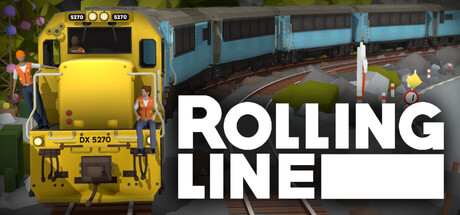
Build and drive trains: Players can build and recreate train layouts, lay tracks, design landscapes, and drive the trains they place on their maps. The focus is on building with trains, but driving is also a core activity.
Virtual model railroad sandbox: The game is a virtual model railroad sandbox where players can create and simulate model railways. It offers a creative tool for building model railways and railroads.
VR and PC support: The game supports both VR and standard PC modes, with motion controls available in VR. It was originally designed for VR but is also playable without it.
Map creation and sharing: Players can create custom maps, including art maps and train maps, and share them via Steam Workshop. Pre-made maps are also included.
Steam Workshop support: The game supports Steam Workshop content, allowing players to download community-created mods and content. Workshop sharing is also available.
Good performance on average PCs: Many users report smooth performance on average laptops, low-end PCs, and even potato-spec hardware. The game is generally lightweight and runs well on modest systems.
Memory issues with large textures: Poor optimization for large textures and community layouts leads to high memory usage and crashes. Loading a single train mod can consume 1GB of memory.
Lighting causes lag: Turning on lights causes significant lag, and many lights continue to cause performance issues even after improvements.
Mods may cause lag: One user experienced lag possibly due to the number of mods downloaded. Mod usage can impact performance.
Occasional stutters at high FPS: Some players get mostly 90 FPS but experience occasional stutters. Performance is generally high but not perfectly smooth.
Recommendations
Great for Train Enthusiasts: Many reviewers highly recommend the game to anyone who loves trains, model railroads, or rail-fanning. It is considered a must-have for people with an interest in trains.
Strong Recommendations from Players: There is a large number of enthusiastic recommendations, with phrases like 'can't recommend enough' and 'highly recommend.' The game receives strong positive word-of-mouth from the community.
Good Value for Money: Many players find the game well worth its price, often citing the $20 cost as fair and reasonable. It is considered a great investment for the content offered.
Ideal for Model Railroaders: The game is specifically recommended for model railroaders and train modelers. It appeals to those who enjoy building and operating model train layouts.
VR Not Required, But Enhances Experience: While the game is often associated with VR, many note that it works just as well on PC without VR. Some recommend building on a monitor and viewing in VR for the best experience.
Buying context
Community fair range: $15.00 - $20.00.
Session length: 2.0h.
Endgame: 500.0h.
Rolling Line often starts slow because of a steep layout-building learning curve, unclear controls, and an unhelpful tutorial, but it becomes fun after a few hours once players get the hang of the gameplay and tutorial. Some players find it immediately relaxing, especially with mods or multiplayer, but the clearest time-to-fun report follows early friction.
Reported time to anchor: 3h.
Friction: Steep layout-building learning curve; Initial boredom while learning gameplay and tutorial; Unclear controls and unhelpful tutorial; Buggy tutorial; Tedious placement and multi-button controls; Lack of multiplayer for co-op building.
Unlock drivers: Sticking with it through the first few attempts; Getting the hang of the gameplay and tutorial; Watching community tutorial videos; Understanding and accepting the learning curve.
Player profiles
Train and Model Railway Enthusiast: Operates trains, builds railway layouts, and recreates model-railway scenes. Motivation: To enjoy trains and model railroading in a virtual, accessible form. Stance: buy.
Cozy Sandbox Rider: Rides trains, watches scenery, listens to music, and plays casually in sandbox mode. Motivation: To relax, unwind, and enjoy scenic train riding without pressure. Stance: buy.
Creative Modder and Layout Builder: Builds maps and layouts, makes liveries and models, installs mods, and shares creations. Motivation: To create, customize, and share railway content with the community. Stance: buy.
Platform notes
Steam Deck: The limited review set shows a technically seamless Steam Deck/Linux experience: users report no stutters or crashes, no launchers or Proton tweaks, and no launch failures. The only notable friction is a control learning curve, especially for grabbing and placing decoration items, but this is input usability rather than a technical barrier. Overall, the game appears to work out of the box on Deck with minor control adaptation.
Other review notes
Steam Workshop and modding scene: The Steam Workshop offers thousands of player-made layouts, liveries, and mods, supported by a large and helpful modding community. This greatly extends the game's content.
Active and caring developer: The game is made by a single dedicated developer who regularly updates it and interacts with the community. Players appreciate the ongoing effort and personal connection.
VR and non-VR support: The game was originally designed for VR but also works on a standard PC monitor without a headset. This flexibility lets more players enjoy it regardless of their hardware.
Frequent updates and fixes: The developer consistently releases updates at least three times a year, improving the game and adding new items. This keeps the experience fresh and stable.
Low price point: The game is sold cheaply, making it accessible to a wide audience. This low cost is often mentioned as a positive factor.