- Strong teamwork and communication focus
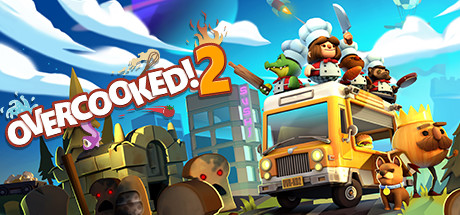
- Cute and appealing art style
- Improved mechanics over predecessor
- High stress and frustration levels
- Chaotic and uncooperative teammates common
- Unreliable matchmaking and population issues
Emotions
What players like:
Common complaints:
Gameplay feedback:
Performance notes:
Recommendations:
Other player notes:
Similar games
Blend with other games


Review evidence
Why players say this
Review evidence
Why players say this
What players like
Strong teamwork and communication focus: The game emphasizes teamwork, coordination, and communication, teaching players to delegate tasks, stay calm under pressure, and support each other. These mechanics are both challenging and rewarding.
Cute and appealing art style: The game's charming, cartoonish art style, adorable characters, and vibrant environments are frequently praised for their visual appeal and ability to create a cozy, joyful atmosphere.
DLCs add significant value: Expansions and DLCs (e.g., beach levels, holiday-themed content) are highlighted for adding new characters, recipes, maps, and challenges, extending the game's longevity and variety.
Improved mechanics over predecessor: Overcooked 2 is praised for building on the first game with new mechanics (e.g., throwing items), larger maps, and more varied gameplay, making it a worthy successor.
Common complaints
High Stress and Frustration: The game’s fast-paced, high-pressure mechanics and strict penalties (e.g., restarting for mistakes) cause significant stress, arguments among players, and even emotional distress. Some players describe it as a 'survival challenge' rather than a fun cooking game.
Chaotic and Uncooperative Teammates: Teammates’ mistakes (e.g., burning food, poor communication) or greediness create chaos, frustration, and arguments. The game’s design amplifies these issues, as one player’s errors can ruin the experience for others.
Unreliable Matchmaking and Population: Players struggle to find matches (e.g., 2v1 instead of full teams) or maintain connections, with frequent mid-game disconnections. The sparse online population and long wait times exacerbate the issue, particularly in competitive modes.
Technical and Optimization Problems: The game suffers from crashes, freezes (e.g., loading screens), and poor optimization, even on high-end hardware. Bugs like clipping, item pickups failing, or save file corruption further disrupt gameplay.
Steep Difficulty Spikes: Later levels and DLC content introduce unreasonable difficulty (e.g., '阴间' levels), requiring excessive patience or reflexes. Some stages feel artificially hard, with poorly designed mechanics or gimmicks that frustrate players.
Gameplay and performance
Multiplayer-focused chaotic cooking: The game is designed primarily for multiplayer (local/online) with 2-4 players, emphasizing chaotic cooking mechanics under time pressure. Teamwork, communication, and coordination are critical for success, often leading to humorous or stressful situations.
Dynamic and diverse level design: Levels feature creative, absurd, and dynamic environments (e.g., pirate ships, volcanoes, moving kitchens) with unique mechanics like portals, fires, and collapsing structures. This variety enhances replayability and challenges players to adapt.
Core cooking and multitasking mechanics: Gameplay revolves around time-sensitive tasks like chopping, cooking, plating, and washing dishes, often simultaneously. Players must manage multiple orders under pressure, with penalties for errors (e.g., lost tips, shared consequences).
Throwing and physics-based interactions: A signature mechanic involves throwing ingredients, plates, or even teammates across gaps or into pots. Physics-based interactions (e.g., knocking players into hazards) add chaos and require strategic use of environmental obstacles.
Solo and co-op modes with hot-swapping: Supports solo play (controlling two characters) and co-op (local/online). Solo mode allows hot-swapping between chefs, while co-op emphasizes teamwork, though player count can affect difficulty and dynamics.
Severe multiplayer connectivity issues: Players report frequent disconnections, high latency, desync, and server instability during online play. These issues persist even in the main menu and affect matchmaking, with accelerators failing to resolve them (Clusters 1, 2, 6, 7, 13).
Game-breaking bugs and crashes: Critical bugs include save file corruption, crashes during online play, and a bug requiring repetition of the final phase. Loading screen freezes with four players and server crashes further disrupt gameplay (Clusters 1, 5, 9).
Poor optimization and hardware demands: The game suffers from inconsistent performance, long loading times, and poor optimization, requiring high-end hardware (e.g., i9 13900k + RTX 4090) for smooth gameplay. Low-end hardware struggles with stability (Clusters 1, 4, 14).
Internet dependency for hosting: The game relies heavily on stable internet for hosting, with packet loss and regional latency issues requiring workarounds like accelerators (Clusters 1, 15).
Inconsistent multiplayer performance: Performance varies by player position, and arcade mode lags without an accelerator. Cross-continent play exacerbates disconnections and latency (Clusters 12, 13, 7).
Recommendations
Ideal for co-op with friends: The game is highly recommended for cooperative play, especially with friends or couples, as it fosters teamwork, communication, and laughter. It is best enjoyed in split-screen or local multiplayer settings.
Chaotic but rewarding gameplay: Players describe the game as chaotic, funny, and addictive, offering a unique challenge that tests relationships and teamwork. It is particularly enjoyable for those who embrace frustration and replayability.
High replayability value: The game offers diverse levels and challenges, making it highly replayable. Many players have completed it multiple times, enjoying the variety it provides.
Controller recommended for best experience: Using a controller is strongly advised for smoother gameplay, as it enhances the overall experience compared to other input methods.
Avoid online multiplayer issues: Players recommend avoiding online multiplayer due to potential issues, suggesting local or split-screen play instead for a more stable and enjoyable experience.
Platform notes
Steam Deck: Overcooked on the Steam Deck delivers a fun and chaotic local multiplayer experience but suffers from significant technical barriers, particularly in online multiplayer stability and broken Steam Cloud Save functionality. While the game runs well natively for single-player and local co-op, the clunky controls and UI navigation issues introduce medium-level friction. The most severe issues—online instability and broken cloud saves—directly impact the user experience and require immediate attention.
Extra review signals
Monetization: The monetization strategy of *Overcooked! 2* is a mixed bag, primarily driven by its aggressive use of DLCs. While the base game is well-received, the fragmentation of content into multiple paid DLCs—some of which are included as day-one bonuses—creates confusion and financial regret for players. Many users feel pressured to purchase DLCs upfront, only to realize later that they haven't even completed the base game. However, the DLCs themselves are generally praised for adding meaningful content, such as new levels and mechanics, which justifies their value for engaged players. Technical issues, though not directly tied to monetization, further amplify frustration and negatively impact the overall perception of the game's value.
Other review notes
Emotional impact of gameplay: Players highlight the emotional journey tied to virtual friendships and personal stories, particularly when playing with partners or experiencing in-game relationships. This adds depth to the gaming experience beyond mechanics.
DLC variety and themes: Multiple reviews mention specific DLCs and their thematic content, indicating that expansions play a significant role in extending replayability and content diversity for players.
Balanced game length: Players note the game’s workable size and short-to-medium playtime (~6 hours), suggesting it is well-paced for casual or co-op sessions without overstaying its welcome.
Family-friendly and accessible: The game is praised for being suitable for kids, featuring a simple story and real-life safety reminders, making it appealing to a broad audience, including younger players.
Community engagement via Discord: The official Discord community is highlighted as a key platform for finding players and fostering engagement, indicating its importance for multiplayer and social interaction.