- Meaningful choices and high replayability are present.
- Improved sequel delivers a unique experience.
- Expanded world offers choice and freedom.
- Significant bugs and unpolished gameplay are present.
- Poor controls and confusing design hinder experience.
- Inconsistent narrative and dialogue detract from immersion.
What players like:
Common complaints:
Gameplay feedback:
Performance notes:
Recommendations:
Other player notes:
Similar games
Blend with other games




Review evidence
Why players say this
Review evidence
Why players say this
What players like
Meaningful choices; high replayability: The game emphasizes player choice, branching narratives, and high replayability. Decisions have real consequences, and players cannot experience everything in a single playthrough due to the immense number of storylines.
Improved sequel; unique experience: The game is considered a significant improvement over its predecessor and a unique, underrated gem. Importing saves from the first game enhances the experience, and the story is engaging.
Unique dialogue; fourth-wall breaks: The game features unique conversation mechanics, branching dialogues, and the ability to role-play as oneself, breaking the fourth wall. The player's choices in these conversations have consequences.
Gameplay-focused; tower setting: The game focuses on gameplay within a large tower setting, while still maintaining a strong story. It's been compared to Deus Ex in a single, expansive location.
Well-done voice acting: The game features well-done voice acting, with returning voice actors delivering good performances. This contributes to the overall immersion and quality of the game.
Common complaints
Abandoned, unpolished, and unfinished: The game suffers from a lack of updates, with some reviewers noting no changes in years, leading to a feeling of abandonment and an unfinished state. This stagnation, combined with the game's Early Access status, raises concerns about its future development and overall quality. Many reviews mention the game is abandonware.
Significant bugs and poor controls: Reviewers consistently report numerous bugs, poor controls, and broken gameplay mechanics that severely hinder the player experience. The game's alpha state is often cited as a contributing factor to these issues, with some reviewers encountering game-breaking bugs and aimbot-like AI.
Empty world, confusing design: The game world feels empty and unfinished, lacking engaging content, environmental storytelling, and sufficient dialogue. The level design is confusing and cramped, making navigation difficult and contributing to a sense of disorientation.
Poor combat and stealth mechanics: The combat system is criticized for its difficulty, poor AI, and unreliable stealth mechanics. Enemies exhibit unrealistic accuracy, and stealth attempts are often unsuccessful, leading to frustration and a lack of viable gameplay options.
Inconsistent narrative and dialogue: The game's narrative and gameplay integration are inconsistent, with aggressive playstyles leading to expulsion from the Consortium. Dialogue with guards is often nonsensical, and their reactions to the player's actions are unpredictable, creating a disjointed experience.
Gameplay and performance
Expanded world, choice, and freedom: The game expands upon the original with a larger world, more player freedom, and branching narrative choices that affect gameplay and relationships. Players can expect more action, stealth, and interactivity within the expanded environment.
Energy management is crucial: Resource management is crucial, as actions consume energy that must be replenished by recycling items. Players must manage their energy for healing, repairs, and suit functions, adding a survival element to gameplay.
Gear, upgrades, and suit variety: The game features a gear and upgrade system, with a sufficient arsenal of weapons, equipment, and gadgets. Different suits provide unique abilities, such as flying or X-ray vision, adding tactical options.
Quality-of-life improvements added: Several quality-of-life improvements enhance the player experience, including the ability to speed up time, pause conversations, transfer saves from the previous game, and a map that reveals itself as the player explores.
Interesting game setting: The setting is described as big and interesting, but lacks specific details. This point is too vague to be highly important.
Improved graphics and scenery: The game's graphics have been upgraded, with the scenery looking notably better. This indicates a positive visual improvement in the game's presentation.
Uses Source engine: The game Consortium 1 utilizes the Source engine. This is a factual statement about the game's technical foundation but doesn't offer much evaluative feedback.
Recommendations
Recommended for immersive sim fans: The game is recommended for players who enjoy immersive sims, deep stories, meaningful choices, and unique world-building. It is seen as a departure from mainstream AAA games, offering a single-player experience with extensive lore and real decision-making opportunities.
Recommended for Consortium fans: The game is specifically recommended for players who enjoyed the previous Consortium game. It expands upon the original's concepts on a much larger scale.
Support innovative gameplay: Reviewers suggest supporting the developers to encourage gameplay innovation over prioritizing graphics. The game is also recommended for old-school gamers.
Improve exploration with save history: Exploration is hindered by the fear of bugs and easy deaths. Reviewers suggest implementing a save history and persistent map to encourage risk-taking.
Plane version is more polished: The plane version of the game is considered more finished and well-rounded compared to other versions. This suggests inconsistencies in the quality across different platforms or versions of the game.
Other review notes
Early access, incomplete content: The game is in early access with only the first of three acts currently available. Some reviews mention inconsistent update frequency, while others praise constant updates, indicating a potentially unstable development process.
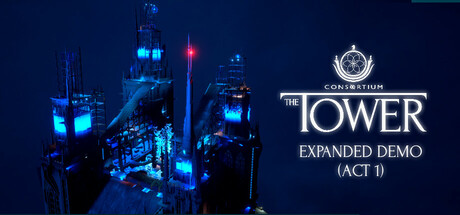
Sequel set in futuristic tower: The game is a direct sequel to Consortium, set in a futuristic universe where players control an operative in a peacekeeping organization on a high-tech aircraft. The game begins immediately after the events of the first game, with the player entering a chaotic tower to face terrorists.
Immersive sim, complex narrative: The game employs 'Immersive Sim' elements and breaks the fourth wall, featuring multiple layers of storytelling and interwoven timelines. Despite breaking the fourth wall, the game takes itself seriously.
'Die Hard meets Deus Ex': The game's concept is described as 'Die Hard meets Deus Ex'. This suggests a combination of action-oriented gameplay with immersive sim elements.
Significant hidden content: The game has a lot of content that players may not have seen yet, even in the available version. This suggests a high level of replayability or hidden content.